A St Goar day trip from Kaiserslautern is what the Mittelrhein looks like once the morning weather report stops being true. We arrived by RB26 from Bacharach at 11:07 on our second wedding anniversary, with an Italian lunch booked, a castle visit planned, and partly cloudy in the forecast. Within three hours the lunch had collapsed twice, the castle was off, and the rain had set in. What follows is the post the trip became: a back-alley Altstadt walk, a basement Asian meal that beat the Italian, an honest view of Burg Rheinfels from below, and a 16:10 KD cruise that turned the day around. This is post 3 of 5 in the Rhine anniversary series.
Visit at a glance
- Official site: burg-rheinfels.com (Burg Rheinfels operator)
- Address: St. Goar Altstadt, 56329 Sankt Goar, Rheinland-Pfalz
- Opening hours: Altstadt and esplanade 24/7; Burg Rheinfels daily 09:00–18:00 (Apr–Oct)
- Parking: Riverfront paid lots ~€3–5/day; train station 5 min to Altstadt
- Cost: Town walk free; Burg Rheinfels adult €6, children €3
- Accessibility: Altstadt level cobblestone; esplanade level; Burg Rheinfels has stairs and uneven terrain
- Distance from Kaiserslautern: ~120 km via A6 → A61 → B9 to Bingen, then RB26
- Time on site: 2–3 h Altstadt + lunch; +2 h for full Burg Rheinfels
- Previous stop: Bacharach in Half a Morning
- Next stop: The KD Cruise St. Goar to Bingen
A bit of history
St. Goar takes its name from a hermit-priest from Aquitaine who arrived on the left bank of the Rhine during the reign of Frankish king Childebert I (511 to 538) and lived in a Felsenhohle (rock cave) above the river.[2] His hospice for stranded boatmen, his chapel, and his grave (around 575) drew pilgrims for the next millennium. The town received city rights in 1183.[2]
The real shape of the town was set after 1190, when the Counts of Katzenelnbogen took Schutzherrschaft (protective lordship) over the settlement and, in 1245, founded Burg Rheinfels on the slope above town as a Zollburg (toll castle) to enforce duties on Rhine traffic.[3] Built by Count Diether V of Katzenelnbogen, the castle survived its first siege within twelve months: in 1255 to 1256 the Rheinischer Stadtebund (a defensive league of twenty-six Rhine cities) attacked to break the Katzenelnbogen toll regime, the siege failed, and Rheinfels “erlangte den Ruf, uneinnehmbar zu sein” (earned the reputation of being unconquerable).[3] It kept that reputation for five hundred years until French Revolutionary forces systematically demolished it in 1796 and 1797.[3]
The two complementary castles on the right bank (Burg Maus, built from 1356 by the Archbishop of Trier, and Burg Katz, built around 1360 to 1371 by the Katzenelnbogen counts as a direct response to Maus[4]) together formed an integrated toll cordon with Rheinfels. The folk names Katz and Maus are documented only from 1744. The cat outlasted the mouse: Burg Katz is mostly there as a 19th-century reconstruction in private Japanese ownership and not visitable[4]; Burg Maus runs irregular falconry hours.[7]
Today St. Goar has roughly 2,847 inhabitants and the Loreley VI car-and-foot ferry connects it to St. Goarshausen.[2] The Bingen-to-Koblenz valley was inscribed as the UNESCO Upper Middle Rhine Valley (Site 1066) in 2002, and St. Goar sits roughly at the midpoint of the corridor.[5]
What to do here
St. Goar is small enough that the daylight portion of a trip reads cleanly on foot.
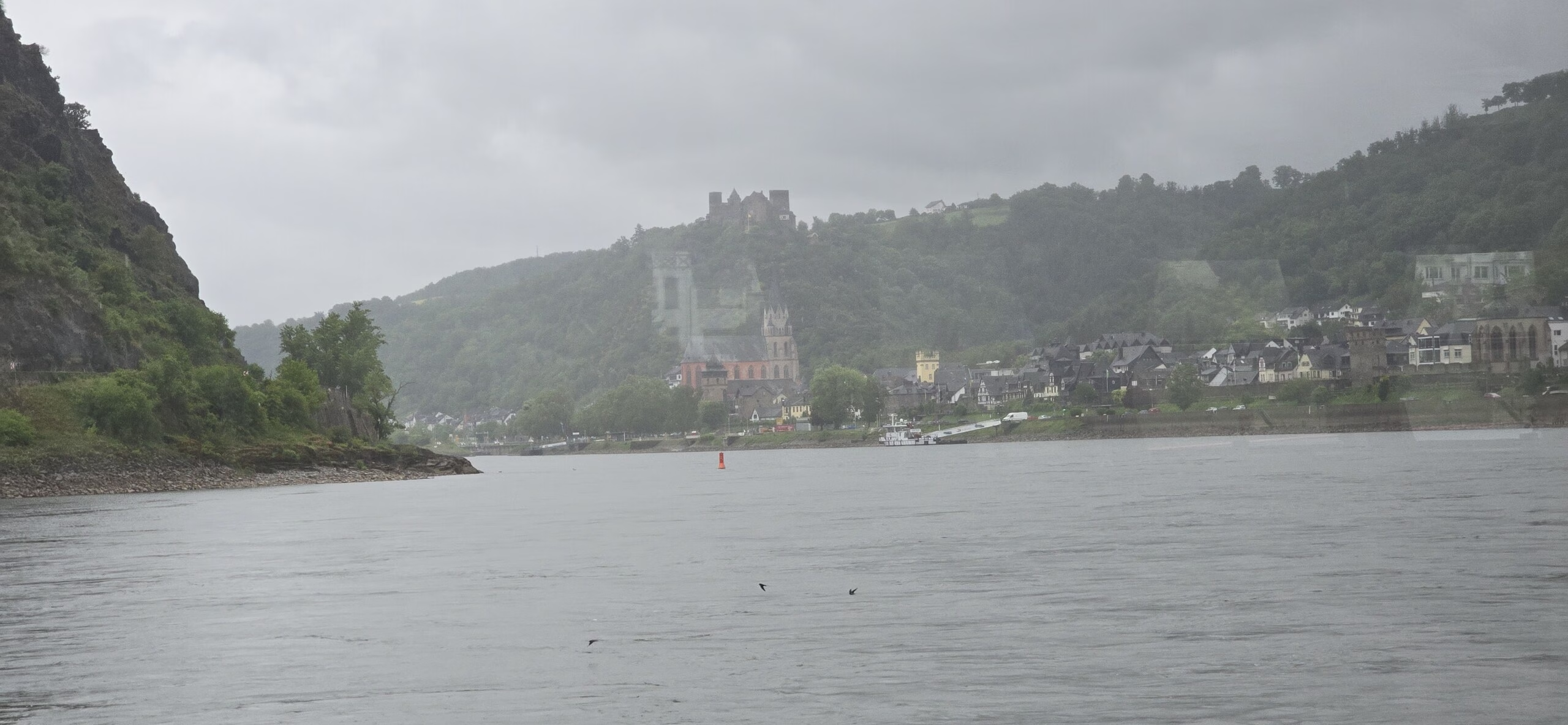
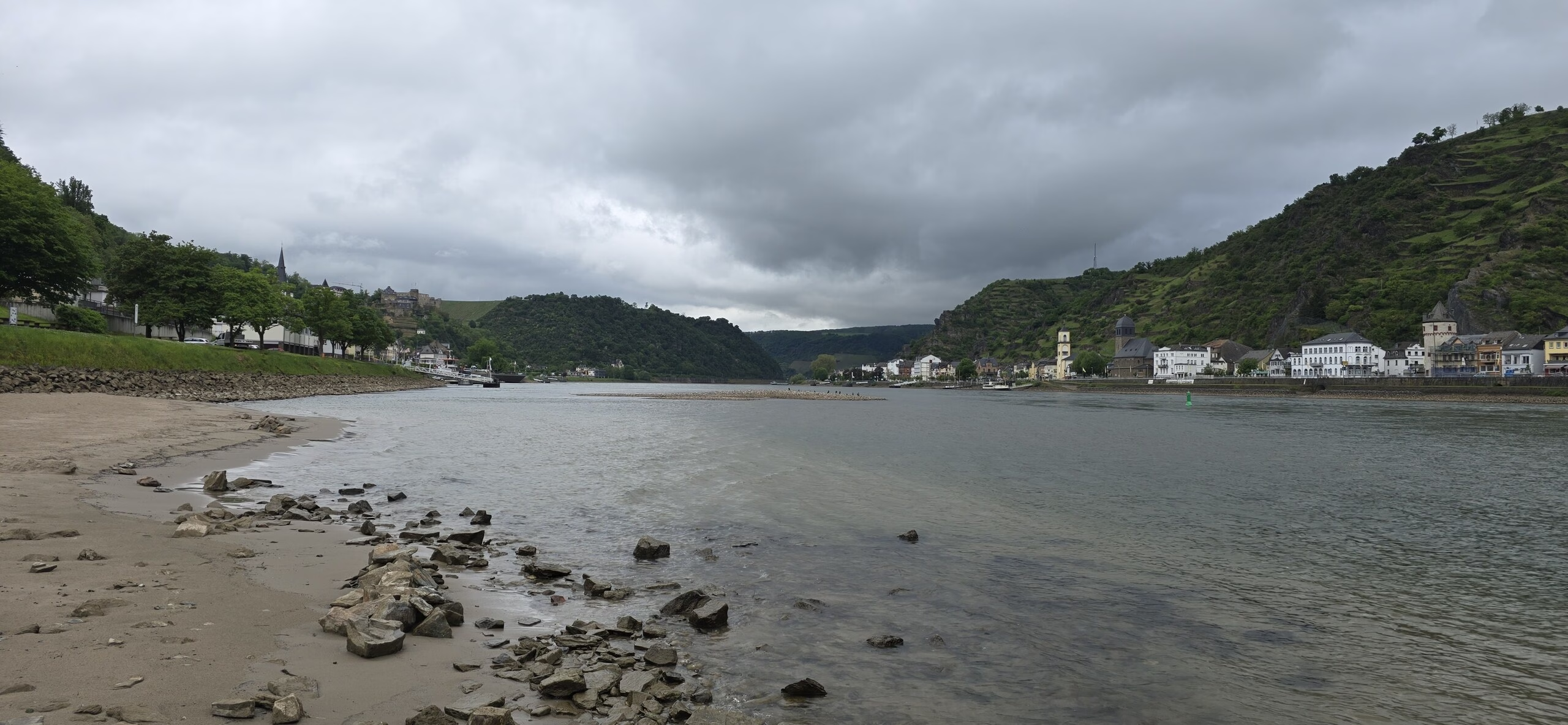
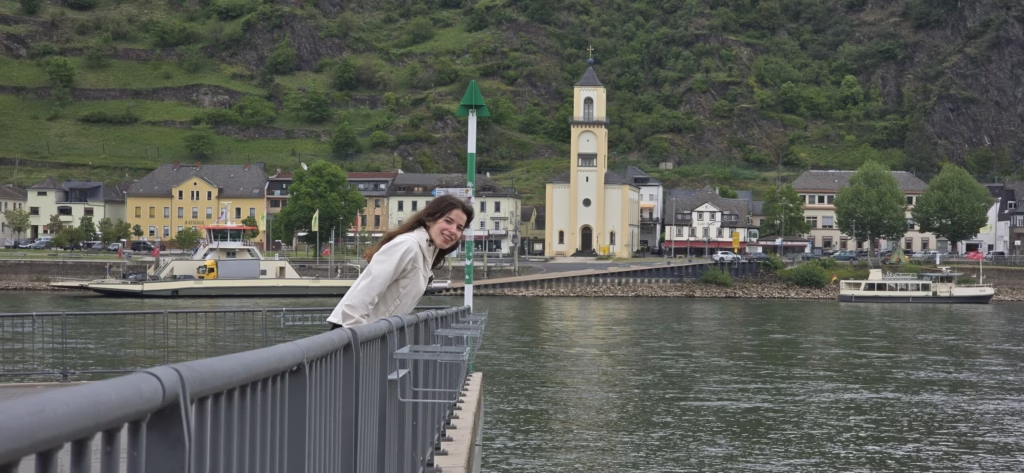
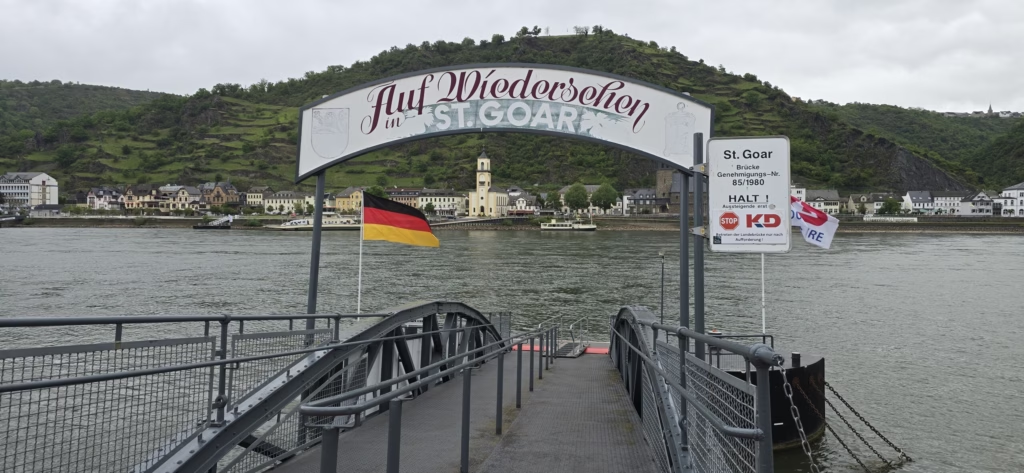
Walk the Rhine esplanade and the ferry pier. From the train station the waterfront promenade runs north toward the KD Anlegestelle and south past the Loreley VI ferry slip. The view across to St. Goarshausen and the Burg Katz silhouette on the ridge above is the orientation shot for the day. Level, stroller-sound, unhurried.
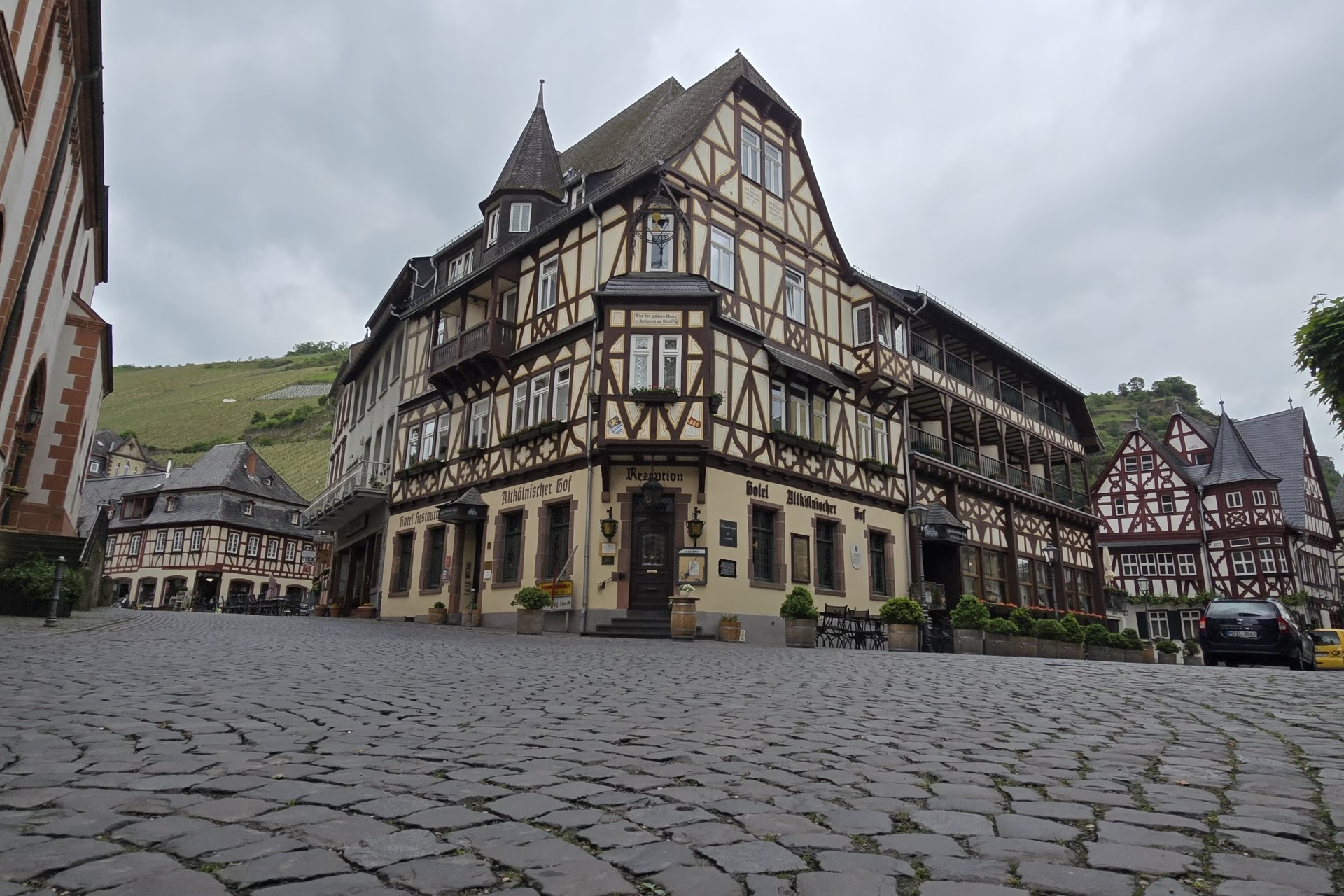
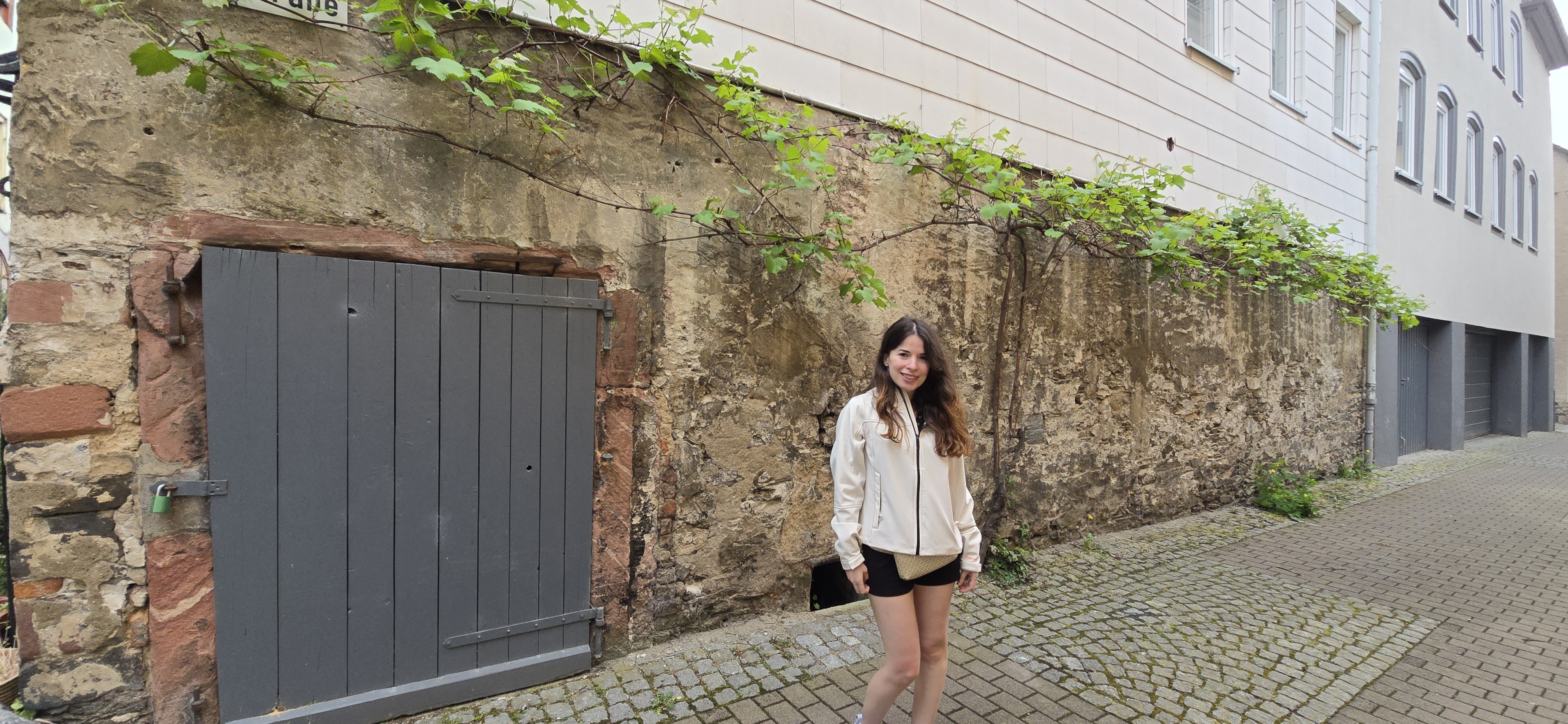
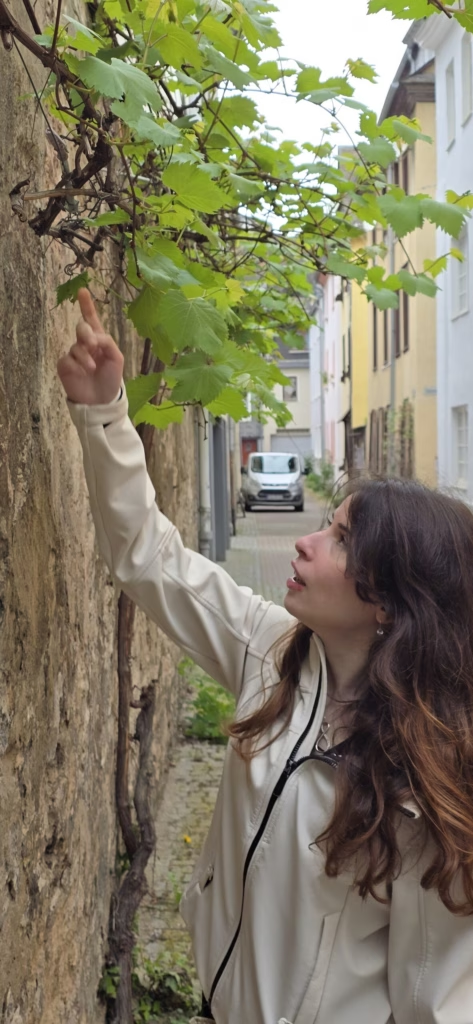
Slip into the back alleys. One block inland from the esplanade, the narrow cobblestone alleys (Burgstrasse, Grebelgasse, Schlossberg) are quieter and visibly older. Grape vines climb the cellar walls. Plan 20 to 30 minutes for a slow loop. The Marktplatz with the Evangelische Stiftskirche (built 1444 to 1469 over Saint Goar’s grave) anchors the inland edge.
Take the Loreley VI ferry across. As of May 2026: the foot-and-car ferry runs daily on a continuous schedule. Without a car, the round trip is worth the few euros for the views back at the St. Goar quay.
Pick a viewpoint above town, even if you skip the castle. The footpath up from the Altstadt toward Burg Rheinfels rewards even an abbreviated climb. We made it as far as the upper viewpoint in the early afternoon rain before the exposed castle approach stopped being appealing.
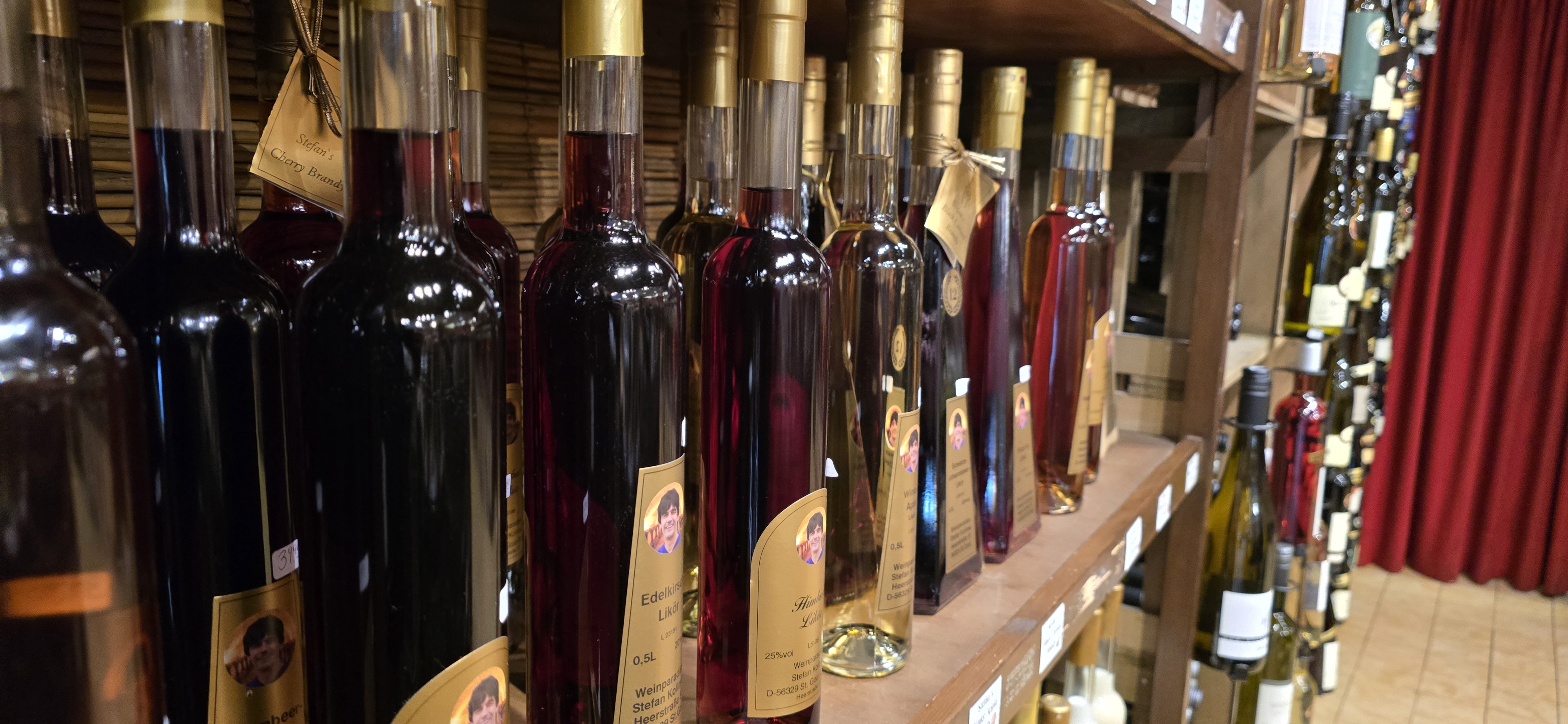
Visit a wine cellar or wine-and-gift shop. The Altstadt has several small cellars selling Mittelrhein Riesling. We bought a 0.2L Brombeerlikor from Stefans Wein- und Weihnachts-Paradies at Heerstrasse 57; see the food and drink section.
The lunch pivot: alla Fontana, zur Krone, Asia Kim
This is the part of the post that exists for anyone who has tried to anchor an anniversary lunch in a small German Rhine town in shoulder season. The plan was Italian at Ristorante alla Fontana, a long-running fixture in the Altstadt. We arrived a few minutes before our reservation window and were refused entry, no reason recorded. Plan B was Restaurant zur Krone, two minutes away across the Marktplatz. Locked. The handwritten sign on the door said Ruhetag, the weekly rest day that German Gaststatten take, usually Monday or Tuesday but sometimes (and this is the part that catches Americans the first time) Wednesday. The Google Business hours had not been updated.
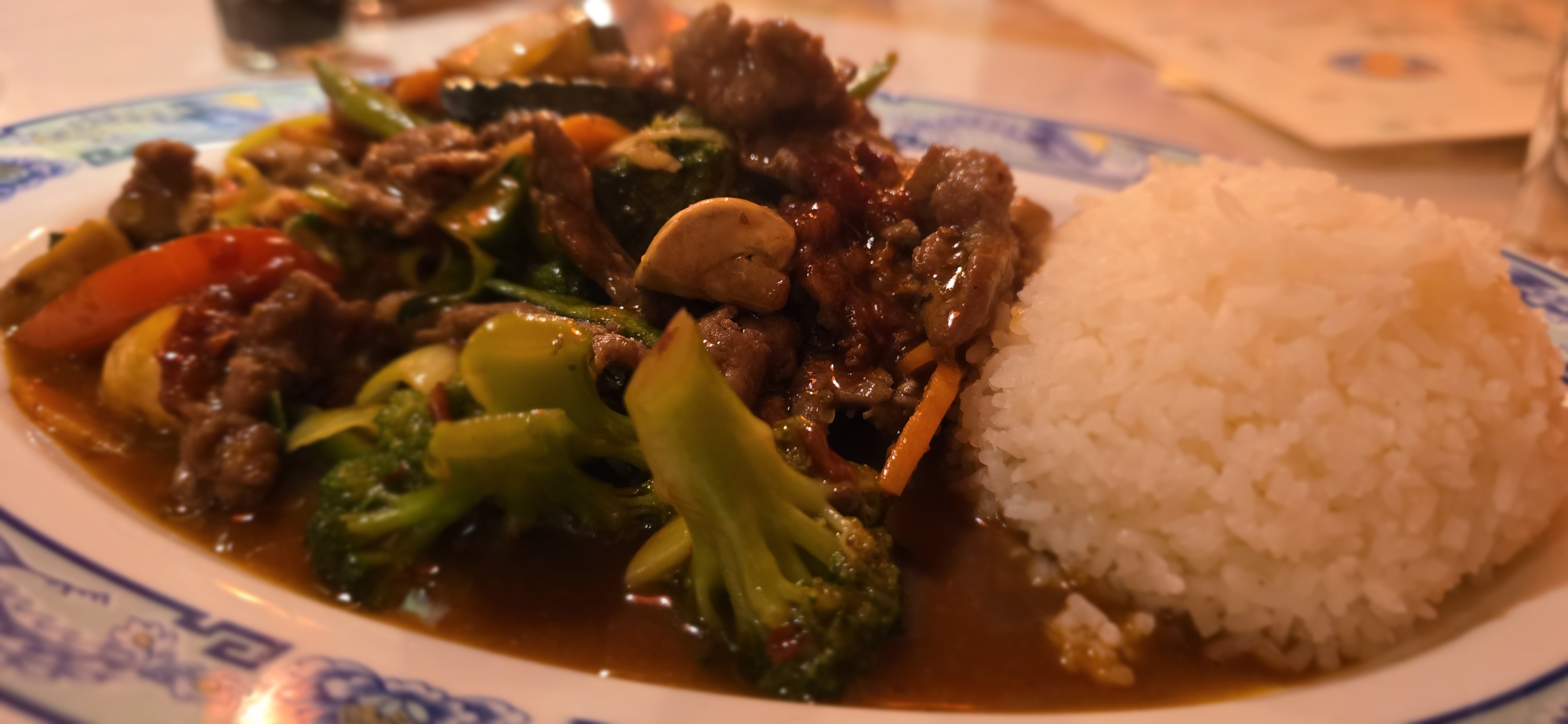
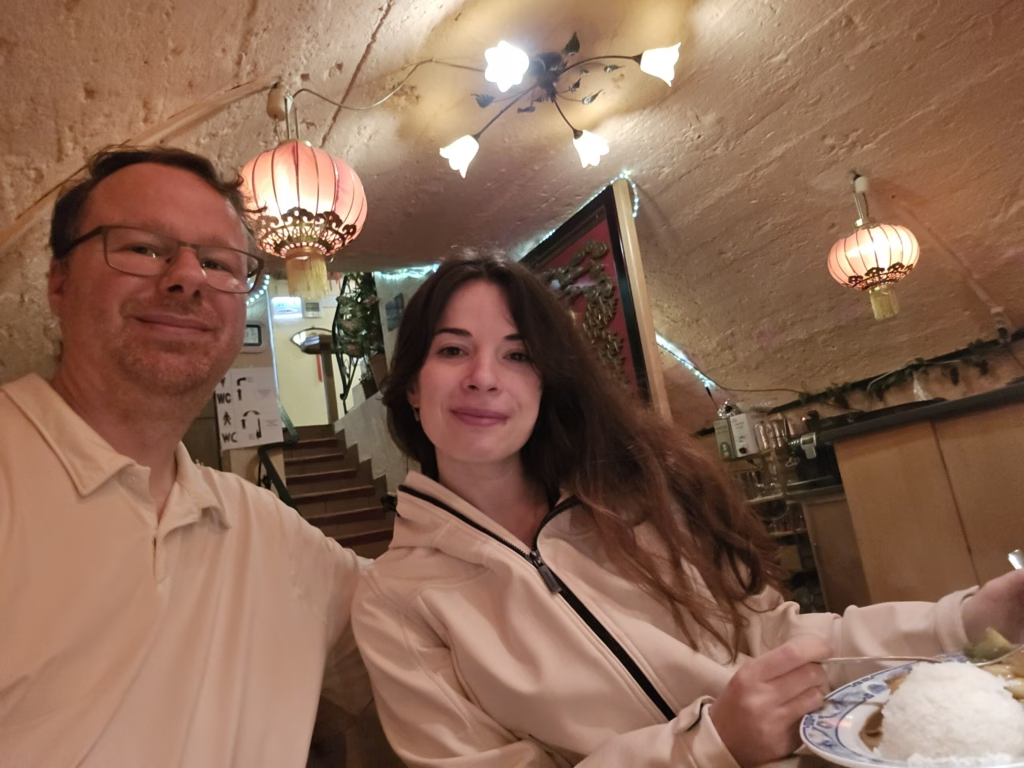
Plan C was Asia Kim in Grebelgasse, the narrow alley one block off the waterfront. The dining room is one flight down in a vaulted cellar with no windows, opening off a low cellar door at street level (phone +49 6741 980461). We had Beef-Broccoli around 12:57 and it was excellent. Chinese-Thai-Vietnamese menu, attentive service, mostly local Wednesday-lunch crowd. The absence of Rhine views meant we actually talked to each other for the first time that day rather than staring at the gorge.
The honest editorial note: small German tourist-town restaurants often post Ruhetag on the door without updating Google or their website, especially in shoulder season. The fix is one phone call the day before. Have a third option you have actually looked up, not the first thing the map produces.
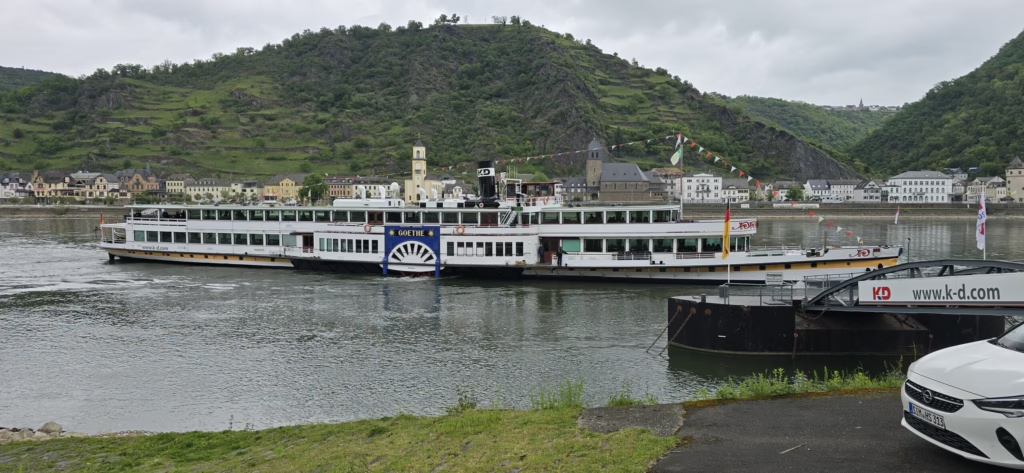
There is a hidden third beat to the lunch story. At 12:14, before the alla Fontana refusal, we walked down to the KD Anlegestelle just to look at the river. The KD Goethe was moored at the dock, the rain had not started, and we took photos from the quay without yet buying anything or going aboard anything. We did not yet know that three hours later, after the lunch had collapsed twice and the castle plan had been called off, we would be back at this same dock buying cruise tickets at the on-site booth around 15:15 and boarding a different southbound boat at 16:10 in heavier weather.
Burg Rheinfels: what we saw from below
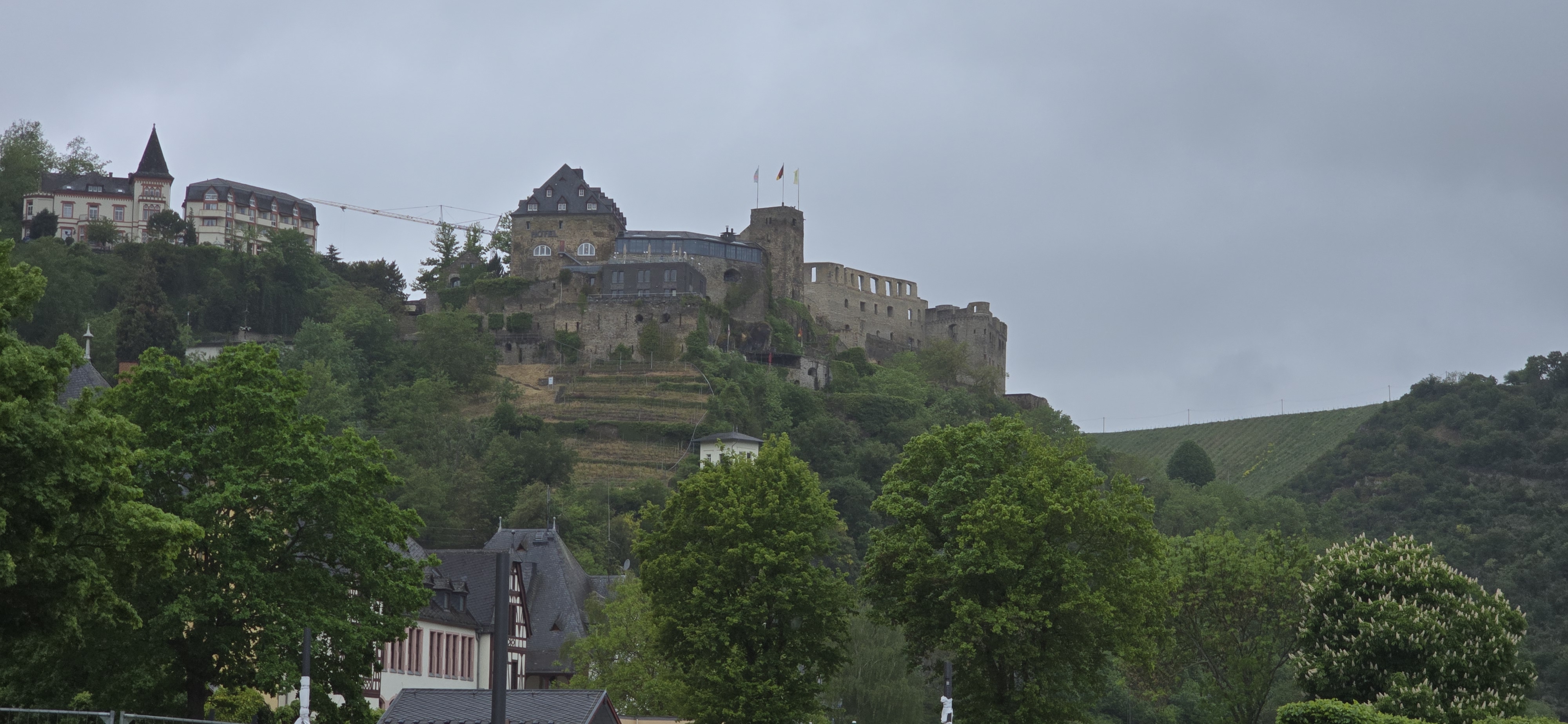
We did not climb to Burg Rheinfels on this trip. The rain decision was honest, the castle deserves better light, and the exposed walls and unprotected cellar circuit are not what you want to drag a partner through on an anniversary. This post puts down a marker that the next trip should reach the gate. What follows is for anyone who can climb on a day with better weather.
Burg Rheinfels sits on a steep south-facing slope above St. Goar and is the largest castle ruin in the Mittelrhein corridor between Koblenz and Bingen.[3] About three-quarters of the surviving ruin dates to the mid-17th century expansion, when the Hessen landgraves turned the medieval fortress into one of the most heavily fortified positions on the German Rhine. The Grosser Keller (Great Cellar) is the set piece: a free-standing vaulted cellar 24 meters long and roughly 16 meters wide and tall, described by Wikipedia DE as “der grosste freistehende Gewolbekeller in Europa” (the largest free-standing vaulted cellar in Europe).[3] The casemate tunnel system, the underground galleries, and the views from the upper terraces are what visitors remember.
The dates that matter: 1479 transition from Katzenelnbogen to the Hessen Landgraves; 1692 successful defense against the French in the Pfalzischer Erbfolgekrieg (Nine Years’ War), while every other major Rhine castle was being blown up by Melac; and the French Revolutionary demolition of 1796 to 1797 that finally took it down.[3]
Practical info for readers who do go. As of May 2026: Burg Rheinfels is open daily 09:00 to 18:00 from April through November (last entry 17:00), with weekend-only hours in winter; admission 6.00 euros adult, 4.50 euros students, 3.00 euros children 6-14, 13 euros family.[1] On weekends and holidays, guided tours run at 11:00, 13:00, and 15:00, included with the ticket.[1]
The most efficient way up is Bus 699, the Rheinfels-Express, a small shuttle from the town center to the castle gate during the main season (May to October). Phone the St. Goar tourist office (06741 383) for the current schedule. The walk up takes 25 to 30 minutes on a paved access road with a steady grade; the descent on a rainy day is the part that becomes unappealing first.
Where to eat and drink
Asia Kim (Grebelgasse, +49 6741 980461). Basement vaulted-cellar dining room, no windows, Chinese-Thai-Vietnamese menu, cash and card. The Beef-Broccoli was excellent and the room had a steady local lunch crowd on a Wednesday.
Ristorante alla Fontana. The long-running Italian fixture in the Altstadt. We were refused entry on a Wednesday around 12:30 without explanation. Worth a phone call ahead.
Restaurant zur Krone. Closed for Ruhetag on the Wednesday we visited; Google hours not updated. Phone-verify the day before.
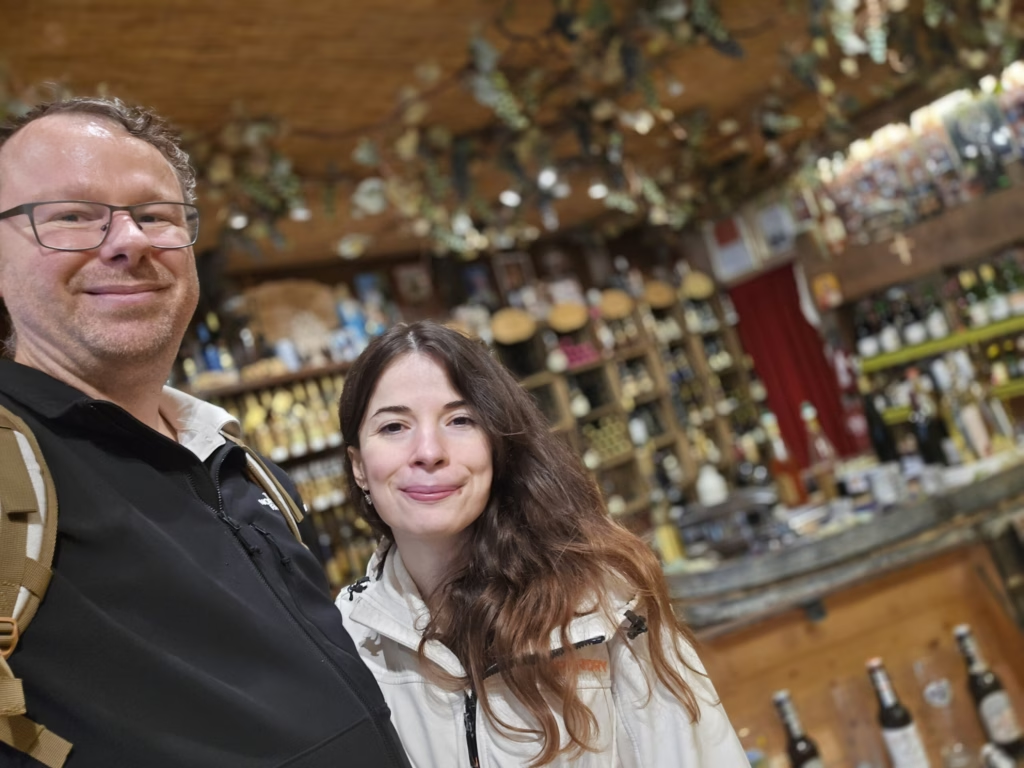
Stefans Wein- und Weihnachts-Paradies at Heerstrasse 57. Wine and seasonal-gift shop run by the Kollmar family for over twenty years; the family claims four centuries of regional winemaking heritage. We bought a 0.2L Brombeerlikor (blackberry liqueur) for 29 euros, wrapped in white paper, and brought it home as a memento of the day rather than opening it on the cruise.
For Riesling tasting from the slate vineyards above town, several small Weinkeller operate in the back alleys with irregular hours; the tourist office (06741 383) keeps a current list.
Practical tips
A St Goar day trip works best when these logistics fall into place before lunch implodes.
- Train arrival from Bingen Stadt covers Bacharach as a free stopover. RB26 from Bingen Stadt to St. Goar takes about 35 minutes. As of May 2026: a single DB Flexpreis ticket (21.80 euros for two adults, Bingen Stadt to St. Goar) covers any intermediate stop on the route at no extra cost. Sparpreis (saver) tickets are bound to one train and do not allow it; book a Flexpreis ticket.
- The KD booth at the Anlegestelle sells a 20% discount that the website does not. KD Rhine grants 20% off regular fares for holders of a same-day DB rail ticket, a BahnCard, a Bahn-Pass, or a Deutschlandticket, redeemable in person at any KD office on presentation of the ticket. Not available online, not flagged on the English-language KD FAQ at the top level.[6] We saved 20 percent on the St. Goar to Bingen southbound at the Anlegestelle booth.
- Phone-verify Ruhetag the day before. Small German Rhine-town restaurants in shoulder season often post Ruhetag without updating Google. One call saves the lunch pivot.
- Burg Rheinfels needs settled weather. The castle is largely an exposed ruin. As of May 2026: daily 09:00 to 18:00 April through November.[1] The climb earns its keep on a dry day.
- The KD 16:10 was the last southbound on a Wednesday in early May. As of May 2026: the gorge southbound at the end of the afternoon has a hard back stop; confirm the day’s last departure with the KD booth.
- Cash and card both work in most Altstadt shops and at the KD booth; carry 40 to 60 euros in coins for safety.
- Language. German throughout, with English available at the tourist office, KD booth, and Rheinfels ticket counter.
From the visit
Sources
- Burg Rheinfels official site, Visit page. burg-rheinfels.com/en/visit/ (retrieved 2026-05-18).
- Sankt Goar, Wikipedia DE. de.wikipedia.org/wiki/St._Goar (retrieved 2026-05-18).
- Burg Rheinfels, Wikipedia DE. de.wikipedia.org/wiki/Burg_Rheinfels (retrieved 2026-05-18).
- Burg Katz (Neukatzenelnbogen), Wikipedia DE. de.wikipedia.org/wiki/Burg_Katz (retrieved 2026-05-18).
- Upper Middle Rhine Valley (Site 1066), UNESCO World Heritage Centre. whc.unesco.org/en/list/1066/ (retrieved 2026-05-18).
- KD Rhine, FAQ General (DB / BahnCard / Bahn-Pass 20% discount at KD Office). k-d.com/en/faq-help/faq-general/ (retrieved 2026-05-18).
- Burg Maus (Peterseck), Wikipedia DE. de.wikipedia.org/wiki/Burg_Maus (retrieved 2026-05-18).