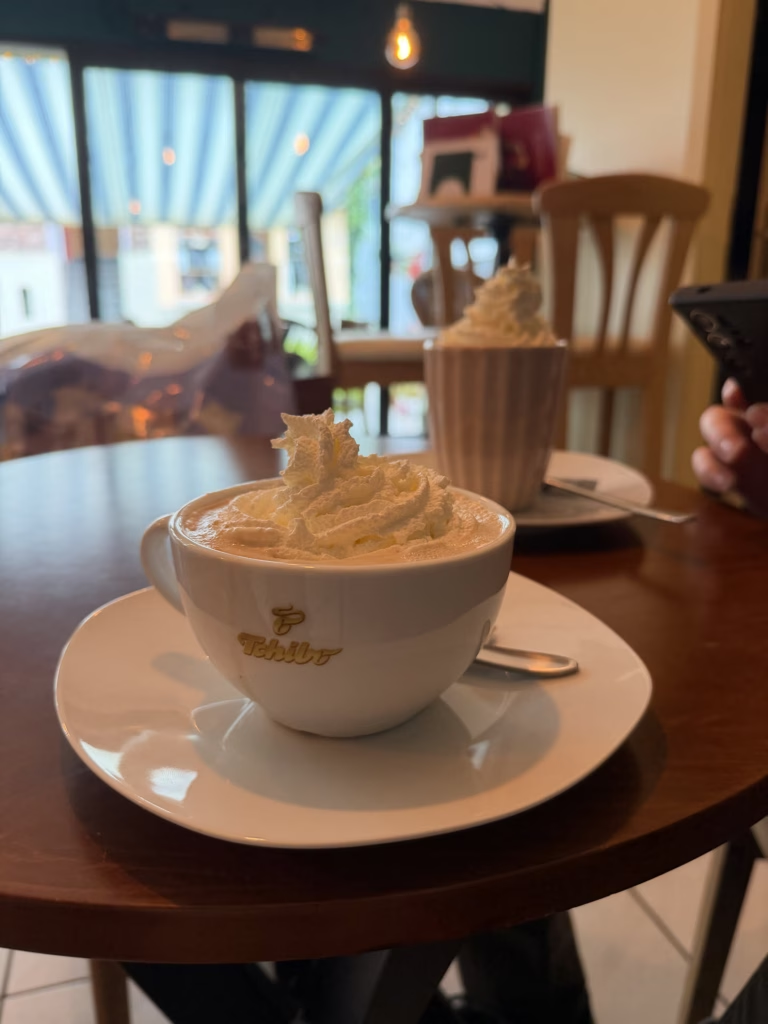
Our second wedding anniversary was a Wednesday in May, and we had the day planned to the minute. Coffee at Backhaus Lüning in Bingen at eight. RB26 to Bacharach. Train south to St. Goar. Italian lunch at alla Fontana. Bus #699 up to Burg Rheinfels. KD cruise home around half past three. Forecast: partly cloudy. The forecast was technically true for the first half of the day. What followed was the kind of day where everything that broke turned out to be the better story, and the only reason we got home with the day intact was the surprise I had been saving for Samira since breakfast.
This is the human-arc post in our Rhine anniversary series. The practical breakdowns live in Bingen as Rhine-day base camp, Bacharach in half a morning, St. Goar in rain, and the KD cruise St. Goar to Bingen. This is the story of that Rhine anniversary trip, told in the order it actually happened.
A day planned to the minute
We are not normally itinerary people. Most of our Pfalz day trips run on a single anchor (a castle, a vineyard, a Wanderparkplatz) with the rest left loose. The anniversary was different. Two years married, a clear date, a 70-minute drive from Kaiserslautern to a stretch of the Rhine we had not properly walked together, and a forecast that suggested we could plan tightly. So we did. The alla Fontana reservation form even included a §280 BGB no-show clause. An itinerary that exists to be admired, not survived.
What the morning got right
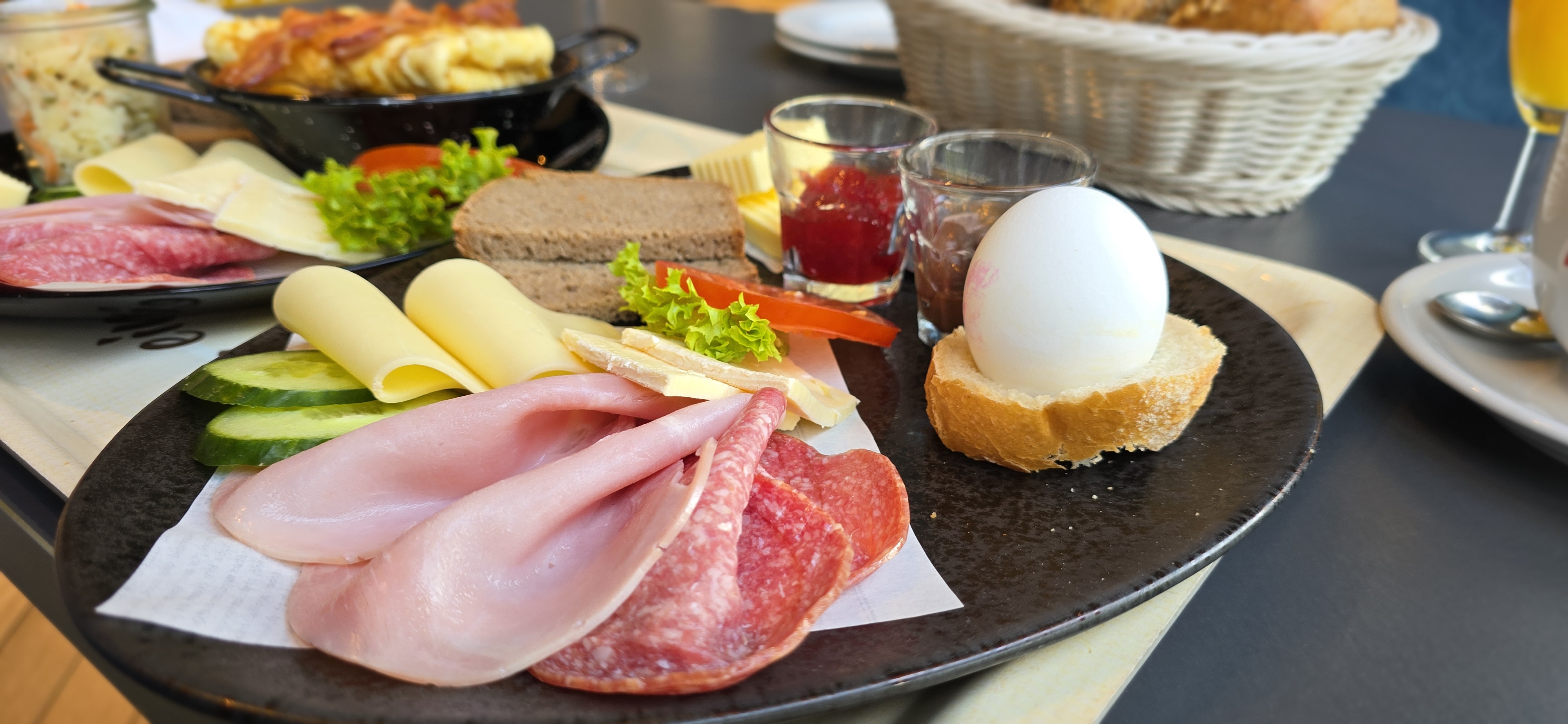
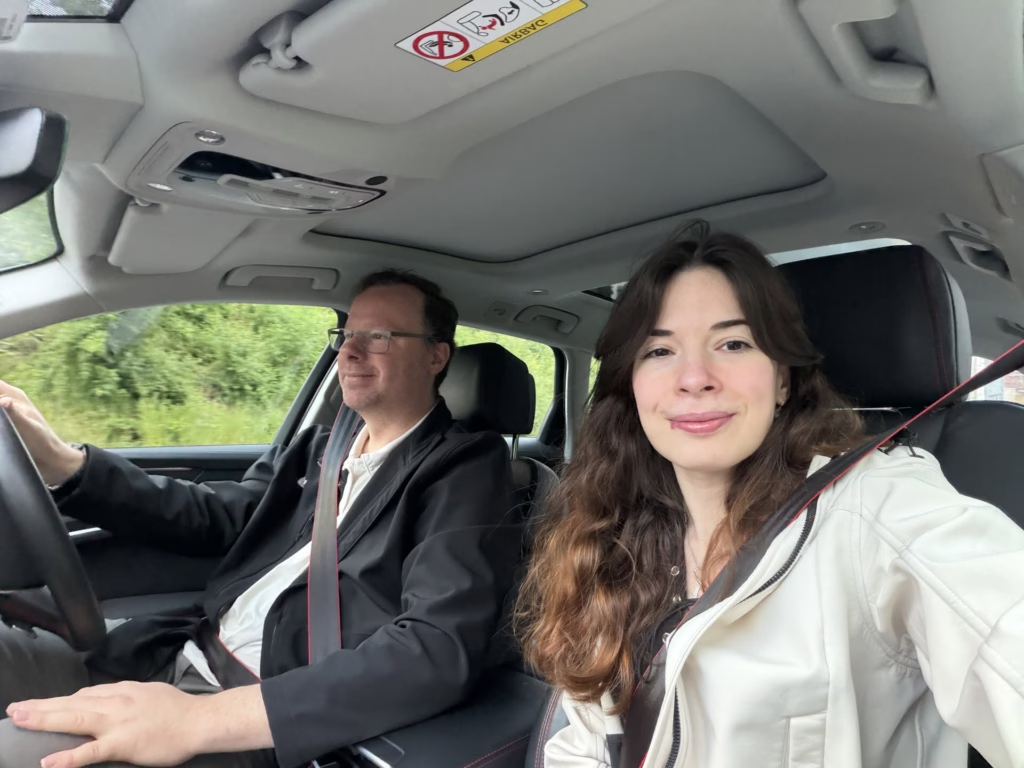
We left Kaiserslautern in the dark and were sitting at Backhaus Lüning in central Bingen by 08:01, the hour at which a careful day still feels possible. Hot coffee, proper bread, a quiet corner table, two people not in a hurry yet.
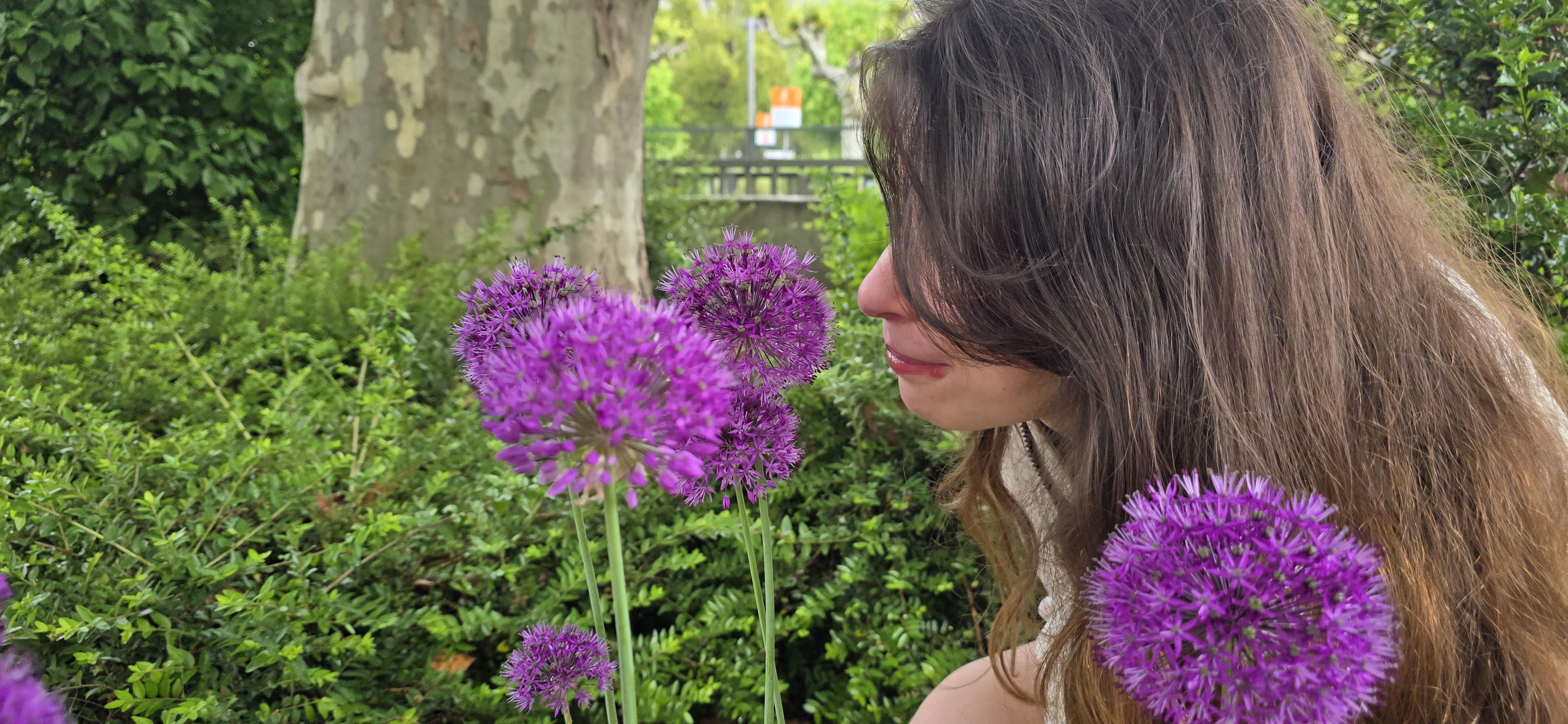
From the bakery we walked the Kulturufer (the cultural waterfront promenade along the Bingen Rhine bank). May had pushed the alliums into bloom, the purple-globe ones that look engineered rather than grown, and Samira stopped to photograph them in the soft early light while the gorge opened up behind her. The Mäuseturm sat on its island. Burg Ehrenfels was in ruins on the far bank. The whole UNESCO gorge frame[1] was waiting for us at 08:50 on a Wednesday, and we had it almost to ourselves.
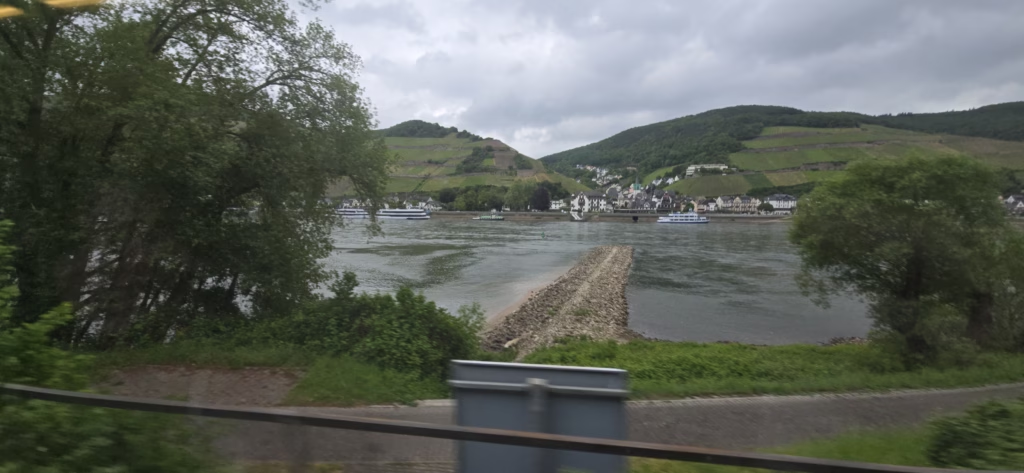
We caught the RB26 from Bingen Stadt (not Bingen Hauptbahnhof, which is in Bingerbrück on the wrong side of town; the Bingen base-camp post covers this trap). The next part of the morning belonged to Bacharach.
Bacharach in the half-morning
Bacharach is twenty-two kilometers north of Bingen on the left bank, the kind of half-timbered Mittelrhein wine town that talks more about itself than it really needs to. Vineyard slopes on both sides of the river, a town wall you can walk up onto, Burg Stahleck on the ridge above, a thousand-year-old Romanesque church in the middle. The RB26 took eighteen minutes from Bingen Stadt and put us on the platform at 09:57 with the morning light still soft and the rain that would eventually find us still parked somewhere over Belgium. The train route runs right along the river bank; for the last few kilometers in we sat at the window and watched the gorge open up.
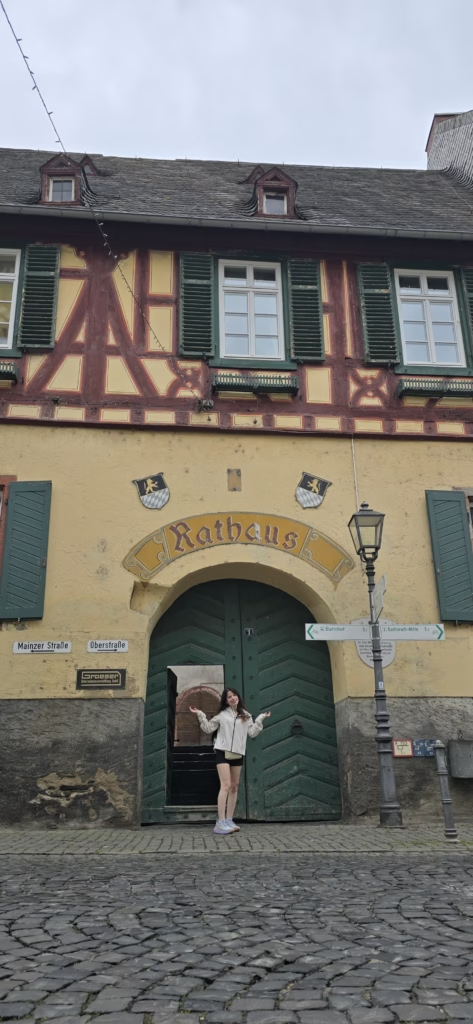
We walked Oberstraße from the station into the Altstadt with no particular plan, the way you walk through a half-timbered German wine town in May when you are not in a hurry. Most of the shops were still opening. The cobbles were damp from overnight; the painted Rathaus on the corner of Oberstraße and Marktplatz read like the cover of a guidebook in the morning light, yellow and red half-timbering and a green entrance arch with a curling Rathaus signboard above it. We slowed down for the buildings the way you slow down for someone telling you a long story they are halfway through.
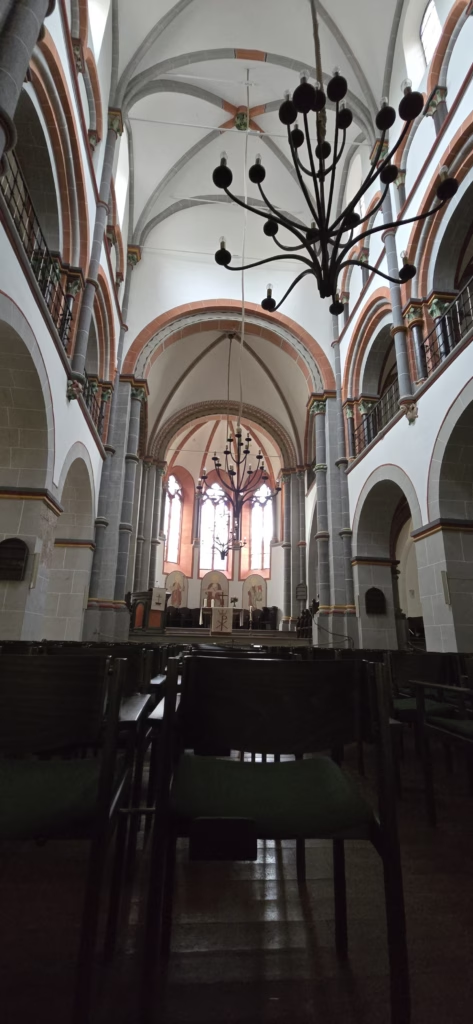
From the Marktplatz we cut into St. Peter Kirche, the late-Romanesque parish church on Oberstraße that has been the load-bearing piece of the Bacharach skyline since the early 13th century. The interior is the kind of dim, cool, stone-and-plaster space that makes you stop talking the moment you walk in: alternating bands of red sandstone and white plaster on the round-arched arcades, a long central nave running toward the altar, a wrought-iron-and-bulb chandelier hanging mid-nave. Samira walked the side aisles; I stood at the back and just looked at the geometry of the arches for a minute longer than was probably interesting to anyone watching.
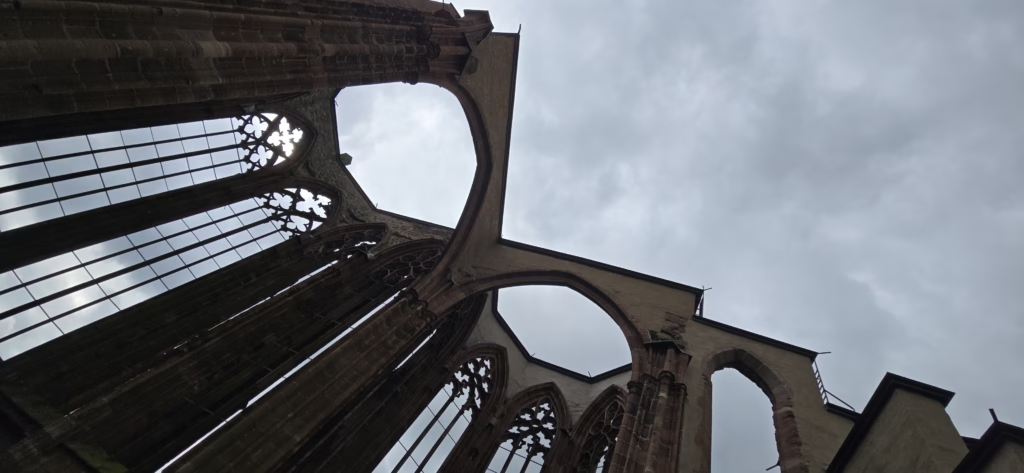
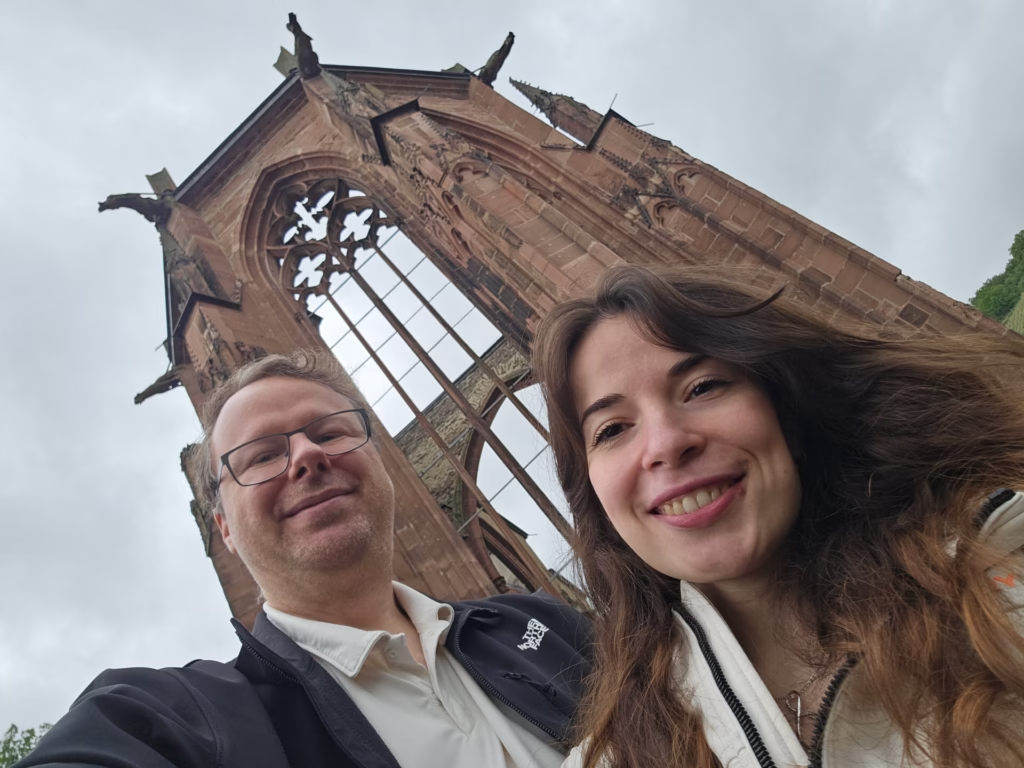
From the church we cut up the wall path that climbs toward the Wernerkapelle, the roofless Gothic chapel ruin that sits as the town’s most photographed silhouette on the hillside above Oberstraße. The chapel was begun shortly after 1287 as a pilgrimage destination, never finished through the Black Death and the Hussite Wars, and left permanently roofless when the 1689 explosion at Burg Stahleck above rained falling debris down through what was left of the vaults. What stands today is the eastern apse and a partial nave wall, both pure Gothic tracery, sandstone arches framing nothing but sky. We climbed inside the ruin for a few minutes and stood under the rose-window opening looking up.
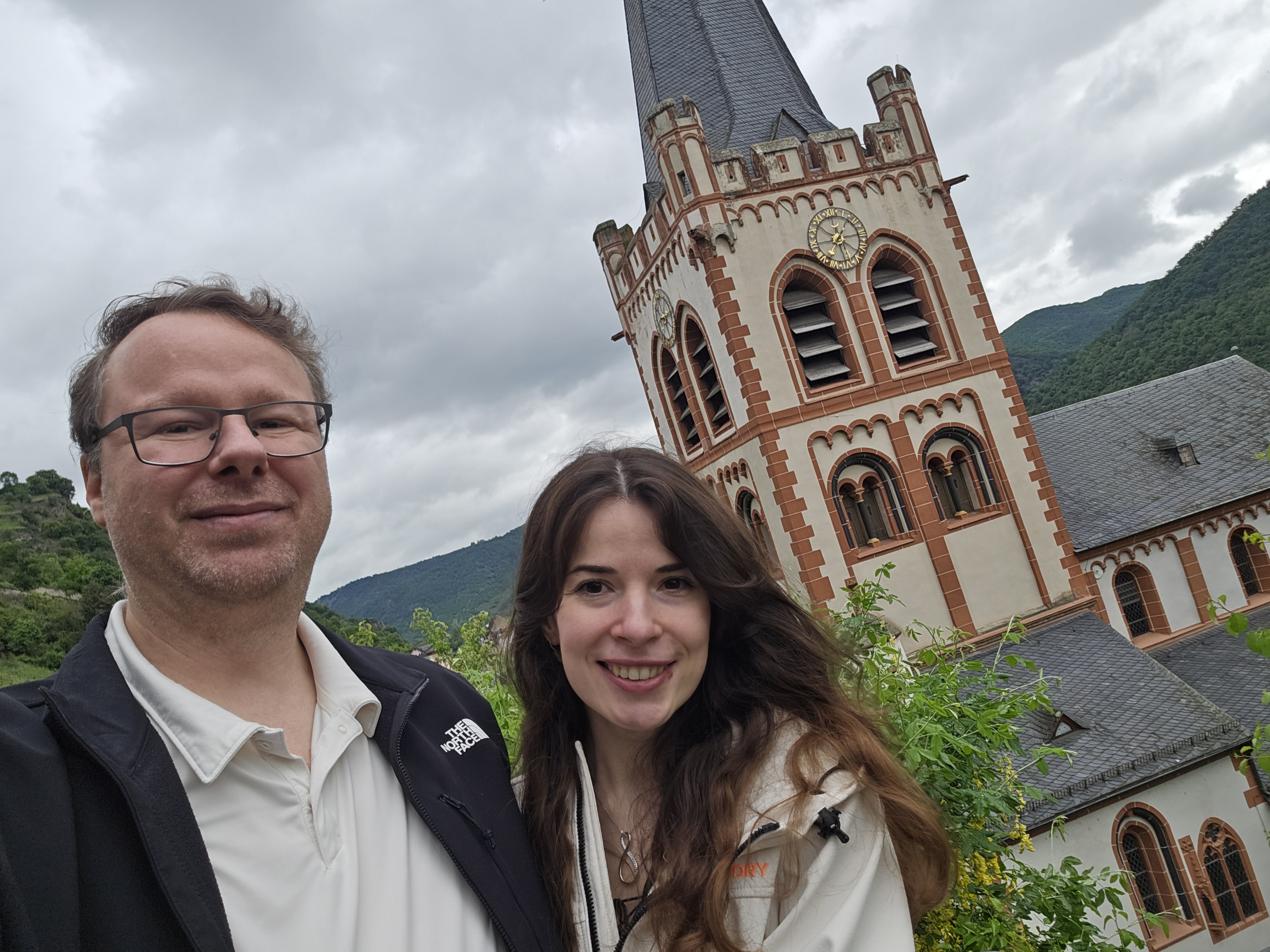
From the chapel we kept climbing a few minutes longer to the bend in the path where the ridge first opens up. We did not go the rest of the way to Burg Stahleck (the youth hostel above the town that was a 12th-century imperial castle before the French blew it up in 1689); we stopped at the viewpoint and took the rooftop selfie. The town opens out beneath you from that angle: slate roofs in shingles, the church tower below, the river behind, the vineyard slopes climbing.
By 10:45 we were back at the platform and on the RB26 north for the eighteen-minute run to St. Goar. The morning had stayed kind through Bacharach. We did not yet know this was the high-water mark.
Stepping off in St. Goar
St. Goar sits twenty kilometers north of Bacharach on the left bank, at the foot of the Loreley reach of the gorge. The town and its right-bank twin, St. Goarshausen, face each other across the river: Burg Katz on the right-bank ridge, Burg Rheinfels above the left-bank town, the Loreley cliff just upstream. We stepped off the platform at 11:07 with forty-five minutes before our reservation and walked Heerstrasse east toward the river. The Altstadt was just opening; a soft rain that would become a steady one later was still only suggested in the cobbles. Neither of us had been here before, and at street level St. Goar felt smaller and more tucked-in than Bacharach had a few hours earlier.
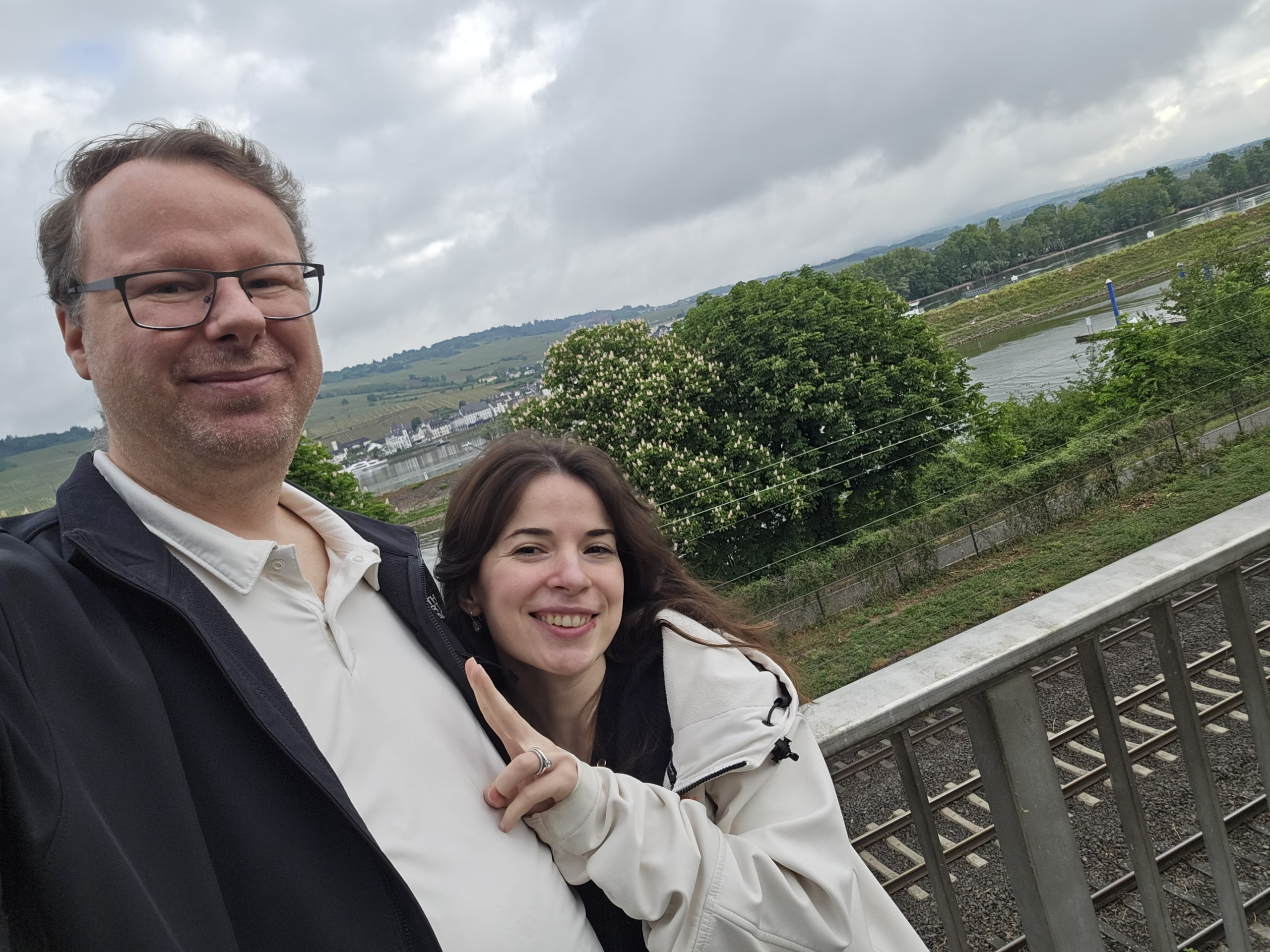
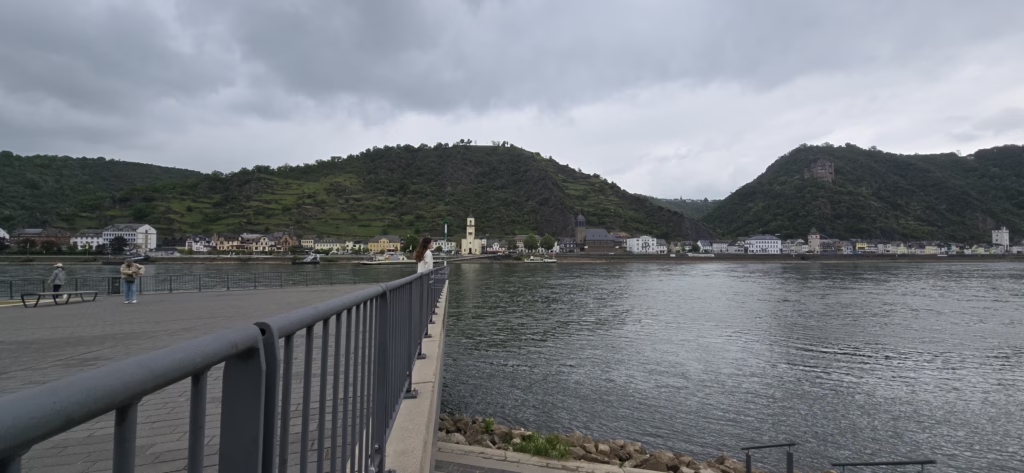
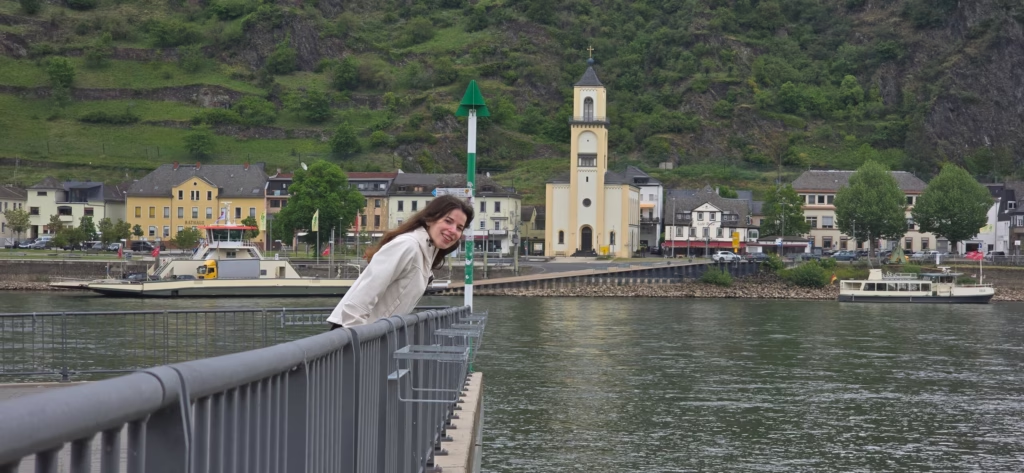
The walk from the station ends at the riverfront promenade. The Rhine is wider at St. Goar than at Bacharach, and the gorge cliffs are more dramatic; the Loreley wall climbs almost straight up from the water on the right bank, and Burg Katz sits perched on the ridge above St. Goarshausen looking like the postcard it became. Samira walked ahead to the rail and stood there for a minute, the way she does when a river opens up in front of her. The Rhine has run through almost every long drive we have taken together since we met. We have crossed it in both directions, walked its banks from the Loreley to the Lake, watched it from train windows and ferry decks and now and then from a bridge that someone braver than us was riding a bicycle across. She turned, smiled, looked back at the water; I stayed a few steps behind and took the photo. The one that says: yes, here is the river again.
The lunch that didn’t happen
We walked to alla Fontana at 11:50, ten minutes ahead of our 12:00 reservation, expecting to be seated. The door was locked. The lights were off. No one was inside. We waited on the street until 12:15, testing the handle once more in case the kitchen ran on a leisurely Mediterranean Wednesday rhythm; it did not. We never saw a host. The reservation form (the one with the §280 BGB clause) had been submitted four days earlier with full names and an anniversary note; neither Google Maps nor alla Fontana’s own reservation site had flagged any closure. Five minutes after giving up we were standing in front of Restaurant zur Krone, the obvious backup about a block away down an alley, and the sign on its door said Ruhetag. Wednesday Ruhetag. No online update. Just the sign, in German, where the door handle was. Walking back past alla Fontana toward Heerstrasse, we finally saw why we had missed it the first time: its Ruhetag sign was propped on the steps railing at an angle that made it nearly invisible from the street, German-only, easy to walk past twice.
The Ruhetag is the weekly rest day a German restaurant takes. The note for next time, and a note worth leaving here for any KMC family planning a similar day: call to confirm the reservation by phone the day before, even when the restaurant accepts an online booking. The booking platform does not always know about the Ruhetag, and the Ruhetag wins.
What followed was about twenty minutes of the wandering walk you take in a small German town on a weekday when the plan has stopped working. We turned off Heerstrasse onto Grebelgasse and saw a stairwell going down to a basement and a sign that said Asia Kim. No windows, no Rhine view. We went in, glad to be out of the rain.
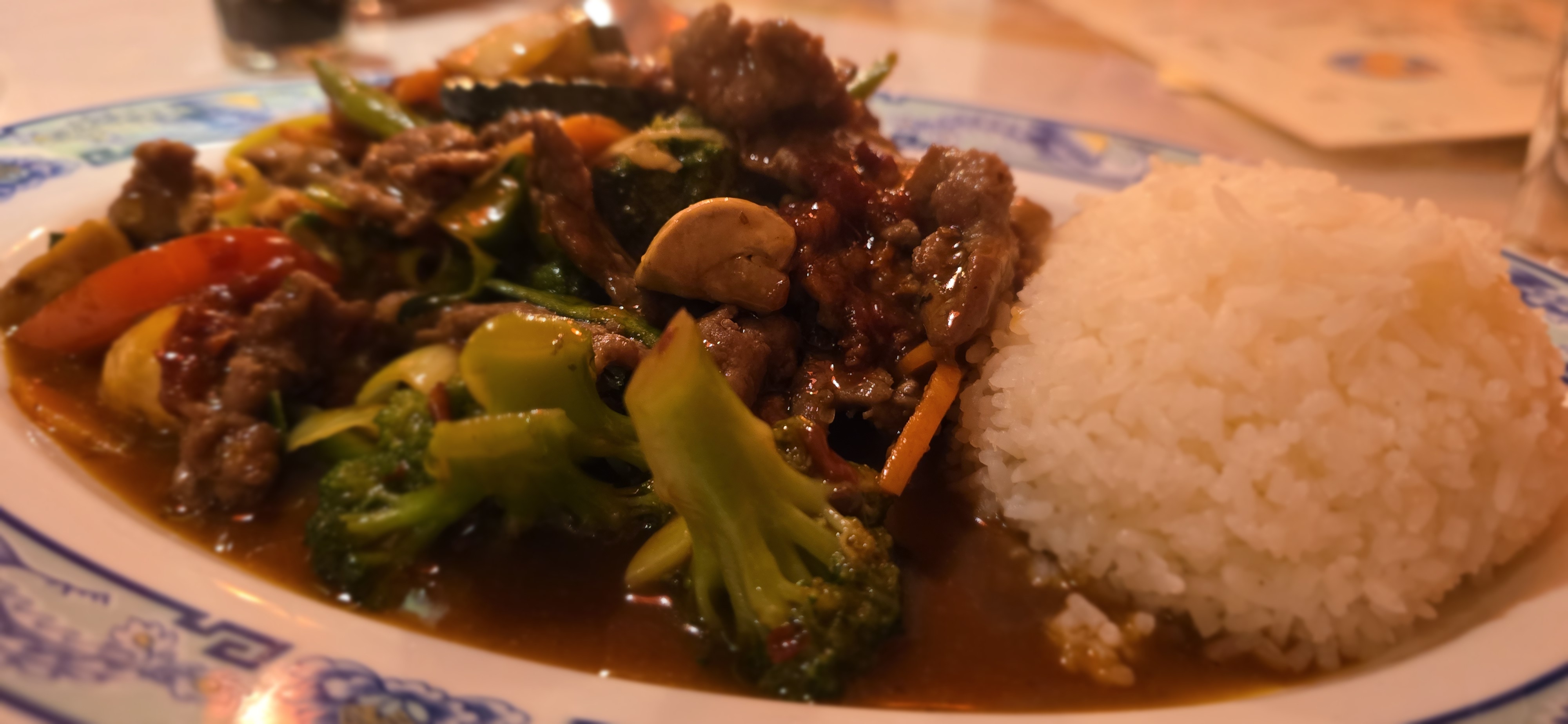
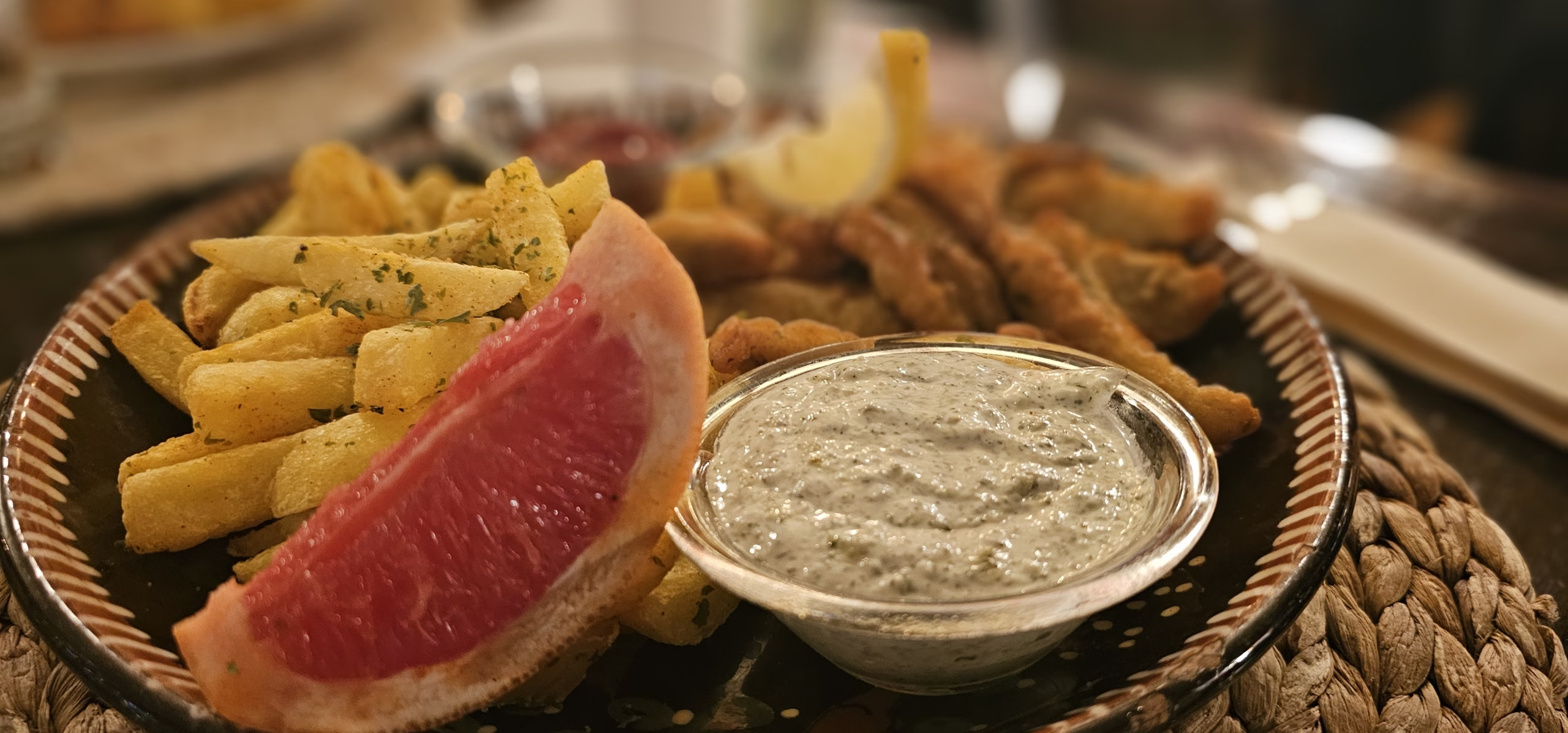
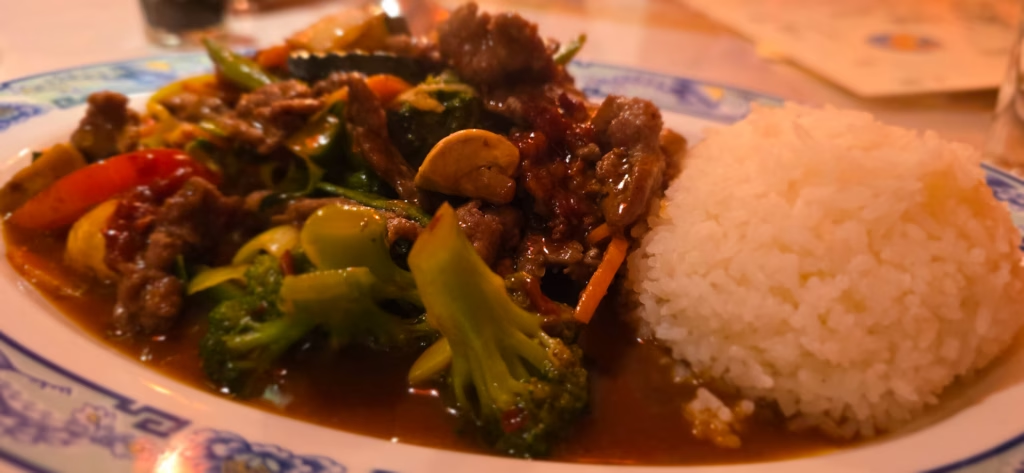
The Beef-Broccoli was excellent. Service was attentive and warm. There was no view. There was no window. The basement was lit by paper lanterns, and the warm room out of the rain was exactly what the day wanted by that point. We talked across the table the way you do when the food is good and you are both glad to be inside.
The Goethe at noon
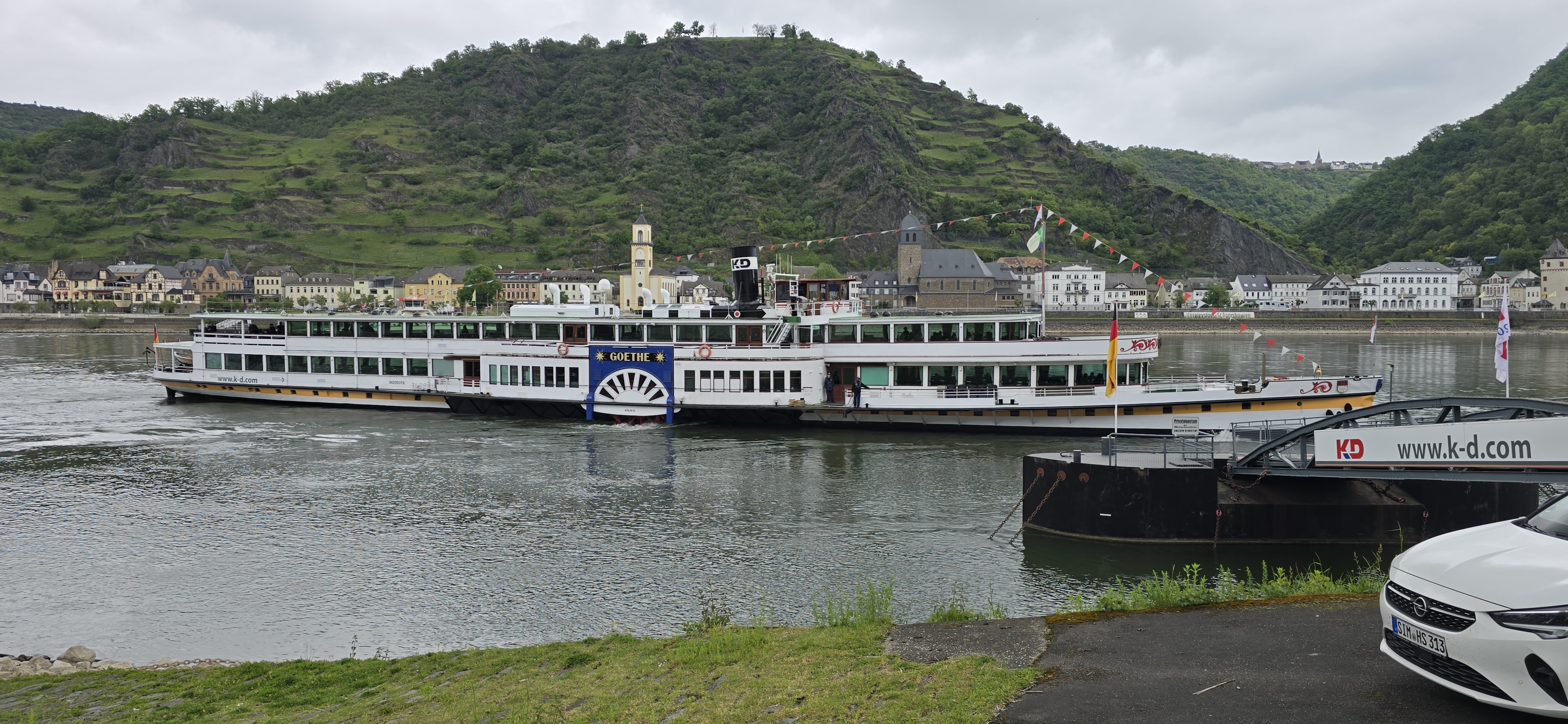
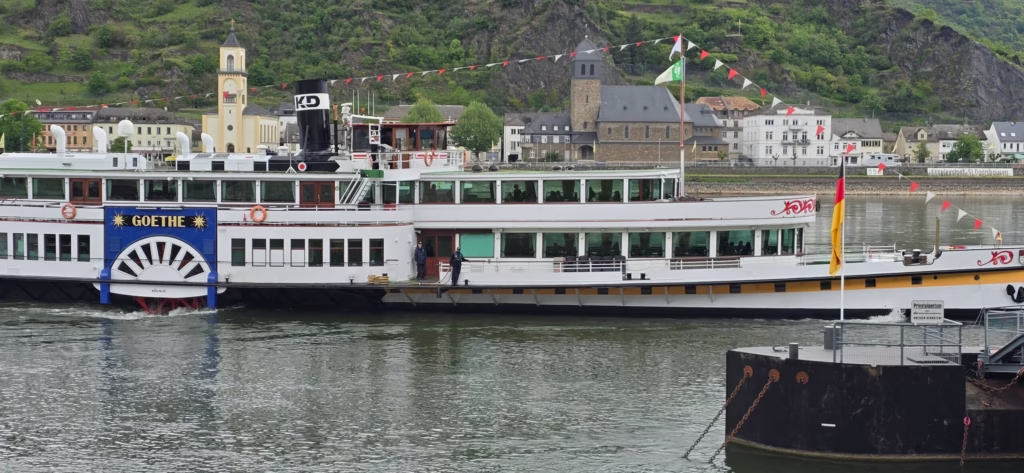
Earlier, at 12:14, before the lunch collapse had started, we were walking the St. Goar waterfront trying to decide where to eat. The KD Goethe was moored at the Anlegestelle. We took a photo of the boat from across the quay because it is the kind of vessel you stop and look at: an Art Deco paddle steamer in white and black, big side-wheels, the name Goethe across the bow in painted capitals. We did not yet know that the river return was the part of the day we would remember.
What rain does to a castle plan
The rain set in by half past one. Not driving rain, just the slow soaking Rhine-valley rain that does not let up. The plan had said: catch Bus #699 (the seasonal Rheinfels-Express shuttle) at the Marktplatz around two, walk Burg Rheinfels for ninety minutes, ride back down in time for the 15:30 KD. The castle is an exposed ruin on a hill above the town. We walked the lower path as far as a viewpoint above the upper streets, looked across at the Rheinfels silhouette in the rain, and turned around.
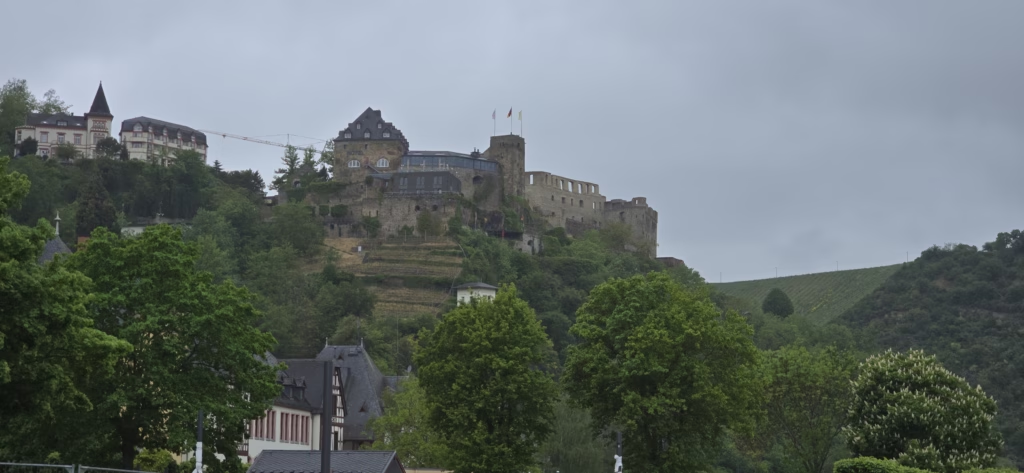
We did not get to the castle. The St. Goar post has what we saw from below; Burg Rheinfels will need its own day, with its own weather window and its own set of dry boots. We stood there for a minute or two, looking up at it, disappointed but agreeing without much discussion that today was not the day. There is a particular flavor of letting-go that happens when you decide one of the planned stops of a trip is not going to happen, and you have to choose whether the day is broken or just shaped differently. We were on the edge of broken for about five minutes. We talked briefly about catching the train back to Bingen and calling the anniversary early, on the grounds that we were cold and tired and the rain had stopped reading as atmospheric. We did not. We pushed through and adapted, and the rest of the day was the part that made the day.
Stefans, the basement, the Brombeerlikör
The thing that pulled us back was Stefans Wein- und Weihnachts-Paradies on the waterfront. A wine and seasonal-gift shop, year-round Christmas displays, the kind of place that should not work but somehow does. Stefan Kollmar runs it. His family claims four hundred years of winemaking in the Mittelrhein, which sounds like marketing copy until you see the photographs on the wall and realize he can name the vineyards his great-grandfather worked. We bought a 0.2L bottle of Brombeerlikör (blackberry liqueur) for €29. Stefan wrapped it in white paper and asked about the anniversary; we tucked the bottle into a bag, intending to take it home as a memento rather than open it on the day.
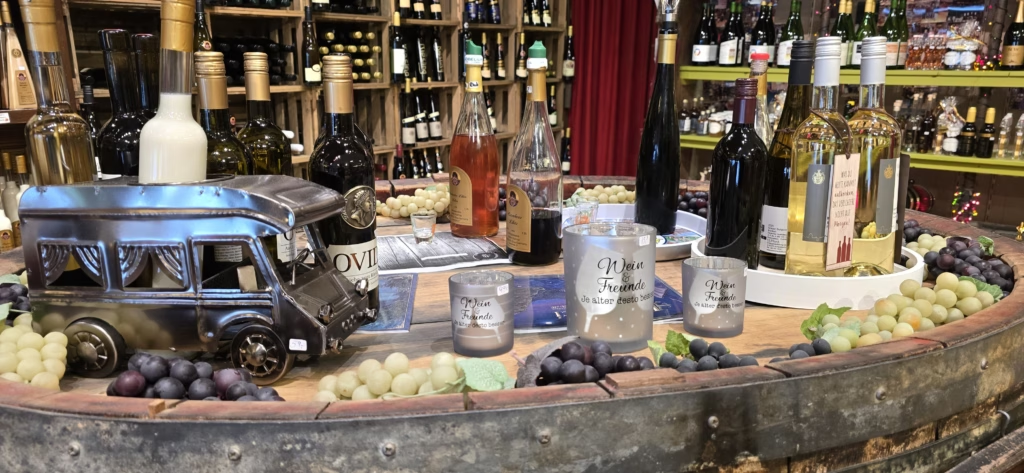
What Samira did not know yet was that the river return was already part of the plan. I had booked the day around it months earlier; the 16:10 KD southbound from St. Goar to Bingen was the way we were getting back to the car. She had spent most of the morning in riddle-solving mode about the logistics: why did we not drive here, are cars not allowed in St. Goar, is parking limited, is the gorge dangerous to drive. I had been content to let the cruise stay a surprise and to enjoy the day trip as it unspooled. With the castle off and the rain steady, standing in Stefan’s shop with a paper-wrapped bottle of Brombeerlikör in hand, it became time to walk down to the dock and tell her. The look she gave me when she connected the morning’s riddle to the boat moored a hundred meters away was the moment the day flipped from broken to better. We did not have a castle anymore. We did have a bottle and a boat.
An hour by the water
We bought the cruise tickets at the on-site booth on the dock around 15:15 with our same-day rail tickets in hand for the booth-only discount (the cruise post has the booking mechanics). Departure was not for another fifty-five minutes. The rain was steady but not heavy and we had nowhere we needed to be, which is a state of affairs that we very rarely arrive at as a household. We started walking the shoreline promenade.
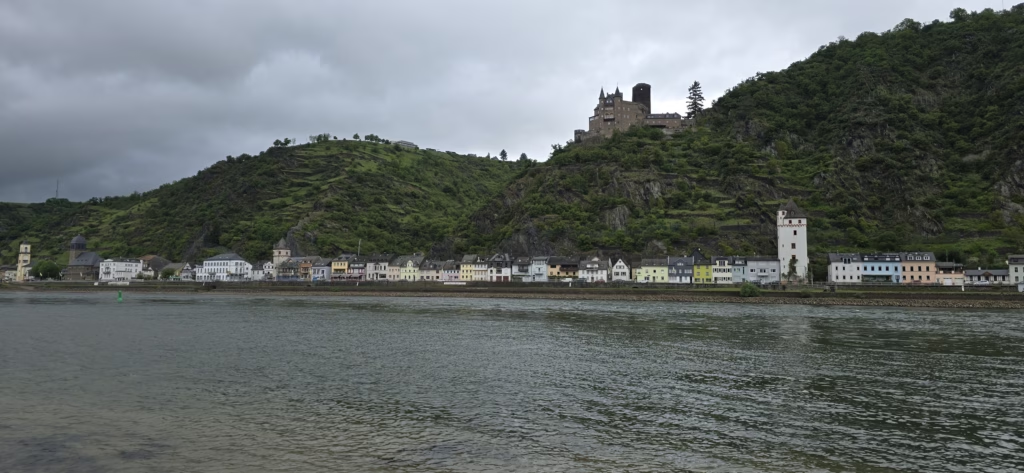
The promenade runs north along the waterfront from the KD Anlegestelle, past gift shops, a small Italian restaurant, a kiosk selling postcards, a closed Eis cafe with the chairs upside down on the tables. Most of the shops were quieter than they would be in July. We did not buy anything else. We took our time. Samira pointed out the colors of the houses on the St. Goarshausen side, and we counted Burg Katz reappearing through the mist every few minutes as the cloud ceiling lifted and dropped. About halfway through the walk we sat down on a bench across from the ferry landing and watched the green-and-yellow car ferry cross back and forth between the two towns, the only vessel moving on the river in front of us.
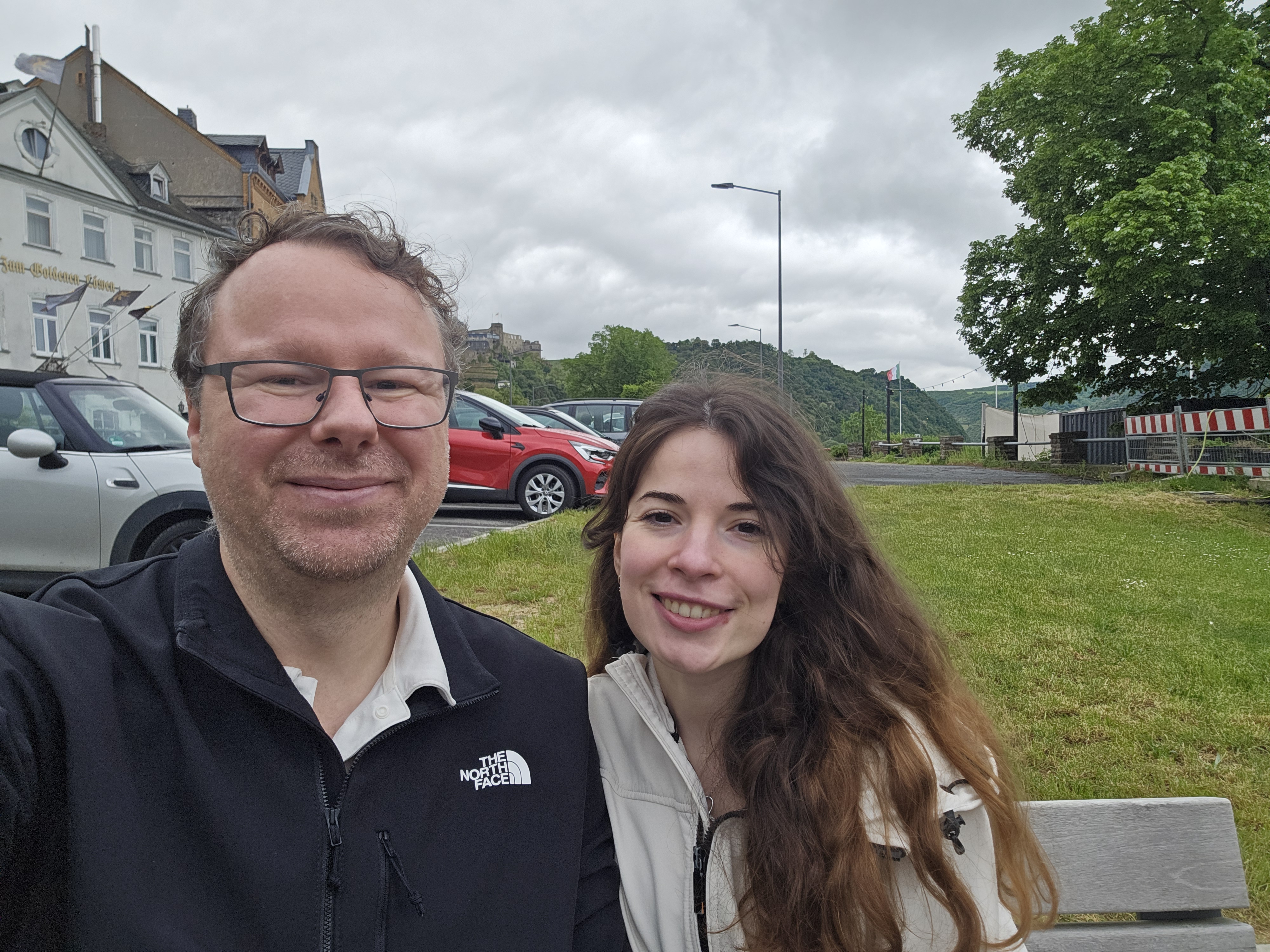
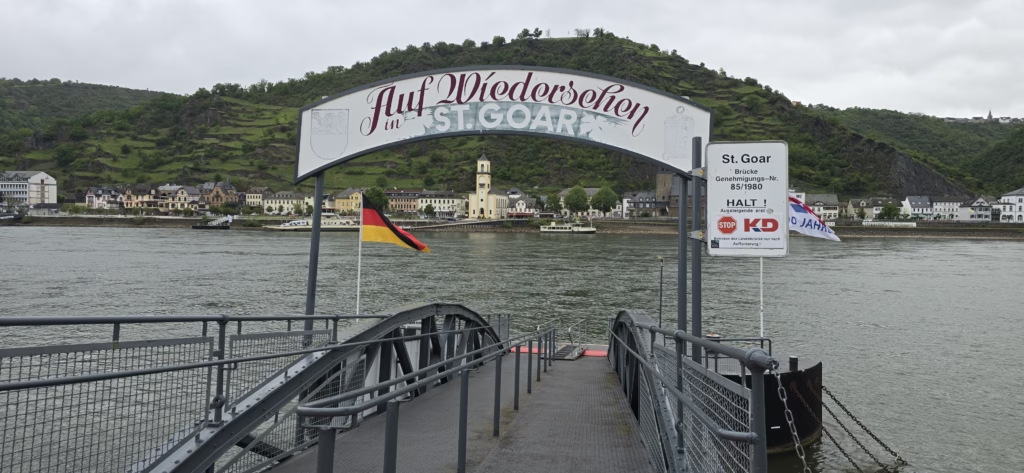
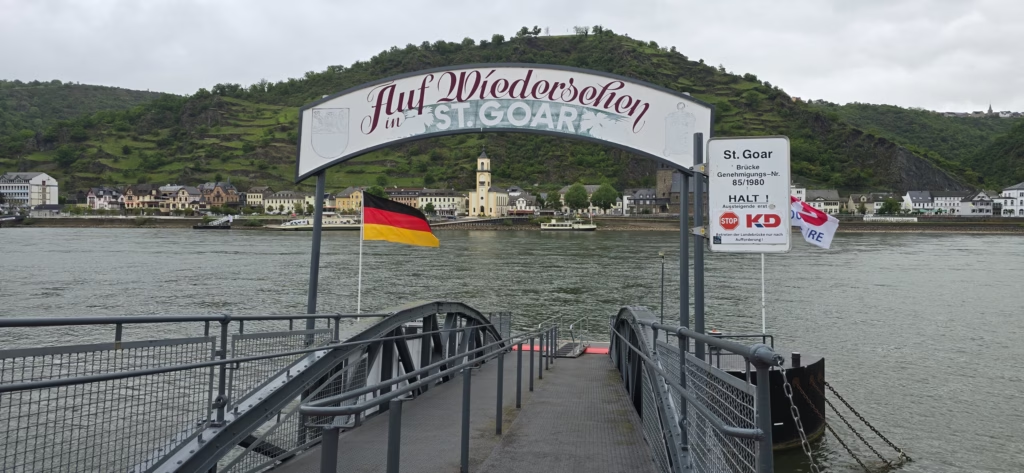
That hour ended up being the part of the day that did the most to make the rest of it work. There was no plan left to fail and nothing on the schedule to hurry toward. We sat on the bench, talked some, listened to the rain on our jackets, and mostly did not speak. The bottle stayed in the paper sleeve in the bag at our feet. Around 15:55 we started slowly back toward the Anlegestelle. The KD pier had a little arched signboard at the head of the gangway reading Auf Wiedersehen in St. Goar, and the German flag on the pier was snapping in the wind off the river. The 16:10 was already moored at the dock waiting.
The 16:10 as the actual plan
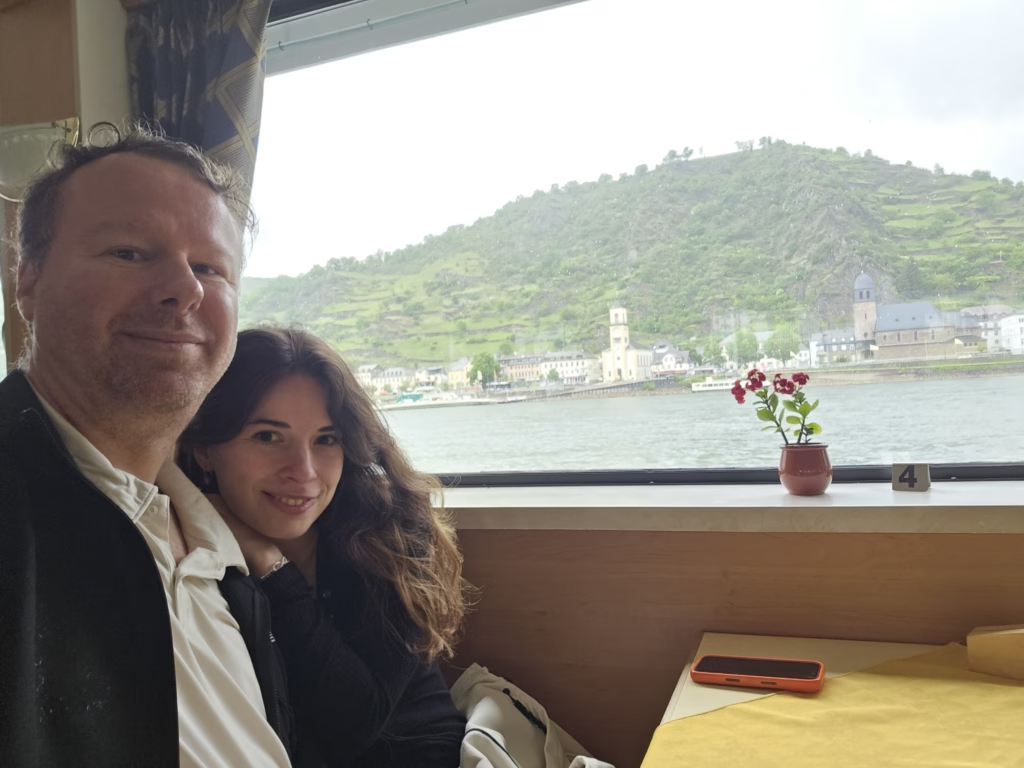
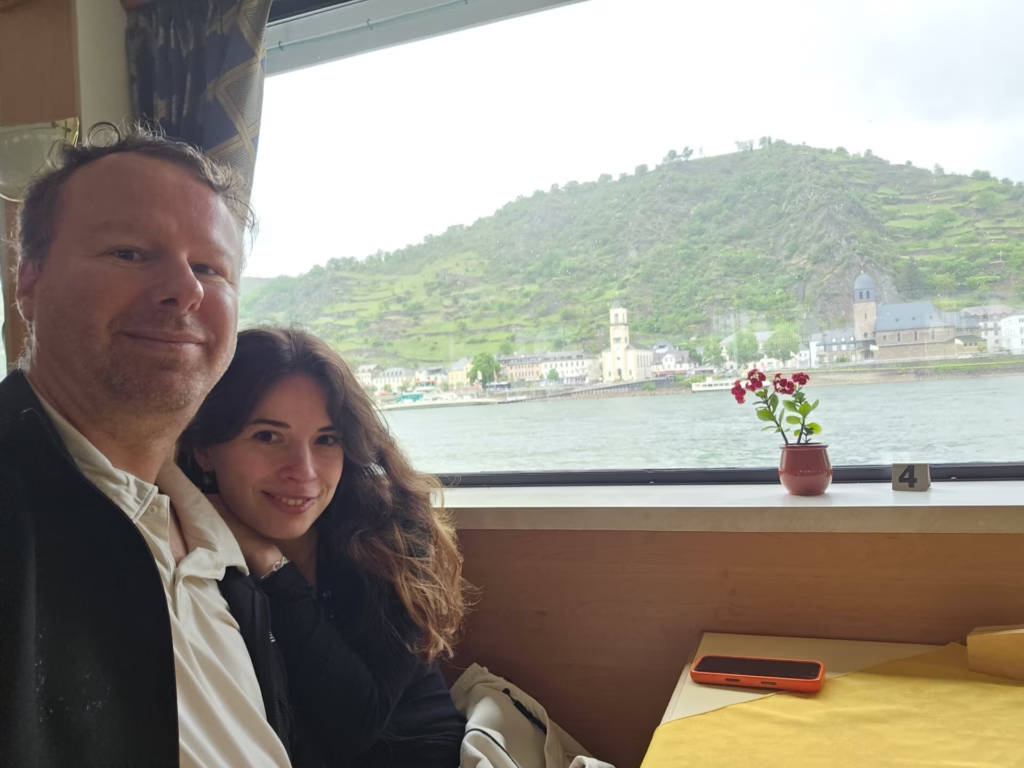
The 16:10 southbound is closer to two and a half hours upstream through the gorge under a covered deck (the boat is fighting the Rhine’s northbound current the whole way, so the run is slower than the same distance northbound, and the published two-hour figure ran long on our trip). About thirty passengers boarded, and almost everyone stayed inside the main cabin because the rain had set in and the roof deck was cold and wet. We found a window table on the right side facing the right bank, ordered tea and a tin of coffee, and watched St. Goar and St. Goarshausen recede behind us into the rain. Burg Katz on the ridge above the right bank was the first to disappear into mist. The cabin was maybe a quarter full and stayed that way the whole cruise.
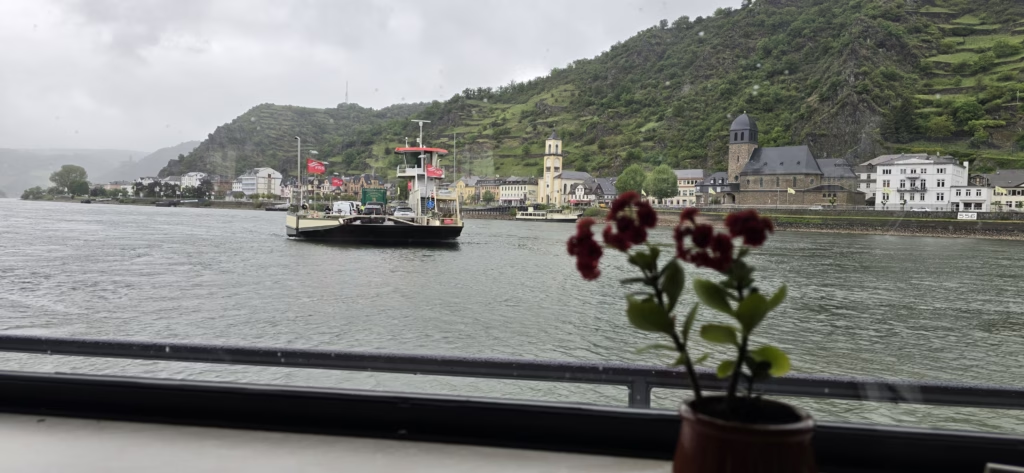
The little ferry that kept crossing our bow as the cruise pulled away is worth a sentence on its own, because it is the only way to cross the Rhine in this stretch of the gorge. The next vehicle bridge upstream is at Mainz; the next downstream is at Koblenz. Between them, for roughly 130 kilometers, the river is bridgeless, and a string of small car-and-passenger ferries (Fähren) carries everything that needs to get across: cars, bicycles, day-hikers, the occasional ambulance. The St. Goar to St. Goarshausen line is run by the Loreley-Linie and crosses about every 15 to 20 minutes during the day, takes 5 to 7 minutes bank-to-bank, and runs roughly 06:00 to 22:00 on a weekday, longer in the summer. If you ever want to see the Loreley cliff from the right bank, climb to Burg Katz, or eat schnitzel in a St. Goarshausen Stube without driving an hour around, this is the ferry you board.
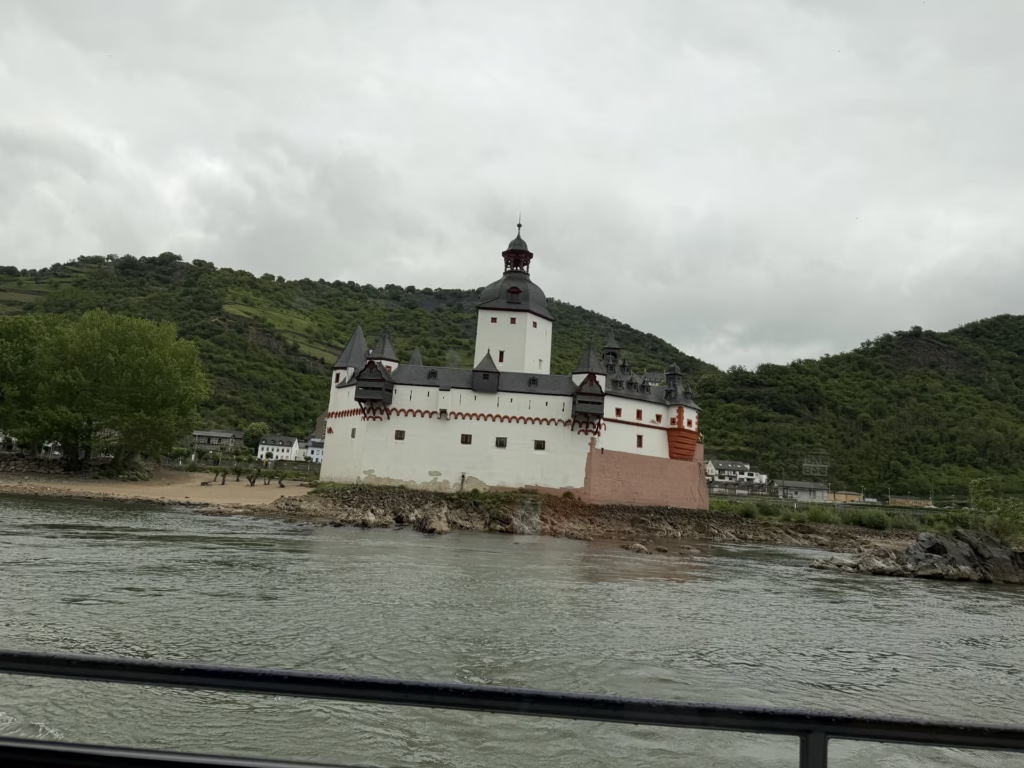
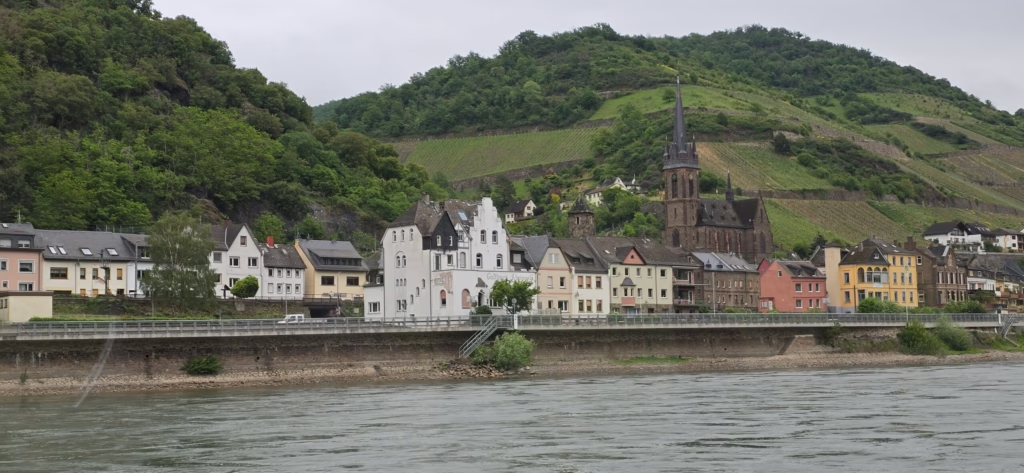
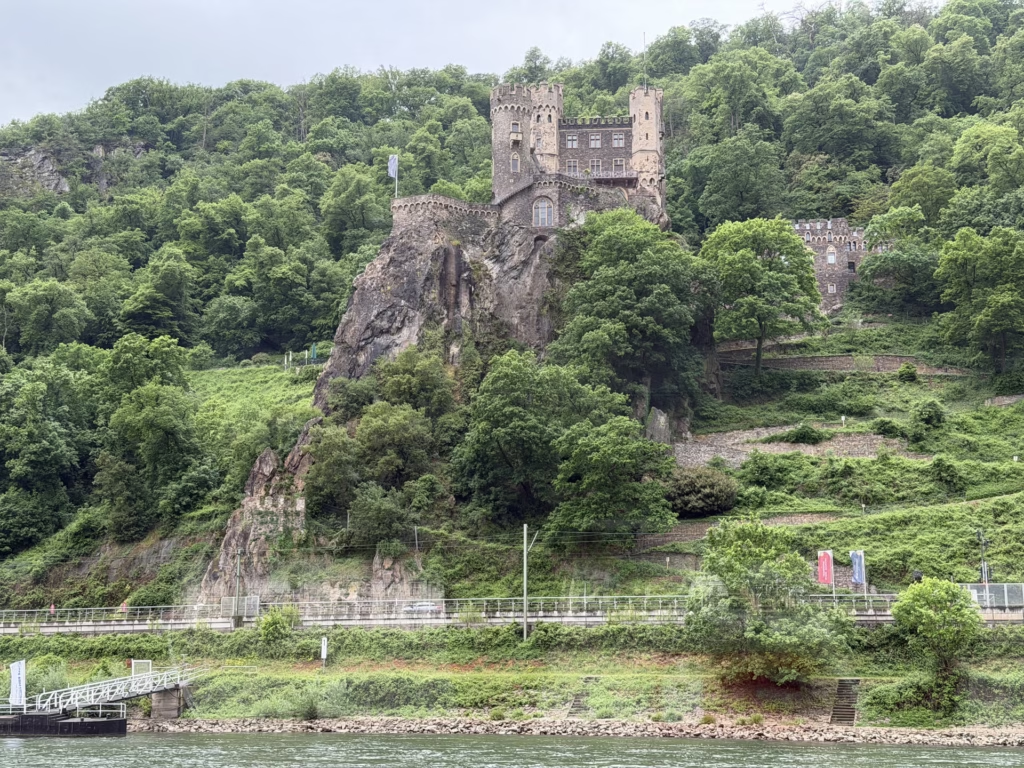
The Romantic-era painters who came down the Rhine after 1815 painted this gorge in weather like this on purpose. Turner went in autumn. Schinkel painted it under cloud. The whole 19th-century Rheinromantik aesthetic is built on the gorge in low light with mist between the castles, which is the opposite of the high-summer cruise marketing the KD runs today. We got it by accident. The right-bank castles came past one by one in the order the cruise post inventories: Oberwesel and Schönburg around 16:44, Burg Gutenfels above Kaub at 17:09, Pfalzgrafenstein on its island at 17:12, Lorch at 17:35, Heimburg above Niederheimbach at 17:54, Burg Reichenstein at Trechtingshausen somewhere past that. We did not try to photograph all of them.
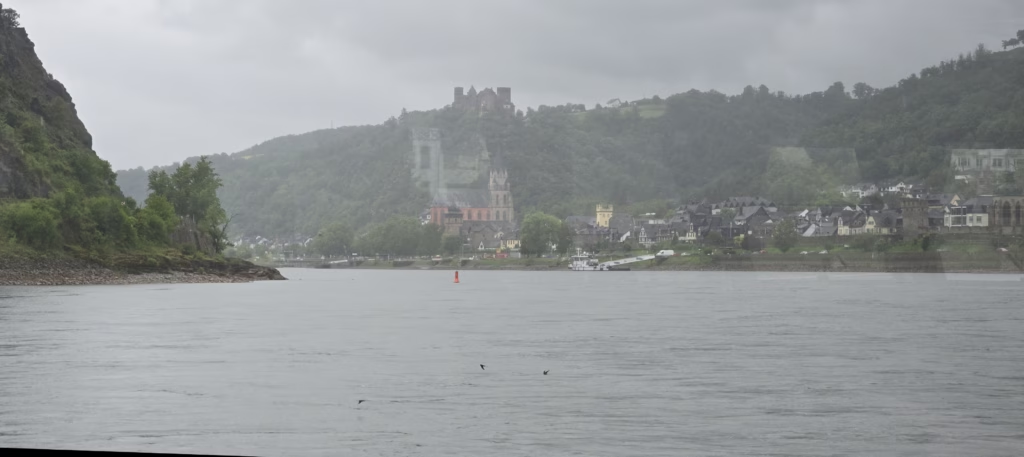
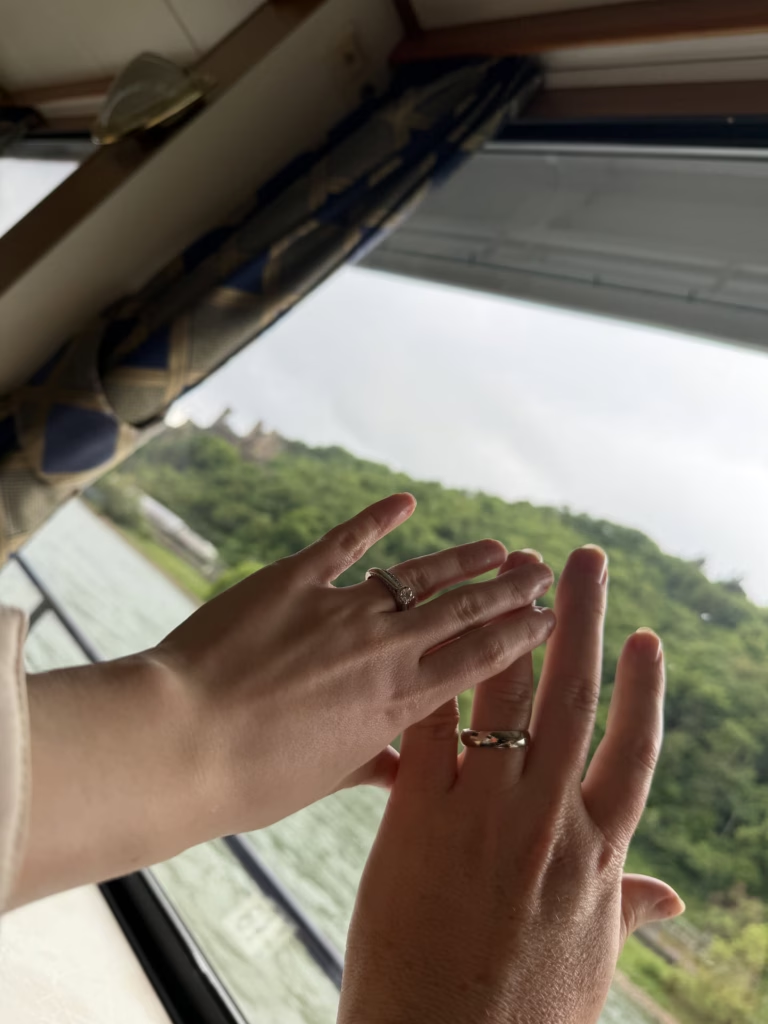
What we did was sit at the window table with the bottle still wrapped in its paper sleeve in the bag at our feet. I ordered a bratwurst from the saloon. Samira ordered the spaghetti. We had more tea, watched the right bank pass, and talked about castles we had not climbed and ones we still wanted to. The rain did not stop. The gorge was darker than the marketing photos and more honest than them. Somewhere past Lorch, Samira said she was glad we pushed through to the cruise, that this part of the day was what made the whole anniversary worth it. I agreed. The 16:10 had stopped being a Plan B thirty minutes in.
Home by 19:30
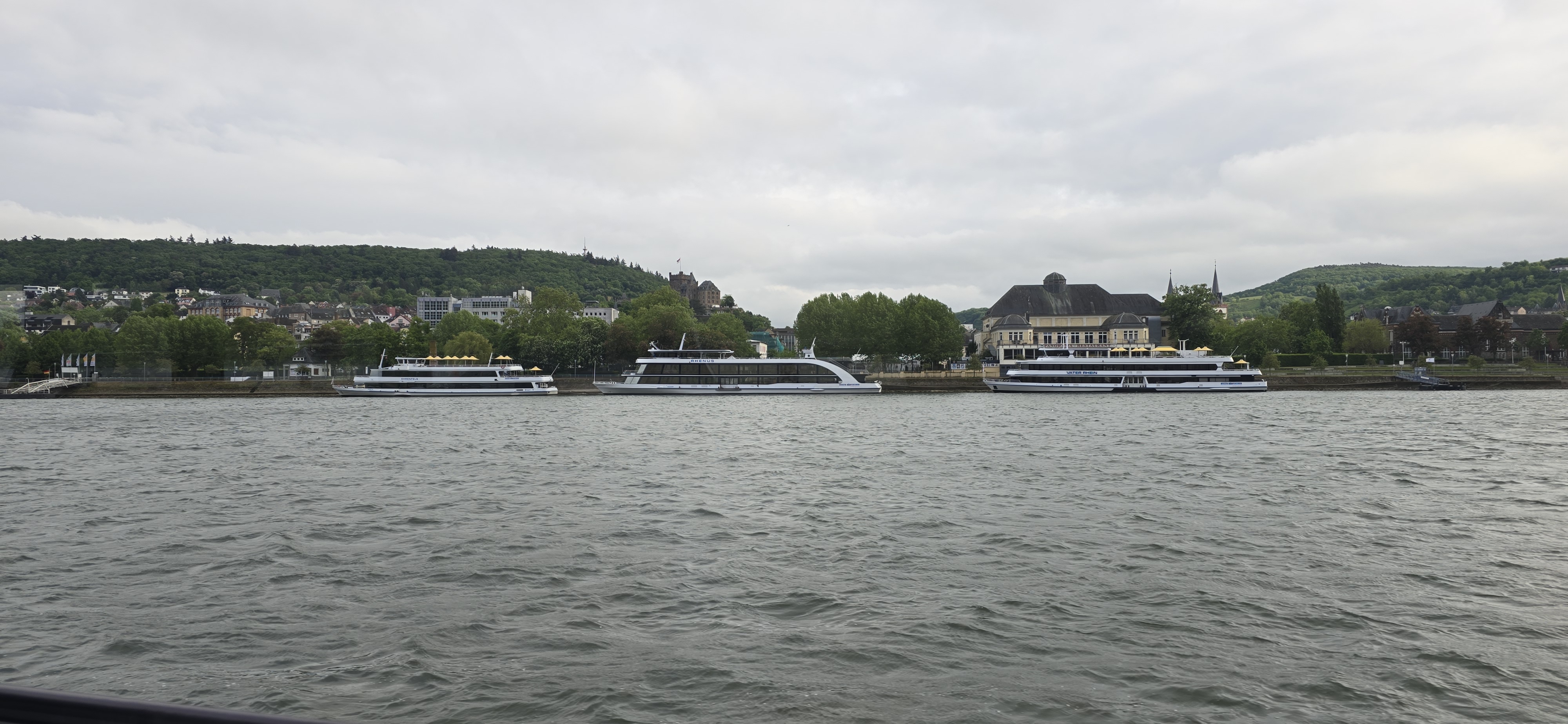
We disembarked at Bingen at 18:47, walked back to the Parkplatz Fruchtmarkt in dusk, drove the A61 south, and were home by half past seven. The same Bingen riverfront we had crossed twelve hours earlier in morning light was now deep blue evening, the KD boats moored at the landing, the Mäuseturm a small silhouette upstream. Samira does not usually sleep in the car on long road trips and did not this time either; we talked the seventy-minute drive home in the easy quiet two people fall into when the day has earned a long breath. The Brombeerlikör bottle stayed in its paper sleeve in the bag on the back seat, still unopened, on its way to the shelf at home where it would sit as a keepsake.
What we brought home
We talk about this day more than we talk about the day we got married. The plan failed in sequence (the lunch, the castle, the schedule), and what was left when the plan had finished failing was the day we actually had: a basement Beef-Broccoli that was better than the Italian would have been, a paddle steamer photographed at noon in better light than the rest of the afternoon would offer, a bottle from a four-hundred-year wine family wrapped in paper for the shelf at home, and a covered cabin through the gorge in painter’s weather where Samira finally got to see the surprise the day had been built around.
We will over-plan the next anniversary, because that is what we do. We will probably remember to call ahead about the Ruhetag, and we will probably also forget. The point of a day trip, we are starting to think, is not the itinerary holding. It is who you are with when the itinerary stops.
The next time we go up the Rhine, Burg Rheinfels is its own trip. We will bring better boots.
One couple’s day on the Rhine in May 2026, written for our own memory lane and shared in case it is useful. Operator hours, restaurant openings, ferry schedules, and cruise timings all change with the seasons; the four companion posts in this series carry the practical details for anyone planning a similar day.
From the day
Sources
- UNESCO World Heritage Centre, “Upper Middle Rhine Valley,” whc.unesco.org/en/list/1066 (retrieved 2026-05-18).