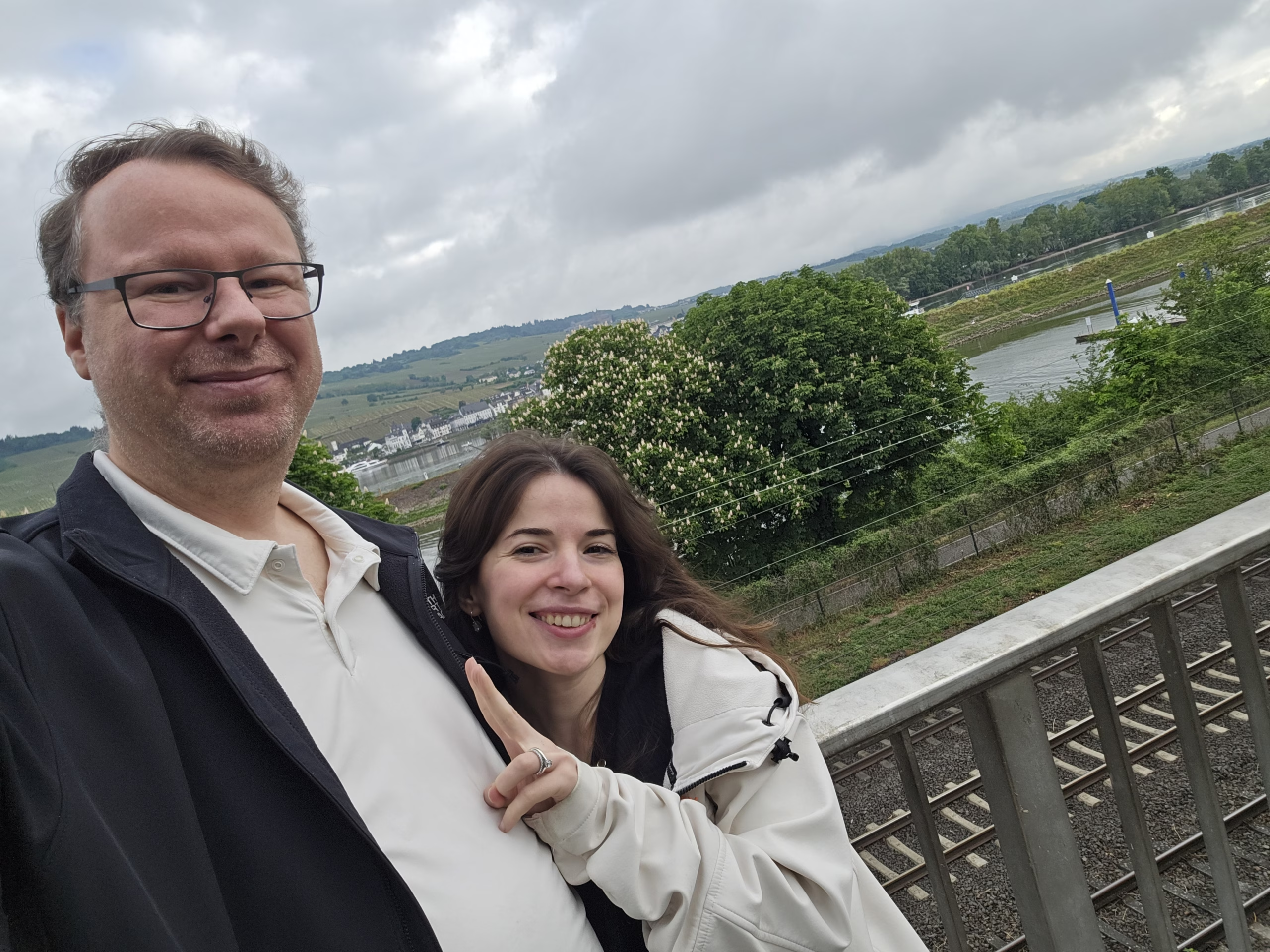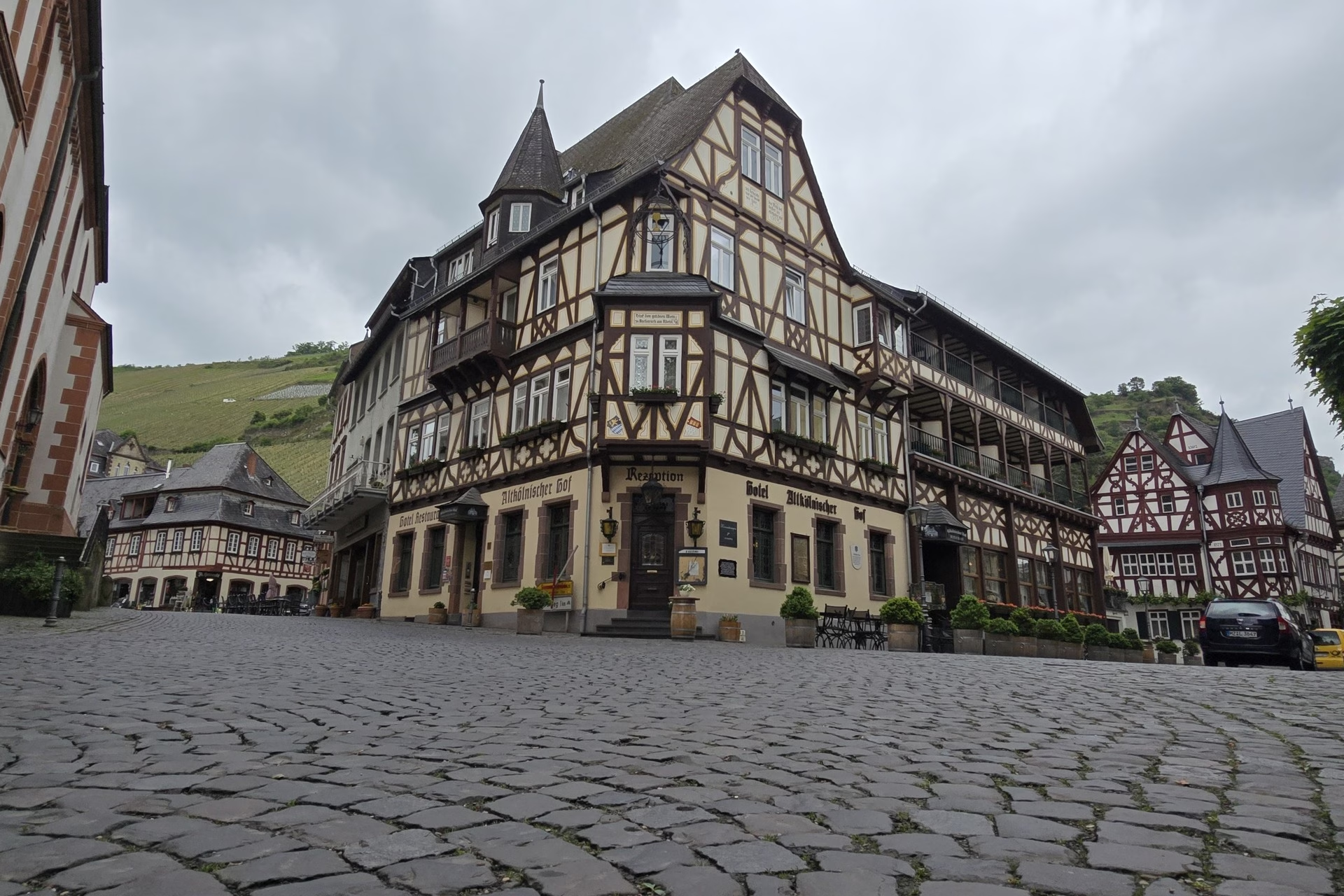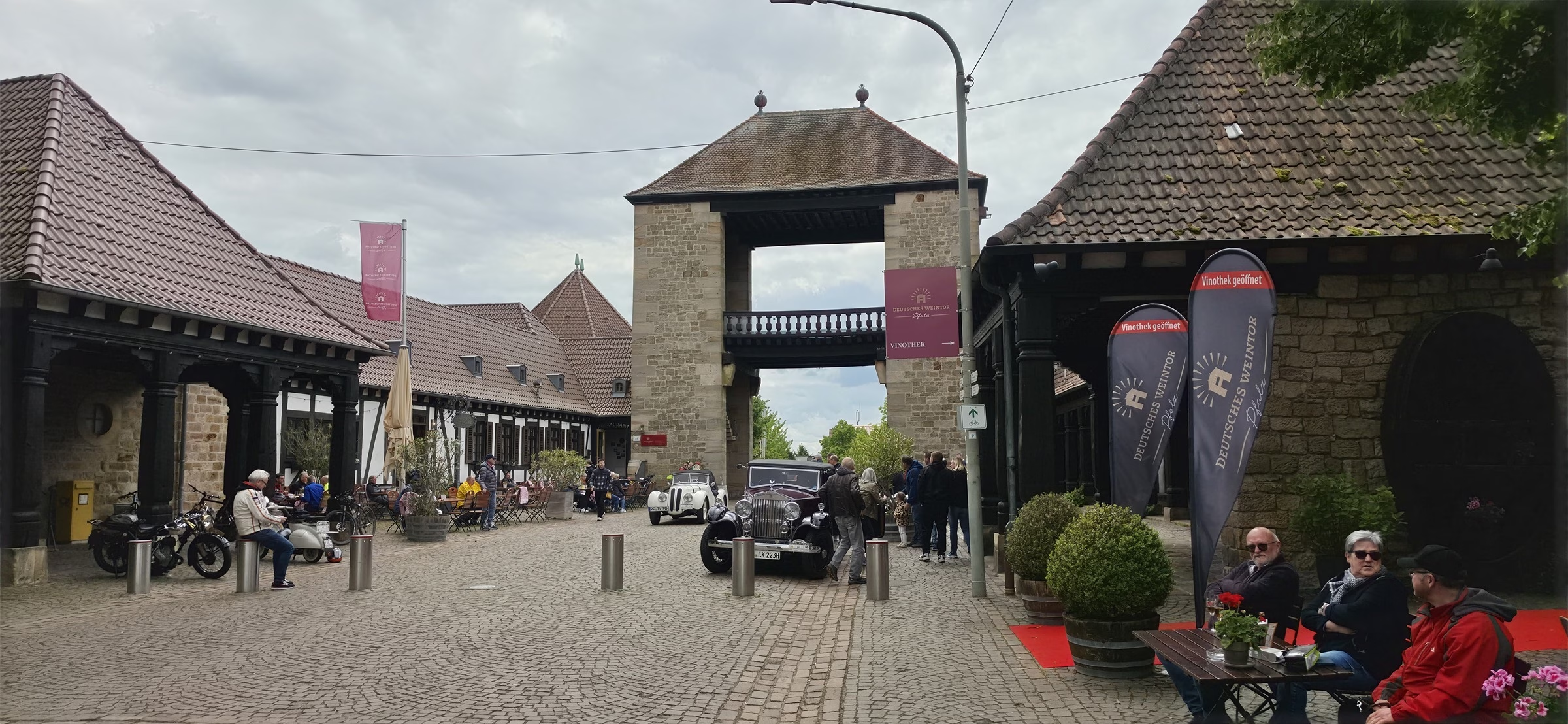
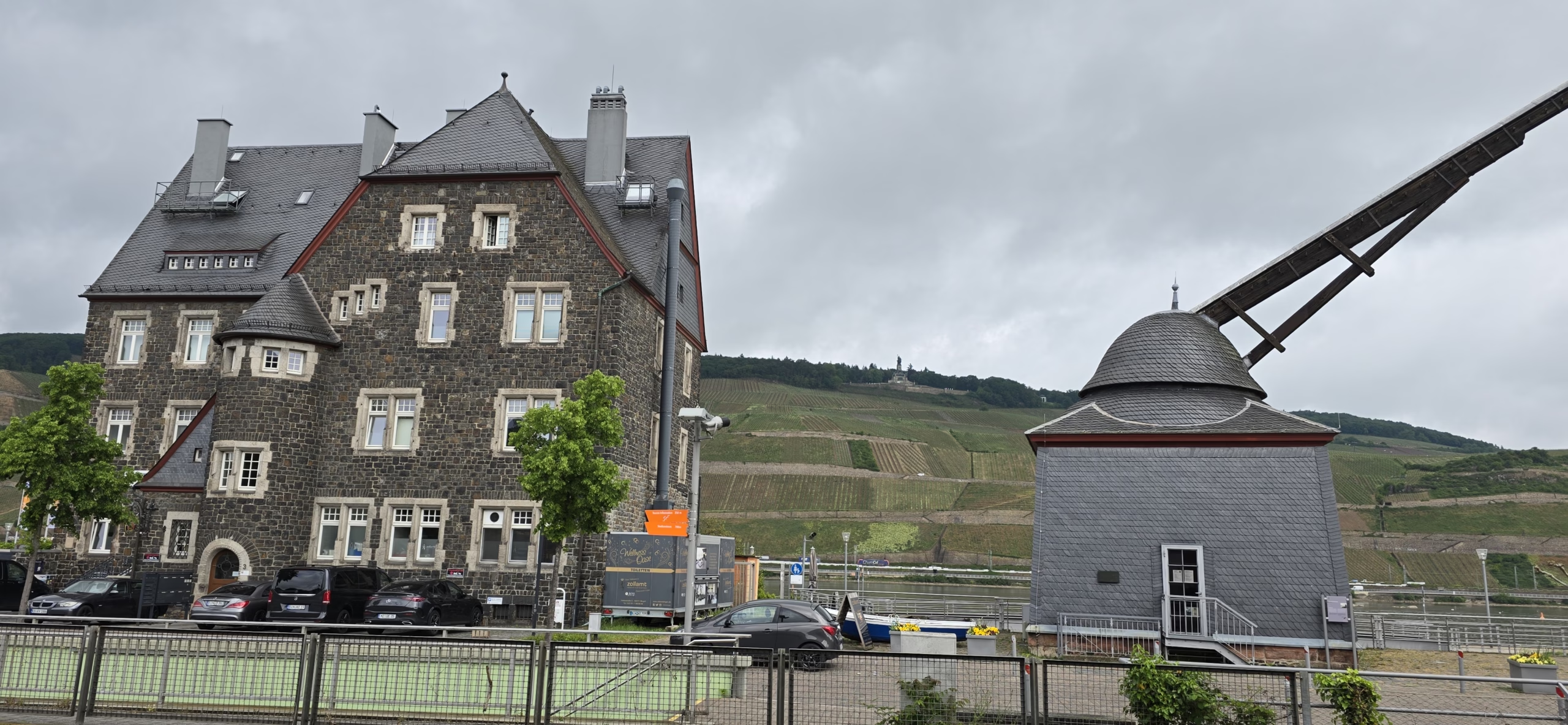
A Bingen Rhine day trip from Kaiserslautern works because the town sits at the southern hinge of the Mittelrhein UNESCO corridor: park once, eat early, take a train north into the gorge, and ride a cruise back to your car at dusk. We did exactly this on our wedding anniversary in May, and the logistics held up so cleanly that I want to give them away here for any KMC family planning a first Rhine day. This is post 1 of 5 in a series covering Bingen, Bacharach, St. Goar, the KD cruise, and the personal story of how the plan partially fell apart.
Visit at a glance
- Official site: dein-bingen.de (Bingen tourist office, EN)
- Address: Bingen am Rhein town center, 55411 Bingen, Rheinland-Pfalz
- Opening hours: Backhaus Lüning Mon–Sat 06:00–18:00 (Sun from 07:30); Kulturufer 24/7
- Parking: Parkplatz Fruchtmarkt, €6/day; ~5 min walk to Bingen Stadt
- Cost: Kulturufer free; Backhaus Lüning breakfast €8–15; parking €6/day
- Accessibility: Level paved promenade; stroller- and wheelchair-friendly; dogs on leash
- Distance from Kaiserslautern: ~95 km, ~70–80 min via A6 → A63 → A61 → B9
- Time on site: 60–90 min morning base; 20–30 min on cruise return
- Next stop: Bacharach in Half a Morning
A bit of history
Bingen sits at the mouth of the Nahe where it joins the Rhine, on the left (western) bank, in Rheinland-Pfalz. The Romans had a settlement here called Bingium with a Drusus-era bridge across the Nahe; the town has been continuously inhabited since, which is the short answer to why everything in the historic center feels stacked on top of something older. The Bingen Narrows (Binger Loch) immediately downstream were the most dangerous shoal on the navigable Rhine before 19th-century engineering blasted a wider channel, and the entire economic structure of medieval Bingen was built on the toll regime that exploited that bottleneck.
The town’s most familiar export is Hildegard von Bingen (1098–1179), the Benedictine abbess, composer, theologian, and medical writer whose Rupertsberg monastery sat on the right bank of the Nahe in what is now the Bingerbrück district. Local shops carry her brand on everything from spelt cookies to herbal teas, and the Hildegardisweg signs you see around town point to a walking trail that connects her sites. For a day trip oriented around the cruise rather than a Hildegard pilgrimage, she is context rather than the lead.
What makes Bingen the right base for a Mittelrhein day is its position at the southern gateway of the UNESCO Upper Middle Rhine Valley (Site 1066, inscribed 2002). The World Heritage corridor runs roughly 65 kilometers downstream from here to Koblenz, with Bingen and Rüdesheim across the river marking the southern entry. Bingen is in Rheinland-Pfalz; Rüdesheim is in Hessen. The two towns face each other across the Rhine but belong to different Bundesländer and different tourism marketing infrastructures, which matters more than it sounds when you are choosing where to park.
What to do here
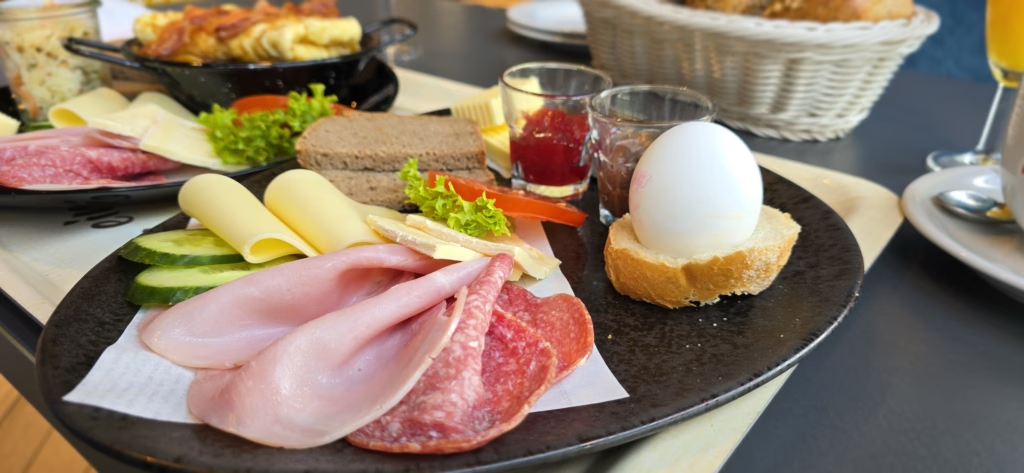
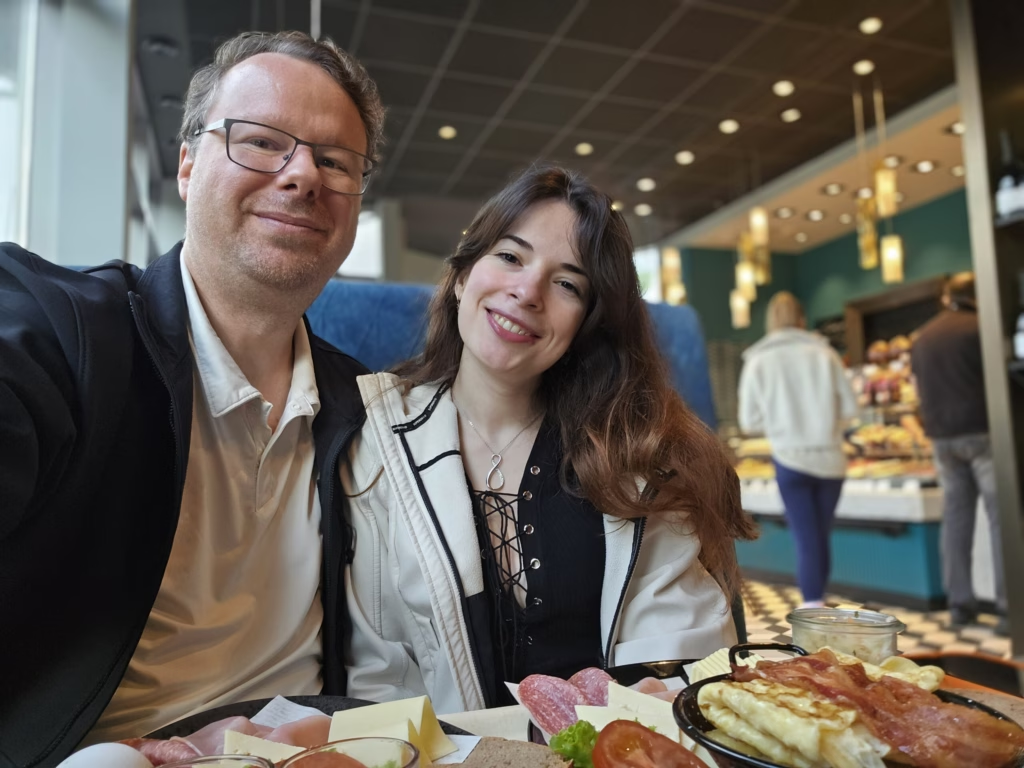
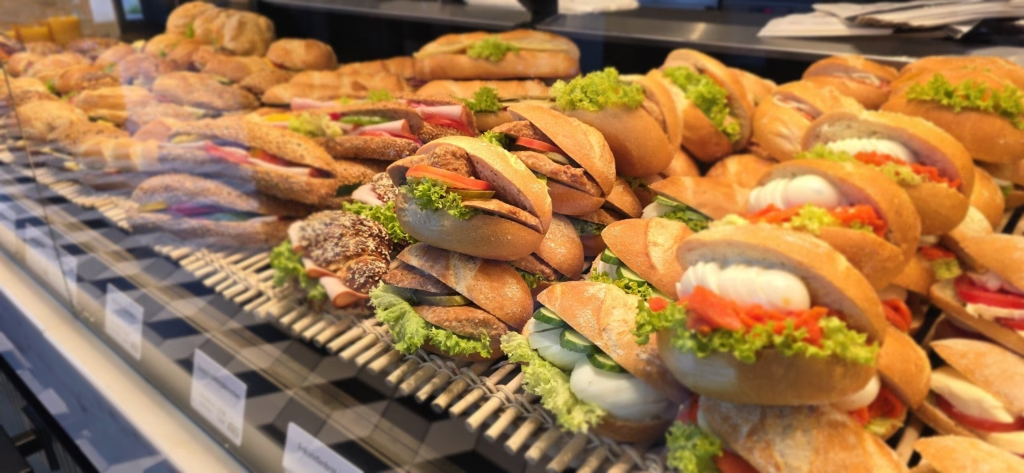
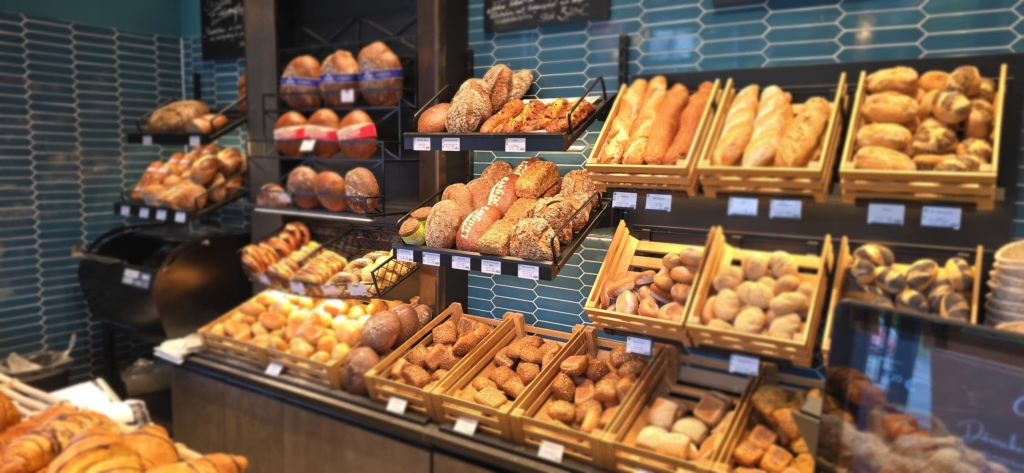
Eat breakfast first. Backhaus Lüning at Mainzer Str. 113 opens at 06:00 on weekdays and Saturdays. This is the load-bearing logistic for the whole day if you are driving up from KL: a 06:30 departure puts you at a hot breakfast at 08:00, and the kitchen is fully open from the opening minute. Free parking in front of the door.[1] It is a bakery-café concept, not a destination restaurant. The point is not that it is the best breakfast in the Mittelrhein. The point is that it solves the “we left KMC at dawn and now we are hungry and the rest of Bingen is still closed” problem without compromise.
Move the car to Parkplatz Fruchtmarkt. After breakfast, drive the few minutes from Mainzer Straße to Fruchtmarkt in the town center. As of May 2026: €6 day maximum, coin meter or handy-parken. Fruchtmarkt is the geographic sweet spot for the day: roughly 5 minutes’ walk to Bingen Stadt station for the train north, and 8 minutes’ walk to the KD landing-stage for the cruise return. Most other Rhine-town day-lots either run higher or sit on the wrong side of the train tracks.
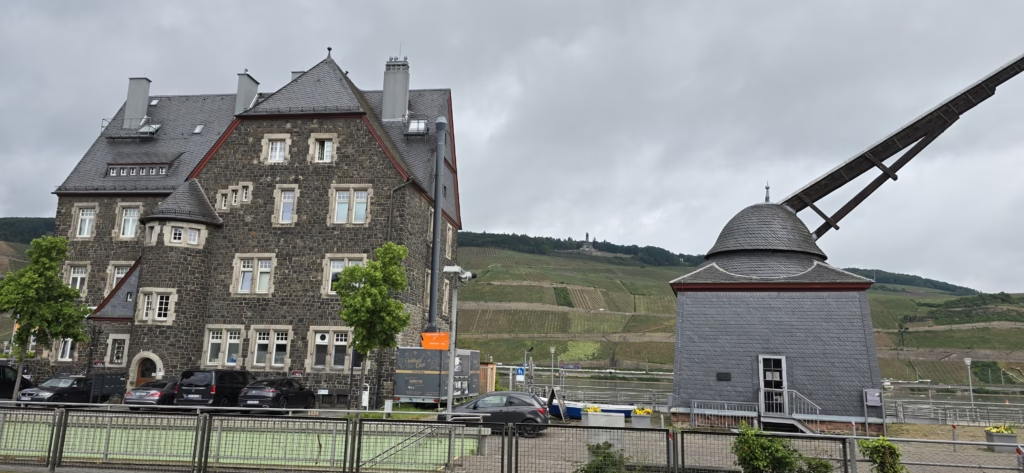
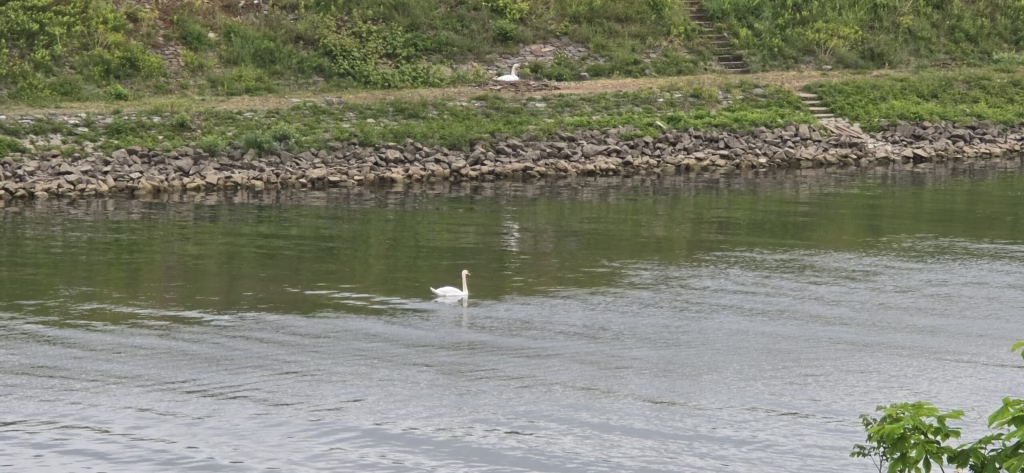
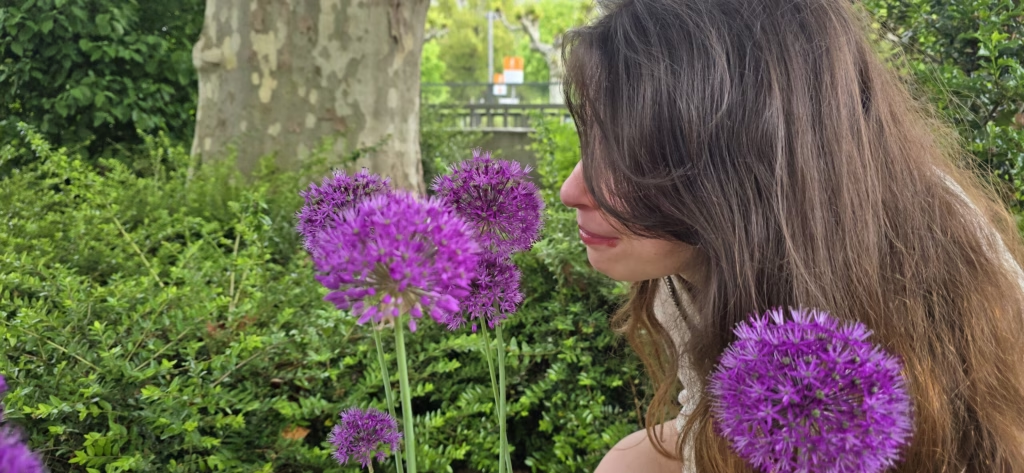
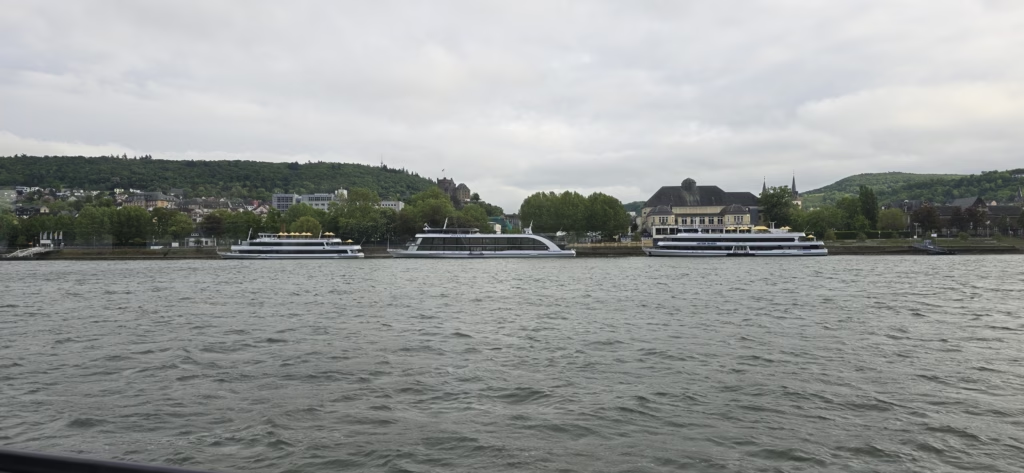
Walk the Kulturufer. The cultural waterfront promenade runs from the Hindenburganlage area east along the Rhine bank. In early May the allium garden is in full bloom and the planting design is generous and slow, with mature plane trees and a Wilhelmine-era stone building at the pier end. It is a calm 15-to-20-minute stroll that gives you the orientation shot you want before the rest of the trip: Mäuseturm on its island mid-channel, Burg Ehrenfels in ruins on the Hessian right bank, the Rhine gorge narrowing to the northwest.
Catch the train north. Bingen Stadt to Bacharach on RB26 takes about 20 minutes; continuing to St. Goar is another 10.[2] DB Flexpreis tickets let you stop at any intermediate station on the route for no extra cost, so a single Bingen Stadt → St. Goar ticket covers a Bacharach walk-around with no separate fare. This is not advertised prominently. Two adult tickets cost €21.80 in May 2026.
Return at dusk via the KD cruise. Plan the day so the southbound cruise from St. Goar (or further north) lands at Bingen at the end. The boats moor at the KD Anlegestelle a short walk from Fruchtmarkt parking. As of May 2026: the 16:10 from St. Goar to Bingen was the last southbound departure on a Wednesday in early May, so the day’s pacing has a hard back stop. The covered upper deck handles light rain well.
Mäuseturm and Burg Ehrenfels
The two landmarks you see from the Kulturufer deserve their own paragraph because the on-site signage is sparse and the popular legend is wrong.
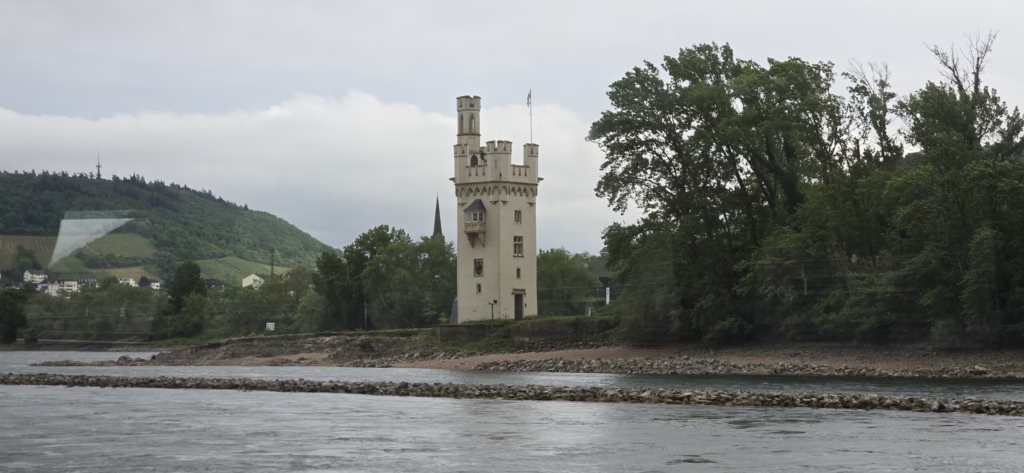
The Mäuseturm is the white crenellated tower on a small island roughly in the middle of the Rhine. It looks medieval, and a watchtower has stood here since the early 14th century, but the building you see today is an 1855–56 neo-Gothic rebuild commissioned by Friedrich Wilhelm IV of Prussia. The architects were Ernst Friedrich Zwirner (the same Cologne Dombaumeister who finished Cologne Cathedral) and Friedrich Albert Cremer.[3] The reconstruction marked the boundary of the Prussian Rhine Province at this point on the river.
The name does not come from the Bishop Hatto legend (the 10th-century archbishop of Mainz supposedly devoured by mice as punishment for hoarding grain during a famine). That story is aetiological, a folk tale invented to explain the tower’s name, first recorded in writing in the 16th century. The actual etymology runs through Middle High German mûsen, “to spy or lie in wait,” or possibly Old High German muta, “road toll.”[3] The tower was a toll-watch station for the Binger Loch narrows, paired with Burg Ehrenfels on the opposite bank in an integrated customs-enforcement system. Tour guides will tell you the mouse story anyway; now you know to enjoy it without believing it.
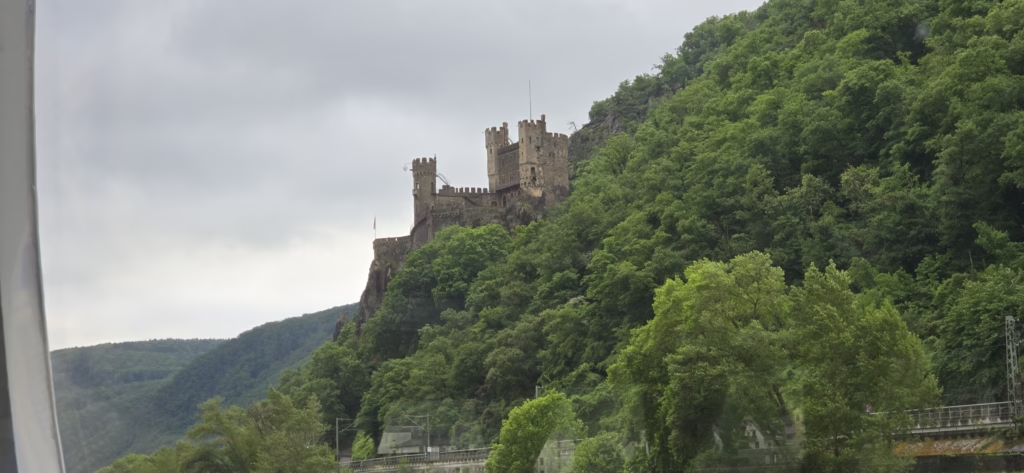
Burg Ehrenfels is the ruin visible directly across the Rhine on the right (Hessian) bank, on a steep vineyard slope above Rüdesheim. It was built around 1211 by Philipp von Bolanden on commission for Archbishop Siegfried II of Mainz, expanded over the next centuries as a toll fortress, and severely damaged in 1689 during the Pfälzischer Erbfolgekrieg (Nine Years’ War of the Palatine Succession) when the troops of French Marshal Nicolas Chalon du Blé, Marquis d’Huxelles, sacked it.[4]
It has stood as a ruin ever since. The interior is closed to the public and peregrine falcons nest in the walls, but the exterior is reachable on foot from Rüdesheim and visible from any river vantage point. Both monuments fall inside the UNESCO Upper Middle Rhine Valley inscription (Site 1066, 2002).
Where to eat and drink
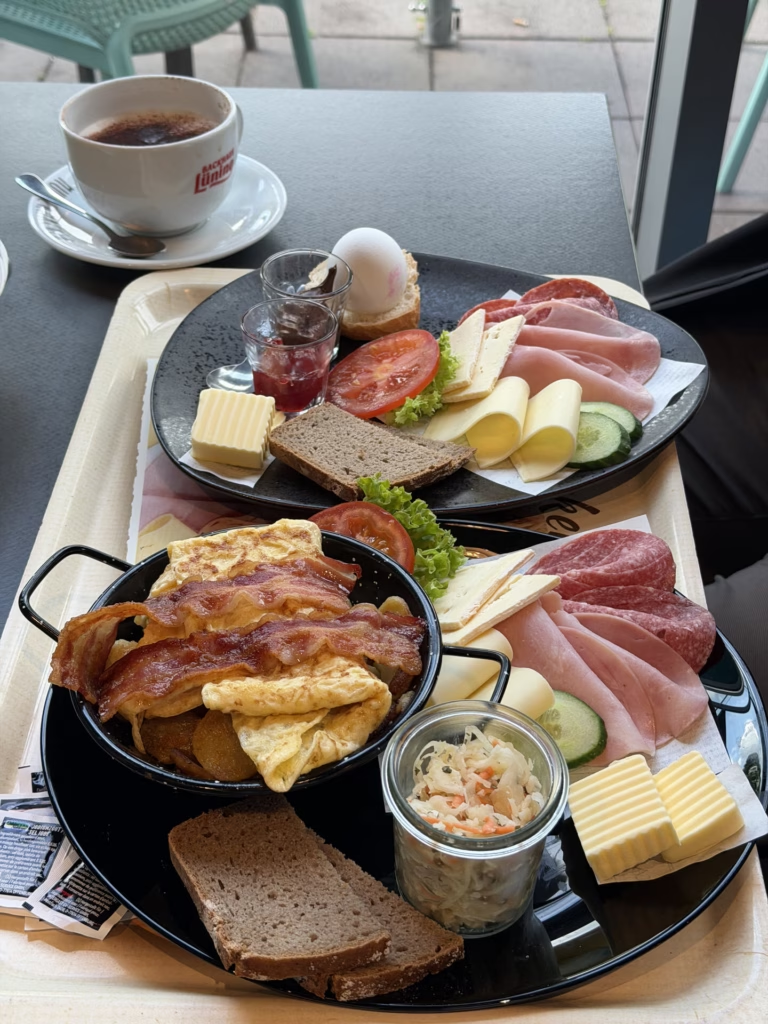
Backhaus Lüning (Mainzer Str. 113, 06721 153 003) is the only place we actually ate in Bingen, so I will not pretend to a wider survey. It is honest bakery-café fare with a strong breakfast bench and a 06:00 open. We took the hot breakfast plate with cold cuts, cheese, a soft-boiled egg, fresh bread, and good coffee. Service was quick and the bakery was nearly empty at 08:00 on a Wednesday. If you are coming from KL and arriving before the rest of the town wakes up, this is the move.[1]
For lunch or dinner we were not in Bingen; the day’s mid-section was up the gorge at Bacharach and St. Goar (see posts 2 and 3 of the series). Bingen has a number of Hildegard-themed cafés and a couple of wine bars in the historic center that are worth a separate visit; the tourist office (dein-bingen.de) keeps an updated list.
Practical tips
A Bingen Rhine day trip has a handful of logistics that can go sideways. Here they are in the order you actually hit them.
Drive time from KL. ~95 km via the A6 and A63 past Alzey, then the A61 north to exit Bingen-Mitte, then the B9 into town. ~70 to 80 minutes door to door in light traffic. The A61 between Alzey and Bingen runs over agricultural plateau without much to look at; pack a coffee.
The station trap. Bingen has two DB stations and they are not interchangeable. Bingen (Rhein) Hauptbahnhof sits two kilometers west in the Bingerbrück district, across the Nahe (the Rhine tributary that splits the town in two) from the historic center, the Kulturufer, and the KD landing. Bingen (Rhein) Stadt is the town-center station, on the same side of the Nahe as everything else you came for, and it is the one you want for the Rhine gorge northbound on RB26 (Mittelrheinbahn, Cologne–Mainz hourly) and RE2 (Südwest-Express).[2] The two stations exist because they were built by different railway companies on opposite sides of a 19th-century state border (Grand Duchy of Hesse vs. Prussian Rhenish Railway). If your DB app routes you to Hbf, manually re-select Bingen Stadt.
The RB26 short-turn trap at Bingen Hbf. Even with the right Bingen Stadt departure, not every RB26 westbound continues north into the gorge. The line carries two service patterns under the same line number: the through-running Köln–Mainz hourly trains (which do continue to St. Goar and beyond), plus additional half-hourly Mainz↔Bingen-Hbf reinforcement services that terminate at Hauptbahnhof one stop after Bingen Stadt and turn back south.[2] On our visit (2026-05-06) we boarded an RB26 at Bingen Stadt expecting it to carry us north, were dropped at Hbf one stop later, crossed the bridge to the opposite-side platforms, and waited 40 minutes for the next through-running RB26 (yes, same line number) to St. Goar to pick us up. Before you board at Bingen Stadt, check the destination (Ziel) on the train’s side display: if it shows “Bingen Hbf” instead of “Koblenz” or a station further north, you are riding a short-turn and will need to change at Hbf. Build 30 to 60 minutes of buffer into the day if your return depends on a specific cruise.
Parking strategy. Park at Parkplatz Fruchtmarkt in central Bingen for the day (€6 daily max, as of May 2026). It is about a 5-minute walk to Bingen Stadt station and 8 minutes to the KD landing-stage, both on the same side of the Nahe. Do not try to park near Bingen Hbf in Bingerbrück; you will be across the Nahe from the day-trip core and looking at a 25-minute walk over the river bridge before anything starts.
Payment. The Fruchtmarkt meter took our contactless card on tap-to-pay without any setup; it also accepts coins and handy-parken (handyparken.de app, follow the meter signage). Backhaus Lüning takes card. No need to scramble for change before you leave home.
DB Flexpreis stopover. A single ticket Bingen Stadt → St. Goar lets you stop at Bacharach (or Oberwesel) at no additional fare. Not flagged in the DB app booking flow. Worth knowing if you want to spread the day across multiple towns.
KD cruise return discount. The KD on-site booth at the Anlegestelle in St. Goar (and other landing-stages) offers a 20% discount on cruise tickets for holders of a same-day DB ticket. This is not available online, not at the DB counter, and not on the English-language KD FAQ. Worth asking about even if you are not sure you qualify. We discuss this more in post 4 of the series.
Language. Bingen is German-speaking. The tourist office English portal at dein-bingen.de is good; the city itself signs in German with occasional English on UNESCO-related panels. Backhaus Lüning staff handled English breakfast orders without trouble.
From the visit

Sources
- Backhaus Lüning, Region Bingen branch page, backhaus-luening.de/filialen/region-bingen/ (retrieved 2026-05-18).
- Wikipedia EN, Bingen (Rhein) Stadt station, en.wikipedia.org/wiki/Bingen_(Rhein)_Stadt_station (retrieved 2026-05-18).
- Wikipedia DE, Binger Mäuseturm, de.wikipedia.org/wiki/Binger_Mäuseturm (retrieved 2026-05-18).
- Wikipedia DE, Burg Ehrenfels (Hessen), de.wikipedia.org/wiki/Burg_Ehrenfels_(Hessen) (retrieved 2026-05-18).