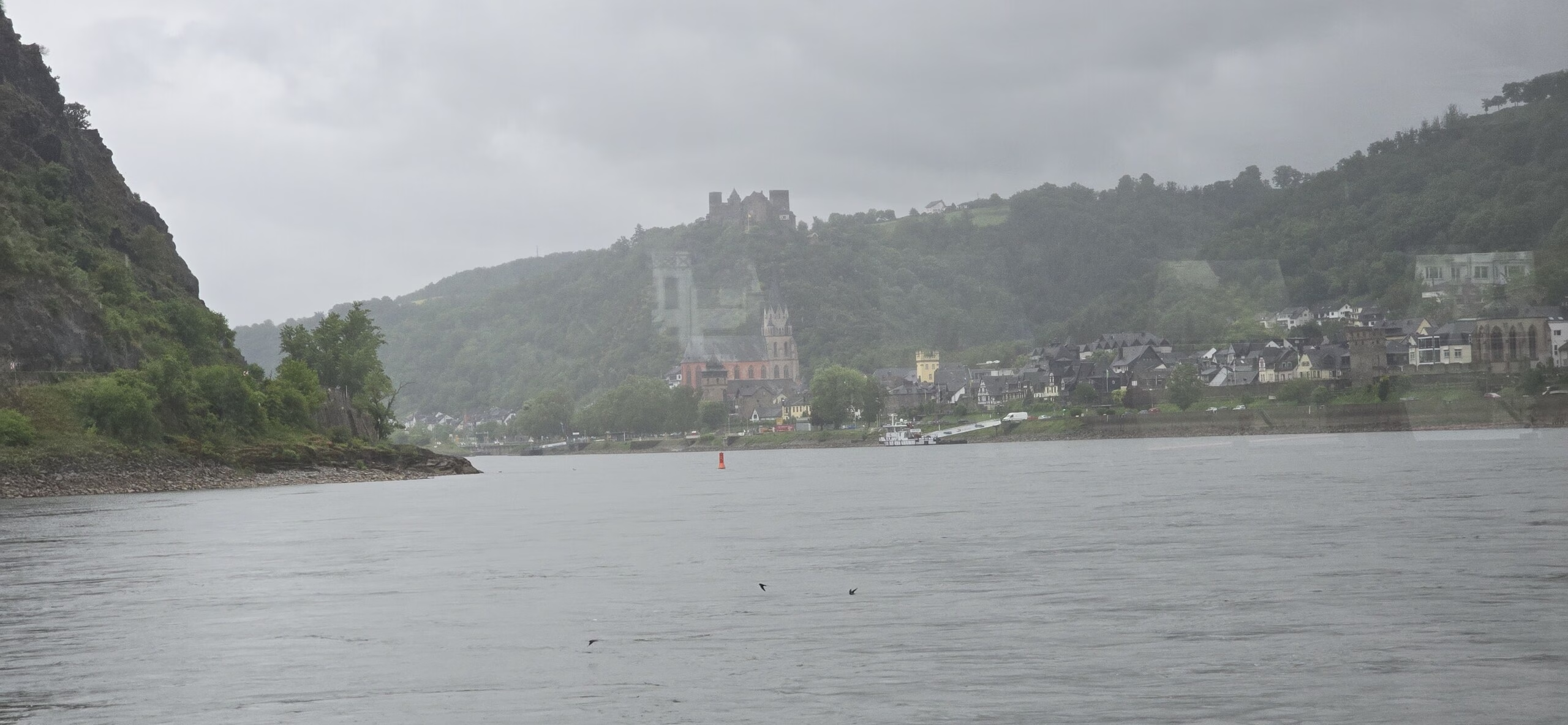
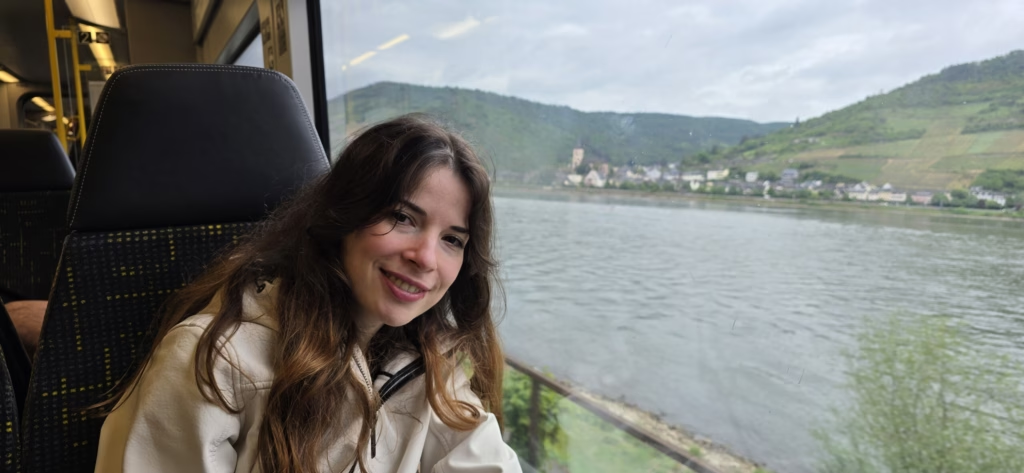
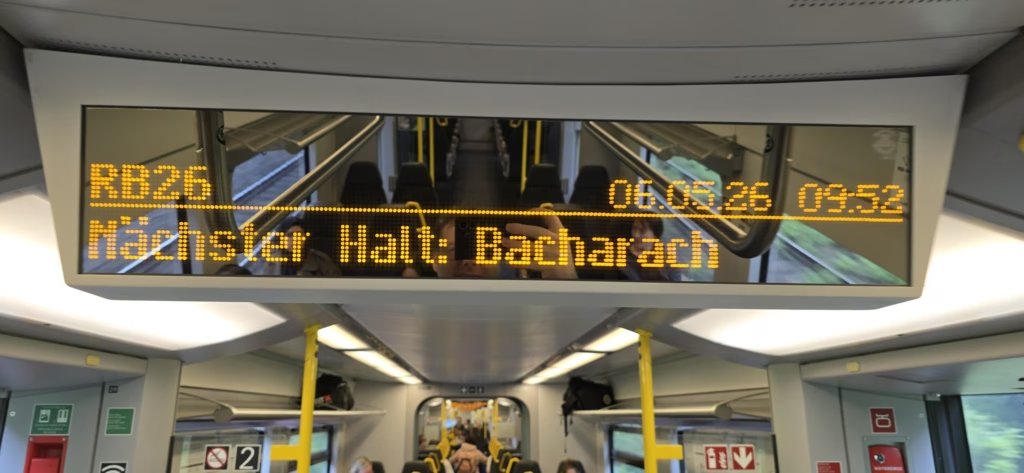
It was the morning of our wedding anniversary, and Bacharach was the first real stop after breakfast in Bingen. We arrived at 09:57 by RB26 from Bingen Stadt, walked the Altstadt for about seventy minutes, and caught the 10:45 onward to St. Goar. That window covered Oberstraße and Altes Haus, the Wernerkapelle ruin above the town wall, a stretch of wall path with Burg Stahleck on the ridge above us, and one souvenir shop transaction. Roughly half a morning, which is the right unit for a Bacharach day trip if you are not staying overnight.
The town is the most photographed wine settlement inside the UNESCO Upper Middle Rhine Valley corridor, and reaching it by train rather than car turns the day into something simpler than a parking-lot search.
Visit at a glance
- Official site: bacharach.de (Stadt Bacharach tourism portal)
- Address: Bacharach Altstadt, 55422 Bacharach, Rheinland-Pfalz
- Opening hours: Old town and town walls 24/7; tourist info Mon–Fri 10:00–17:00
- Parking: Riverfront B9-side lots, ~€3–5/day; train station 5–7 min walk to Altstadt
- Cost: Town walk free; café coffee €3–5; souvenirs €5–30
- Accessibility: Oberstraße largely level; stone steps up to the Wernerkapelle and Burg Stahleck
- Distance from Kaiserslautern: ~115 km via A6 → A61 to Bingen, then RB26 ~30 min
- Time on site: 90–120 min Altstadt; 2–3 h with Stahleck climb
- Previous stop: Bingen as Rhine-Day Base Camp
- Next stop: St. Goar in Rain
A bit of history
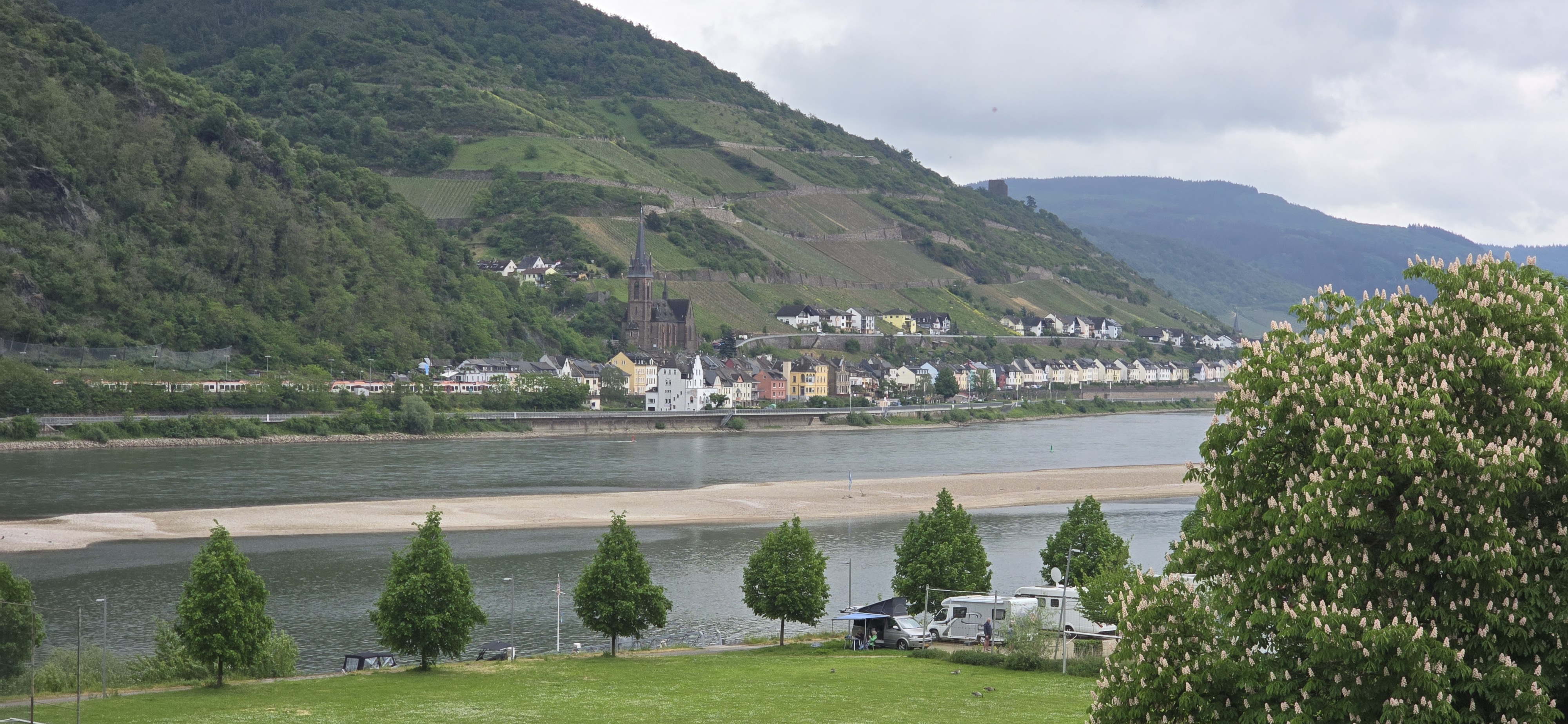
The earliest form of the name, Baccaracus, points to a pre-Roman Celtic settlement; folk etymology stretches that into Bacchi ara (altar of Bacchus) on the strength of how much wine the place has shipped.[1] By the 12th century the Wittelsbach Counts Palatine held the town and Bacharach was one of the most important Stapelplätze (wine-trade transfer points) on the Rhine. Barrels were transhipped from small Rhine vessels into larger ones here because the Binger Loch rapid downstream made through-traffic dangerous. Wine sold across Europe as Bacharacher often had not grown here; some was upriver wine that changed boats.
The town wall went up between 1344 and roughly 1400 and you can still walk most of its circuit. Ten towers survive, including the Postenturm and Hutturm. Stadt Bacharach calls the Stadtmauer noch weithin intakt (still largely intact), which matches the view from the ground [primary-source: visited 2026-05-06].
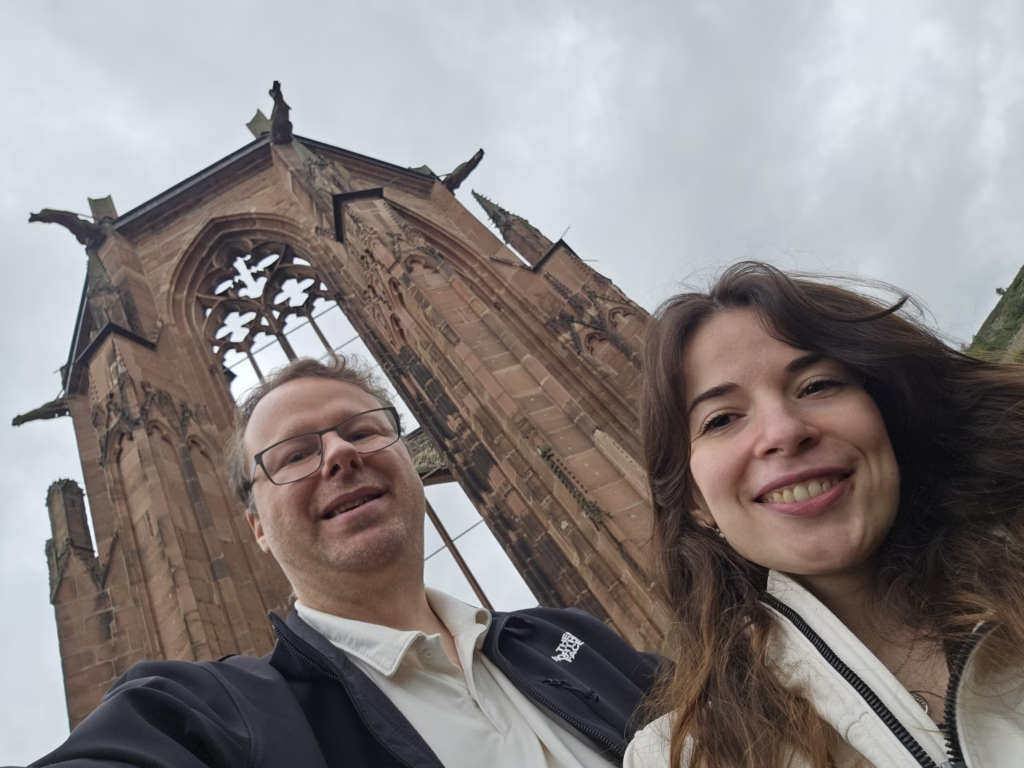
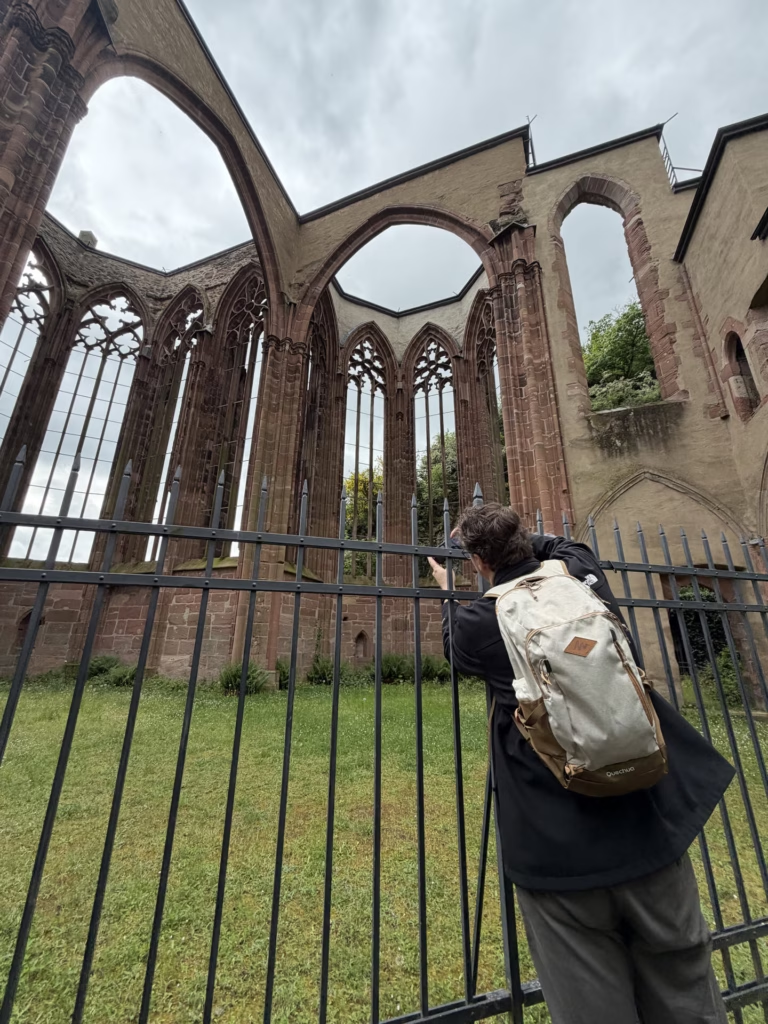
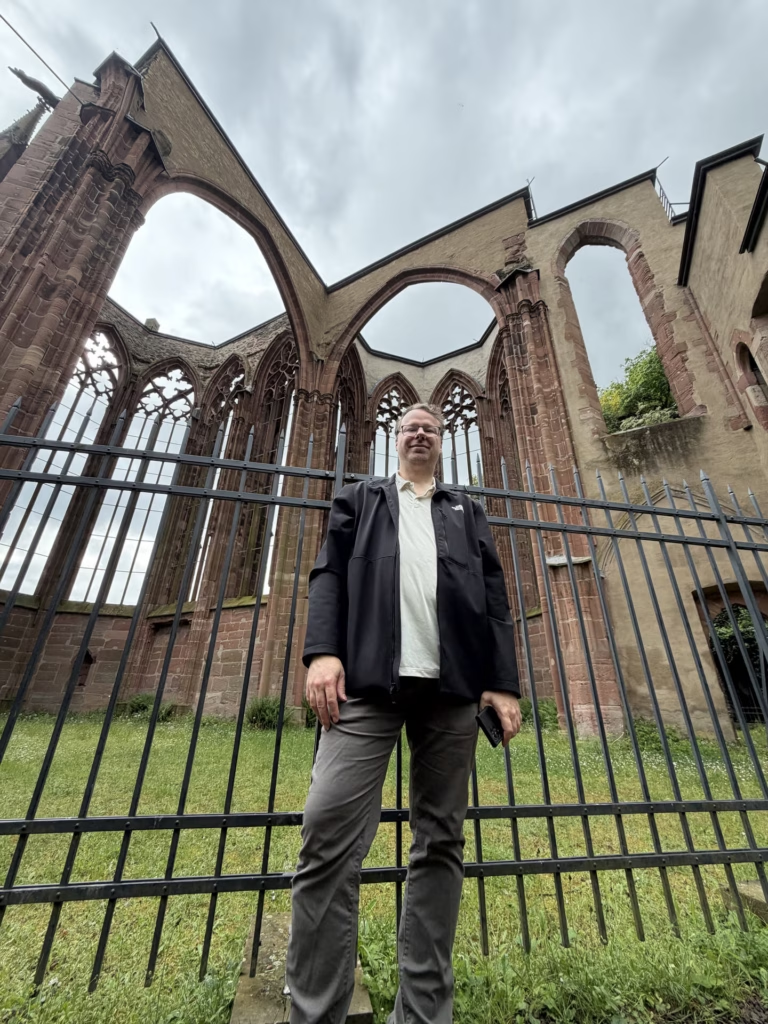
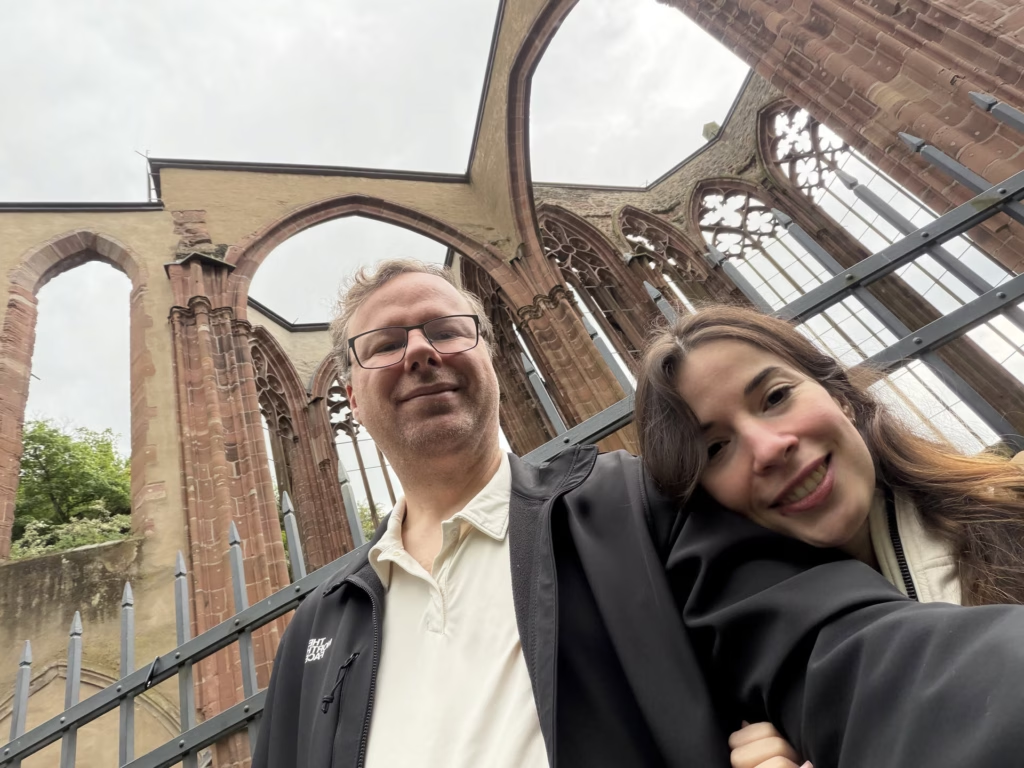
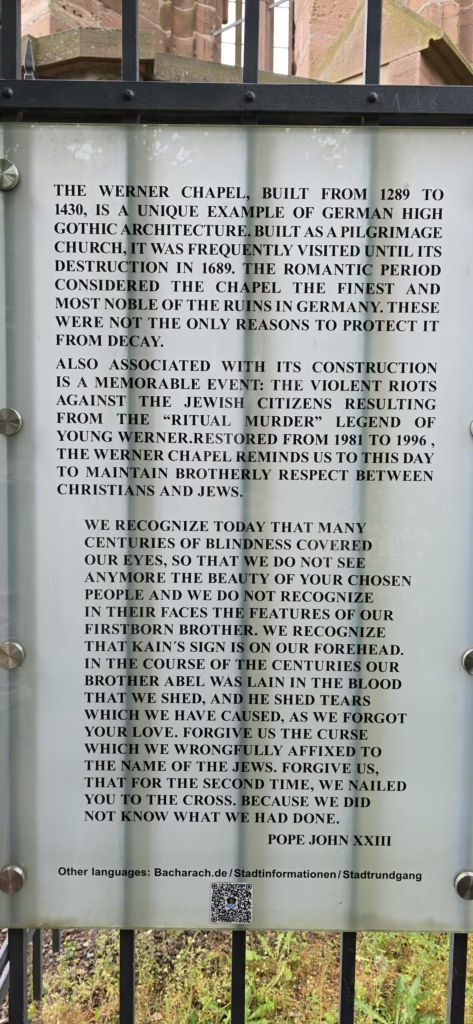
The Wernerkapelle is the Gothic ruin the town wears like a question mark on its skyline above Oberstraße. Begun shortly after 1287 as a pilgrimage chapel attached to the cult of Werner of Oberwesel (whose 1287 death became the pretext for an anti-Jewish pogrom that swept the middle Rhine that year), it was never finished. Construction stalled through the Black Death and the Hussite Wars, and the final coup was the 1689 explosion at Burg Stahleck above, whose falling debris destroyed what remained.[1]
Romantic-era painters who came down the Rhine after 1815 fell on Bacharach because the half-ruined chapel, the wall, and the castle above made one of the most paintable silhouettes on the German Rhine. The chapel’s existence as a ruin is now load-bearing for the town’s identity.
In 2002, UNESCO inscribed the Upper Middle Rhine Valley (the 65-kilometer corridor from Bingen and Rüdesheim downstream to Koblenz) as a World Heritage cultural landscape (Site 1066),[8] with Bacharach inside the inscription boundary.[2] Population today is about 1,845.[1] The economy now runs on the tourism the wine trade built the architecture for.
What to do here
Bacharach reads cleanly on foot in this sequence.
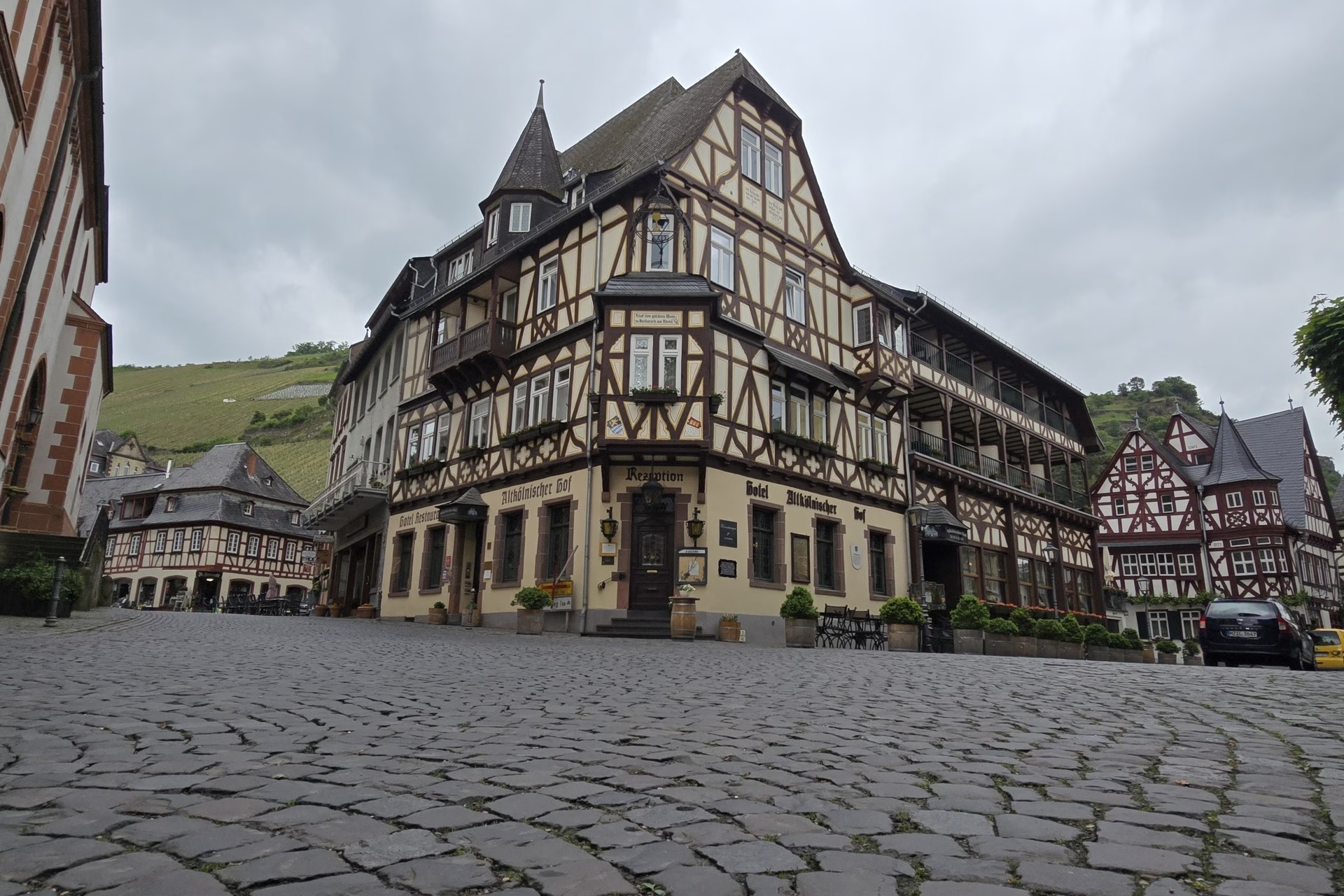
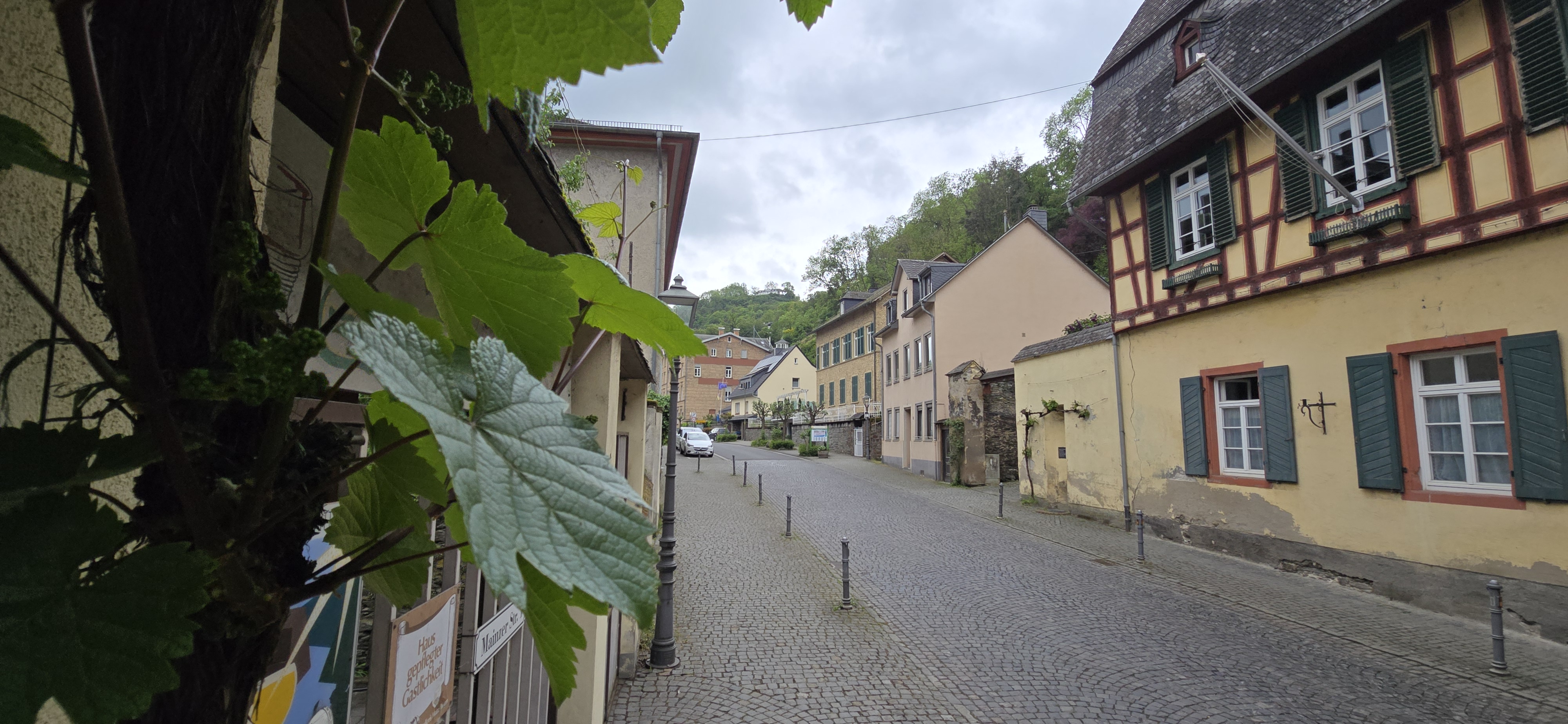
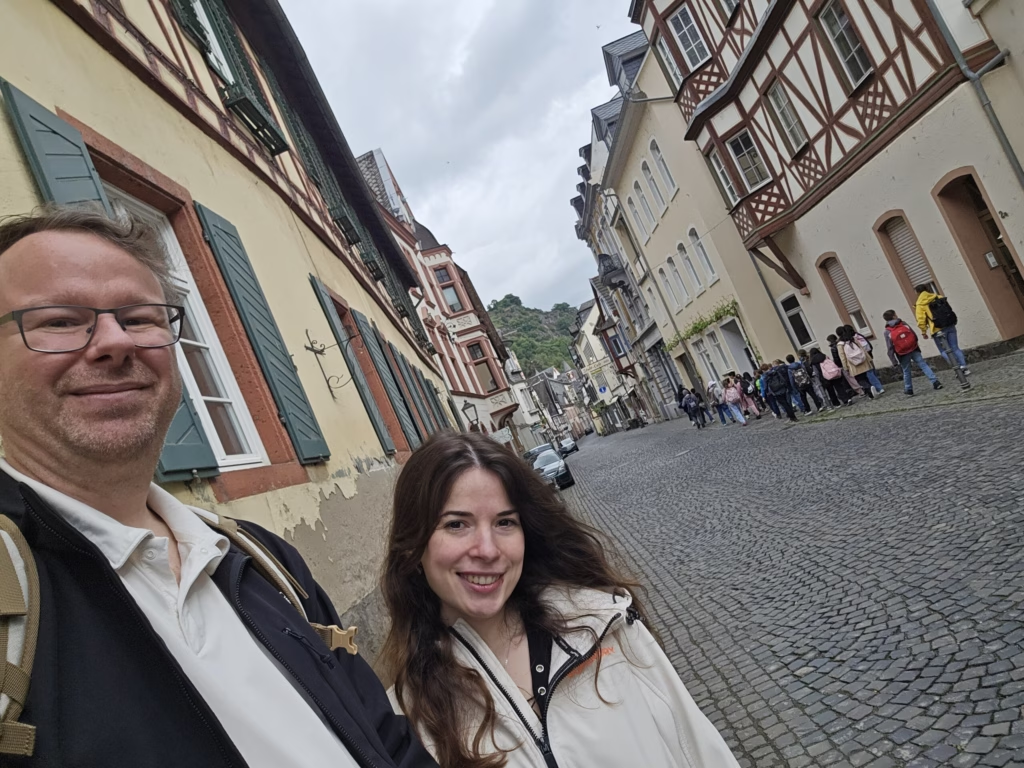
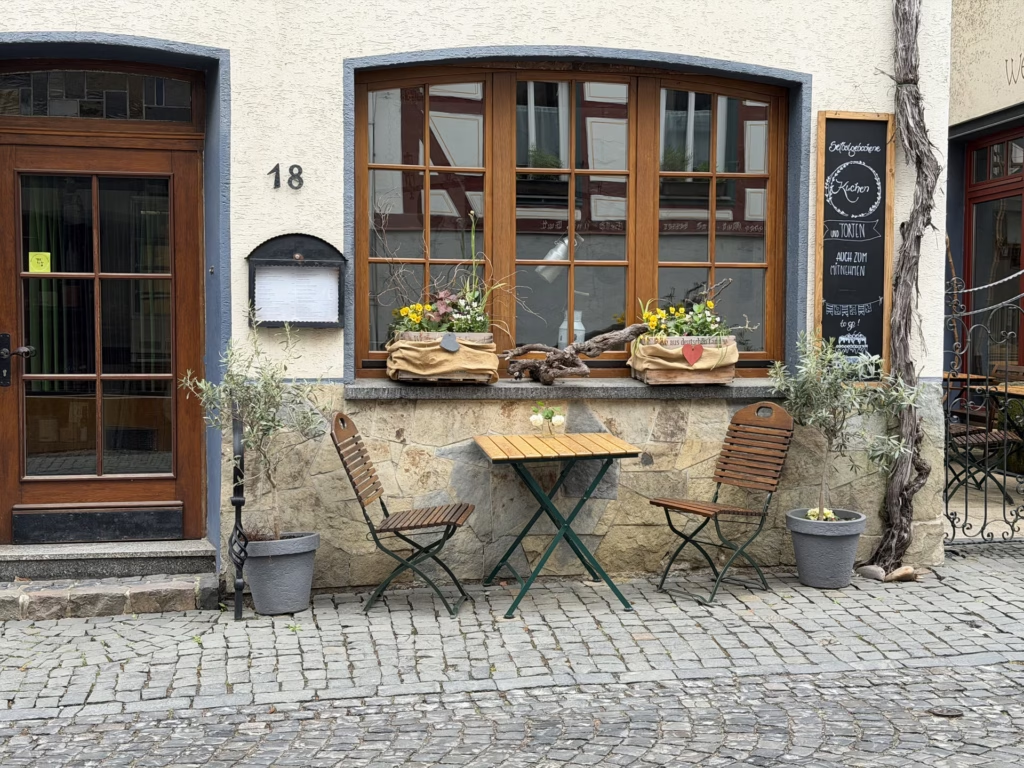
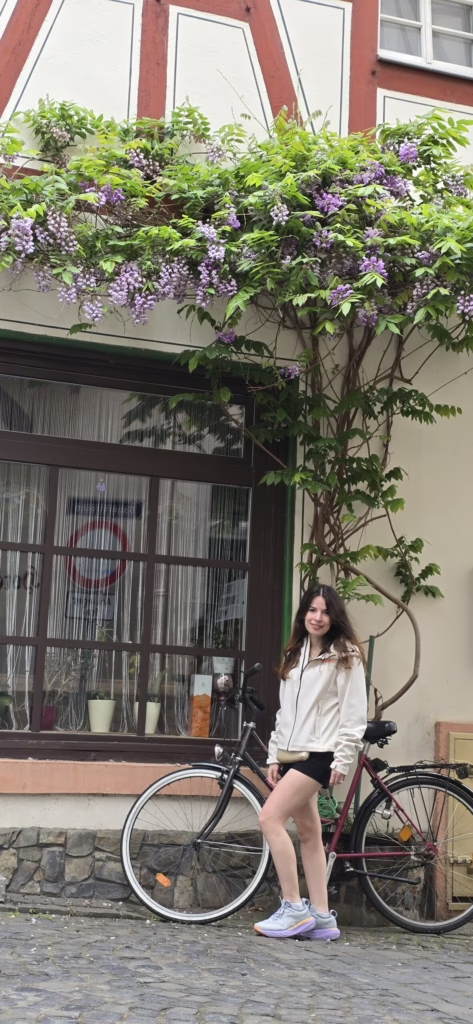
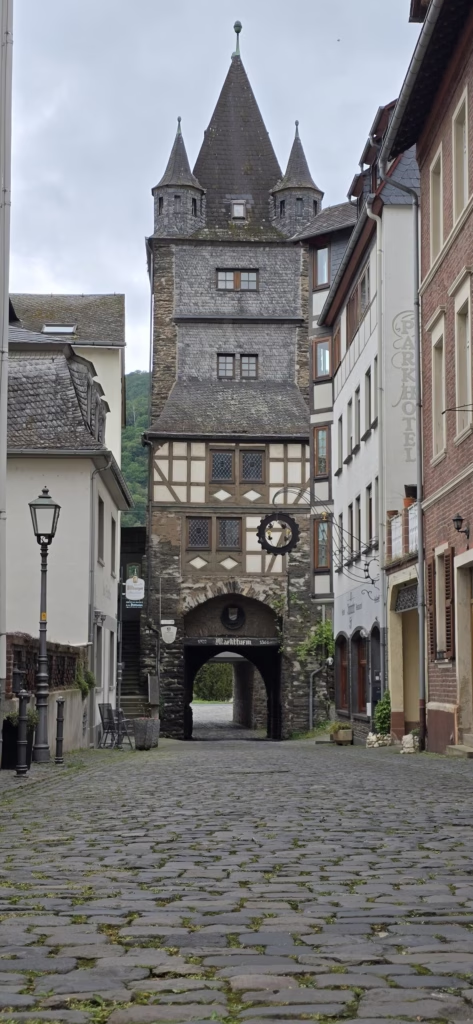
Oberstraße and Altes Haus. Walk north on Oberstraße from the station end. The half-timbered facades are mostly 16th to 18th century; the marquee piece (Altes Haus, dated 1368 in the carved beam over the door) is about three hundred meters in. We stopped at Cafe Karl Heinrich around 10:00, itself a Fachwerk building [primary-source: visited 2026-05-06]. Allow 20 to 30 minutes for the spine and cross-streets.
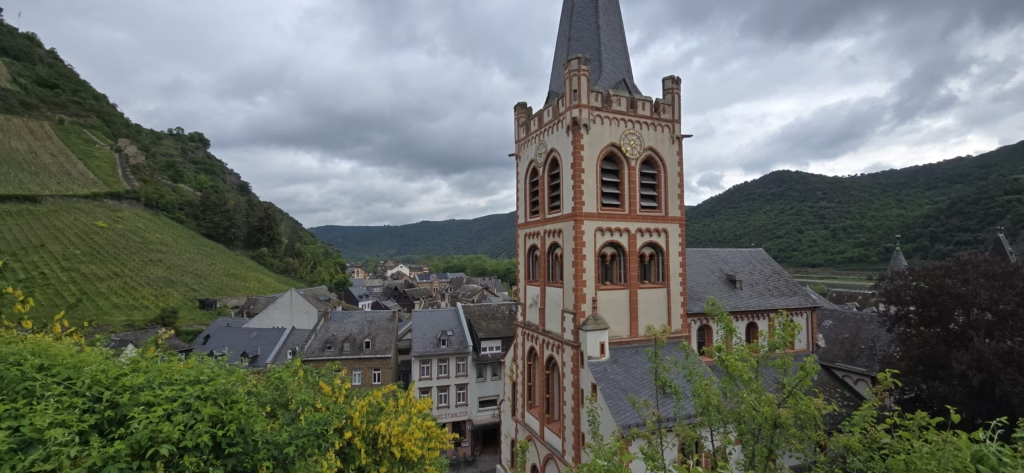
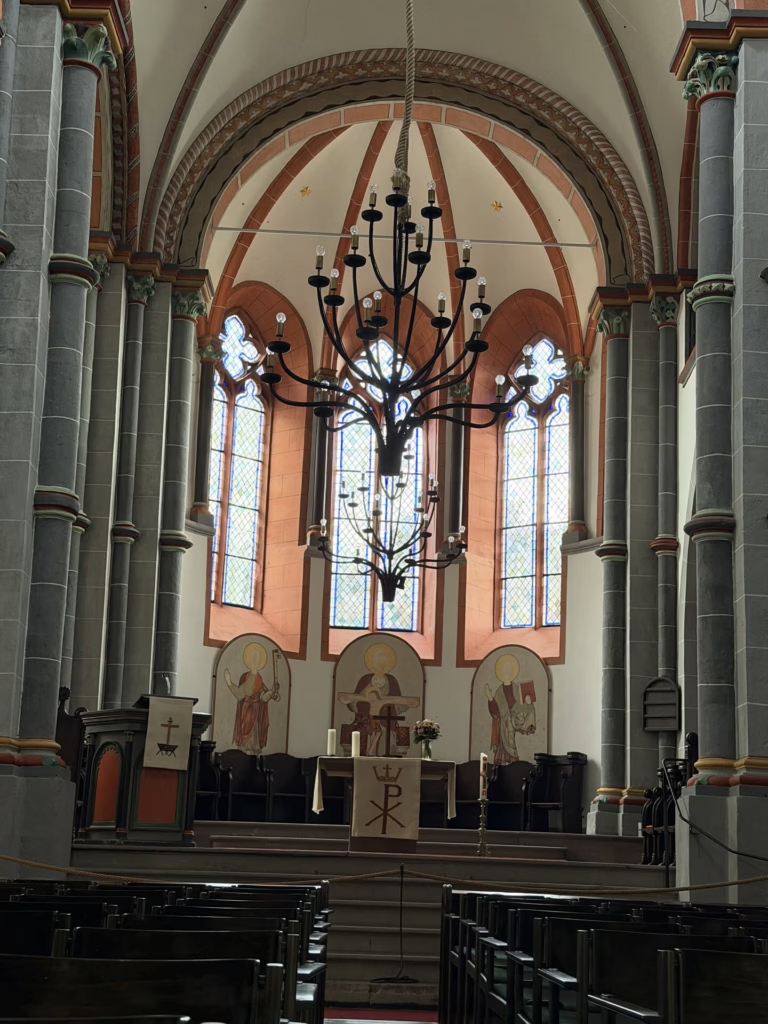
St. Peter Kirche. The Evangelical parish church on Markt is a Rhenish transitional basilica built between 1230 and 1269, with a crenellated late-Gothic upper story on the west tower added in 1478.[3] The slender octagonal spire is one of Bacharach’s three skyline shapes (the other two being the Wernerkapelle and the Stahleck silhouette). Plan 15 minutes inside for the medieval frescoes.
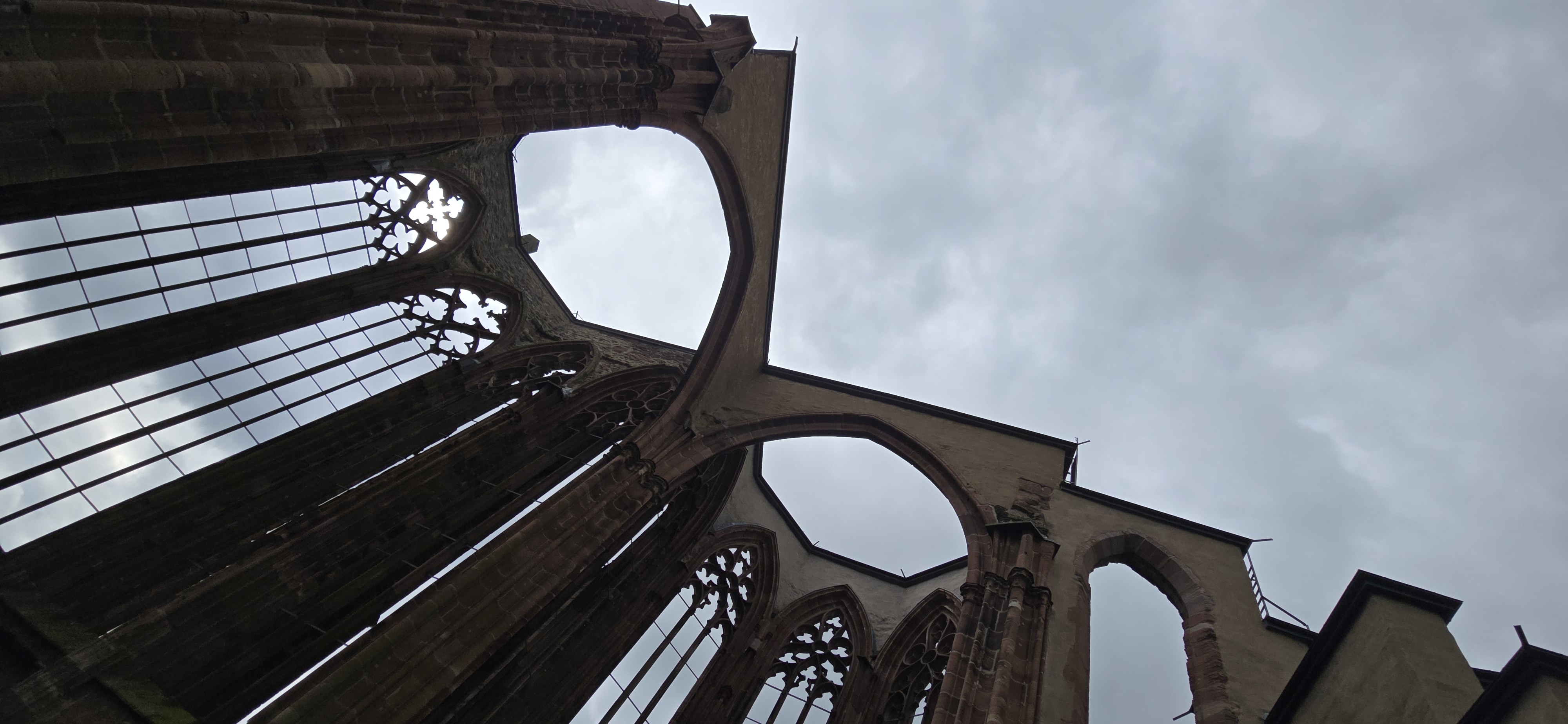
Wernerkapelle. From Oberstraße, take the path up past St. Peter and follow the signs. The Gothic ruin sits on a terrace above the town wall, wall arcade and window tracery intact, roof gone. Walk through and continue around back to see the rear of the apse. About 20 minutes.
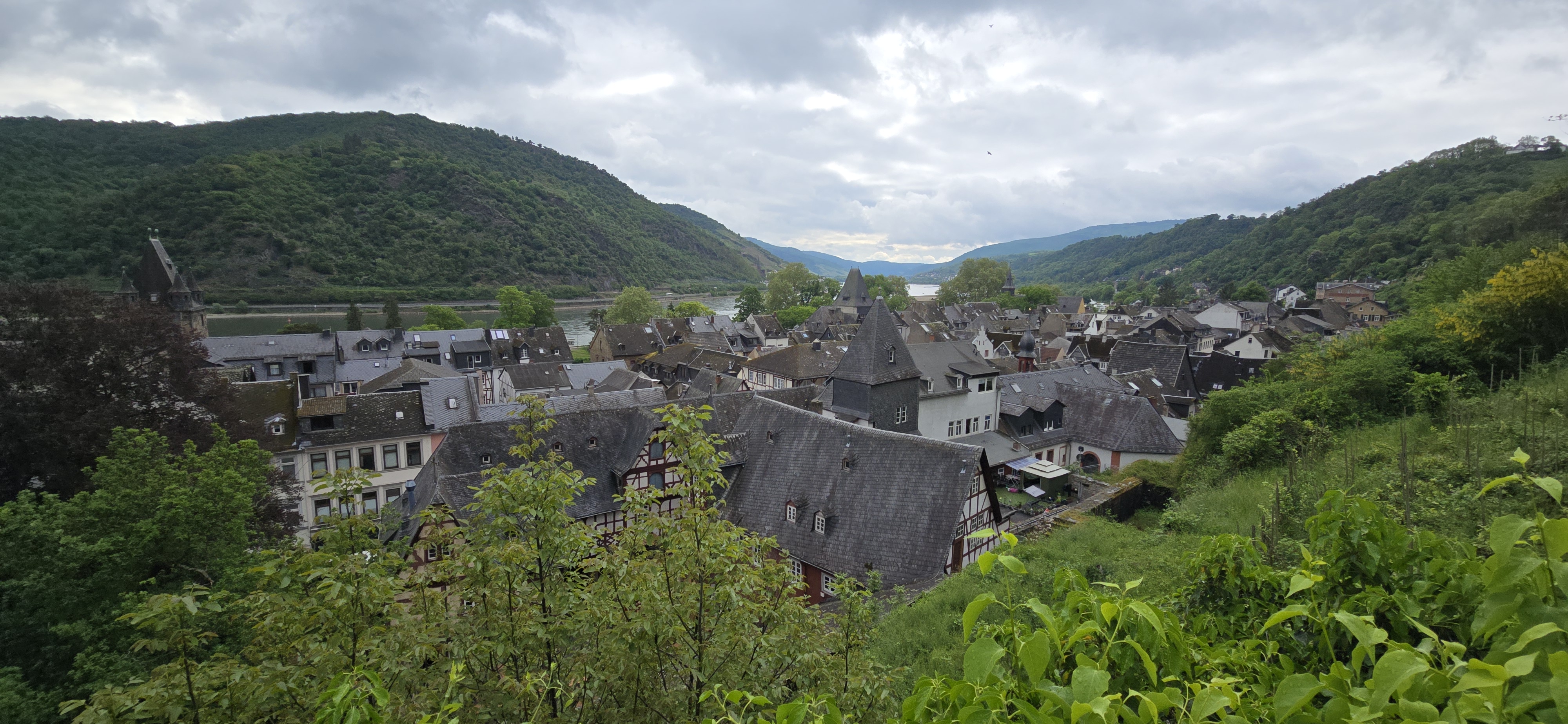
Town wall and Postenturm. From the Wernerkapelle, pick up the wall path that wraps the northern flank of the Altstadt. The Postenturm anchors the high northern corner. As of May 2026: the path is open, no entry fee, but expect small flights of stone steps and a sure foot. The view back down over the rooftops (red tile, half-timbering, the river just beyond) is the photograph everyone takes. Allow 15 to 20 minutes.
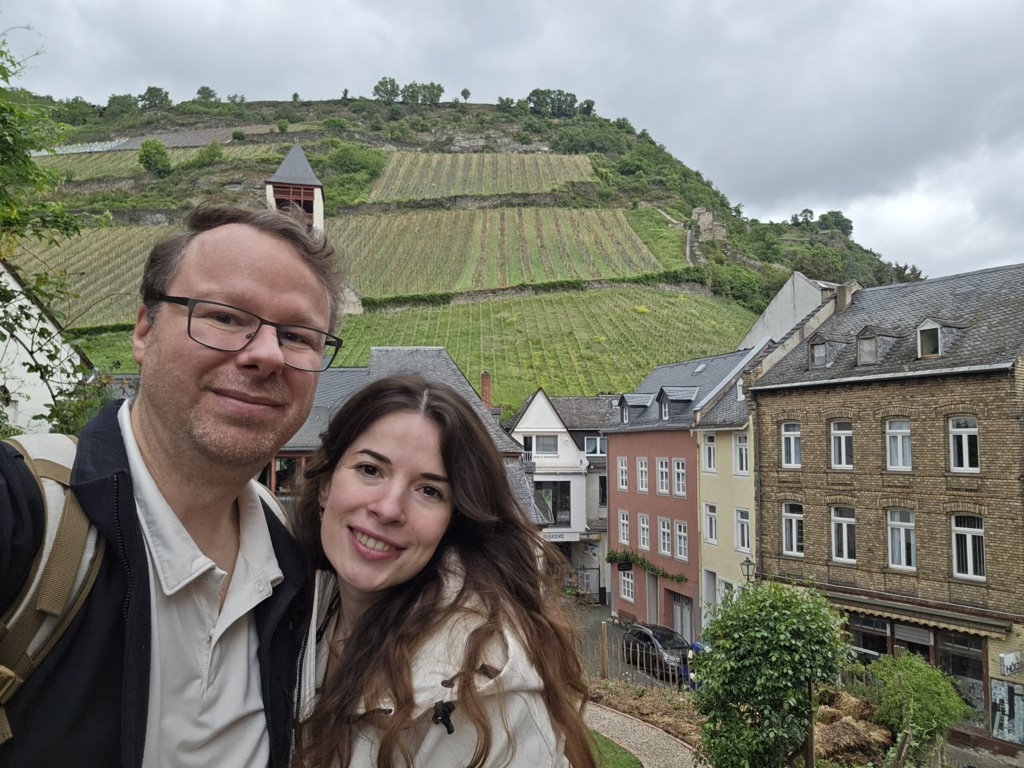
Copper-beech path toward Burg Stahleck. A trail climbs the hillside from the wall toward the castle. We walked as far as the copper-beech tree on the upper switchback before turning back for our train [primary-source: visited 2026-05-06]. The full climb to the gate runs 20 to 30 minutes one way; the trail is well-marked but steep in places. The dedicated section below covers what’s at the top.
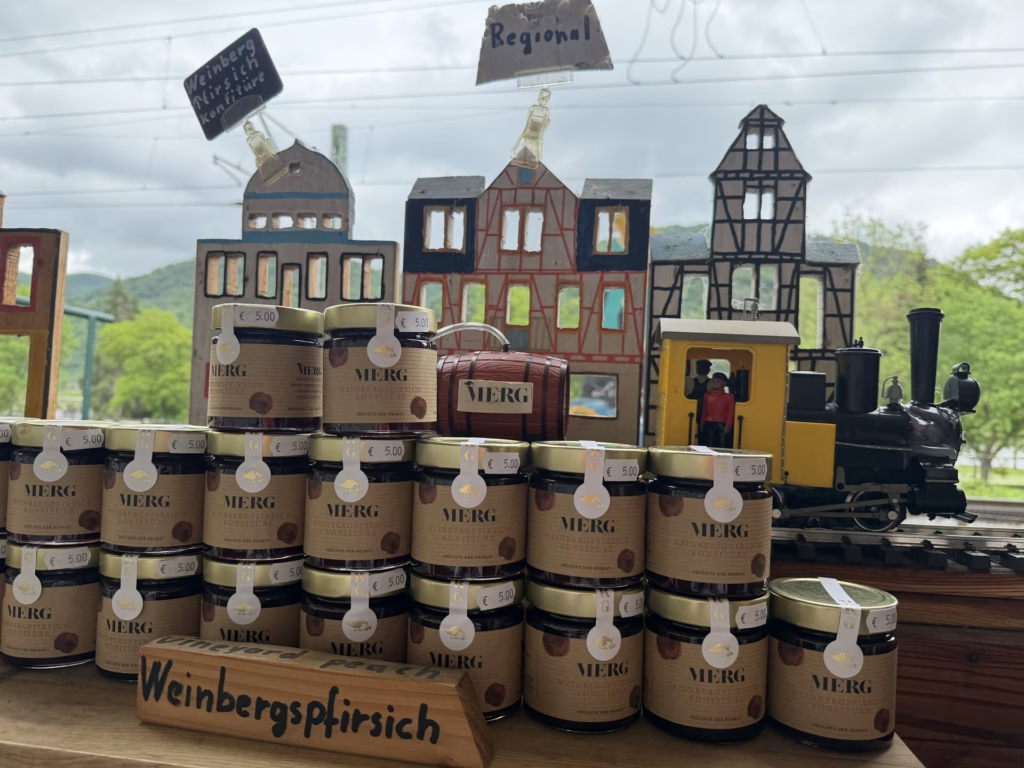
Souvenir stop. A small shop in the upper Altstadt sells pieces that work as anniversary souvenirs without becoming kitsch. We bought Weinbergspfirsich Konfiture (vineyard-peach jam from the fuzz-skinned peaches that grow between the rows of grapes) and a pair of wooden Marktturm Bacharach cutouts [primary-source: visited 2026-05-06]. Card and cash both worked.
Where to eat and drink
Honest disclosure: we did not eat or wine-taste in Bacharach. Anniversary lunch ended up at Asia Kim in St. Goar two hours later (next post in the series); breakfast had been at Backhaus Lüning in Bingen. So this section is what we missed and would try on a return.
Bacharach is a serious wine town. The Mittelrhein Riesling vineyards directly above produce some of the most concentrated slate-grown Rieslings in Germany. Three names worth knowing:
- Weingut Toni Jost (Hahnenhof). The most internationally known Bacharach producer; dry and off-dry Riesling from the Bacharacher Hahn vineyard. Tasting room on Oberstraße
- Weingut Fritz Bastian (Zum grünen Baum). Smaller producer with a Weinstube attached on Oberstraße; sit down for a glass and a bread board rather than buy bottles to go
- Weingut Ratzenberger. Family producer with a small Vinothek in town; respected dry Rieslings and traditional-method sparkling
For food, the Altstadt has the usual cluster of Gaststätten serving regional German fare plus café-bistros aimed at the cruise-boat trade. Two cautions: Wednesday Ruhetag (the weekly closing day) is more common here than the Monday or Tuesday Americans expect, so call ahead; and cruise-boat hours can spike café traffic within 200 meters of the river between roughly 11:00 and 14:00, so time around that window.
Practical tips
- Train from Bingen Stadt, not Hbf. The RB26 northbound to Bacharach runs from Bingen (Rhein) Stadt in the town center; Bingen (Rhein) Hbf is across the river in Bingerbrück, the wrong station. Confirm Bingen Stadt on your ticket and departure board
- DB Normalpreis allows stopovers. A single Normalpreis (Flexpreis) ticket on the regional Rhine line covers any intermediate stop on the route, including Bacharach. We paid €21.80 for two adults Bingen Stadt to St. Goar and stopped at Bacharach on the same ticket. Sparpreis (advance-purchase saver) tickets are bound to a specific train; ask for Normalpreis explicitly if you want flexibility
- 2 to 3 hours minimum for justice. A tight Bacharach day trip (90 minutes on foot plus train both ways) covers the Altstadt spine, Wernerkapelle, and a wall-path stretch, but skips the Stahleck climb, lunch, and wine tasting
- Stahleck climb: steep but short. Wernerkapelle level up to the gate runs 20 to 30 minutes on packed earth with stone steps in places. Wear shoes with grip
- Cash for small shops. Most shops take card and cash; some Wine Festival stalls run cash-only
- Best light. Mid-morning for Oberstraße facades; mid-afternoon for the wall path and Stahleck silhouette. The Wernerkapelle reads dramatically in overcast; do not wait for blue sky
- September wine festival is the busy weekend. For a quiet visit, avoid the second weekend of September entirely
Burg Stahleck, seen from below
We did not climb to Stahleck on this trip. The decision was a function of time and not weather: a 10:45 train to St. Goar meant the castle had to wait. Stahleck is worth its own post, and likely its own dedicated visit, because the castle’s history is uglier and more interesting than the soft “youth hostel since 1925” framing every English-language guide uses.
The basics. Burg Stahleck sits on a spur at about 160 meters above the Rhine, controlling the Bacharach wine-trade junction and the entrance to the Steeger Tal. The name itself reads transparently from Middle High German (stahel for steel plus ecke for spur) as unbezwingbare Burg auf einem Bergsporn (unconquerable castle on a mountain spur).[4] First documented in 1135 with castellan Goswin von Stahleck; held by the Counts Palatine from the late 12th century through the 1689 destruction; rebuilt as a Deutsches Jugendherbergswerk site from 1925 onward.
The hook worth knowing is the Hochzeit von Stahleck (the wedding of Stahleck) in 1193 or 1194. Agnes, daughter of Count Palatine Konrad von Hohenstaufen, was supposed to marry the French king Philip II as part of Emperor Heinrich VI’s political strategy. Konrad agreed. While Konrad was away from the castle, Agnes and her mother arranged a secret wedding at Stahleck to Heinrich the Elder of Brunswick, the Welf son of Heinrich the Lion, the son of the family the Hohenstaufen had just spent decades fighting. The Archbishop of Trier officiated.
The marriage held, and over time it became one of the early reconciliations between Welfs and Hohenstaufen, though the political peace did not survive Heinrich VI’s early death and the disputed 1198 imperial election.[5] A Welf-Staufer reconciliation arranged in secret by a teenage Pfalzgraf’s (count palatine’s) daughter at a castle on the Rhine: this is a much better historical hook than “youth hostel.”
The harder chapter is what happened between 1934 and 1944. The Rheinischer Verein für Denkmalpflege und Heimatschutz had bought the ruin in 1909 and begun rebuilding it as a youth hostel in 1925. The Palas (residential hall) was fully reconstructed between November 1934 and October 1935, and on 25 October 1935 Gauleiter Gustav Simon (the Nazi regional party leader for Gau Koblenz-Trier) dedicated the new building in front of members of the Hitlerjugend, the Jungvolk, the Bund Deutscher Mädel, and SA and SS. For the next two years the Nazi regime used Stahleck to indoctrinate youth in NS ideology through residential courses.
In June 1938 Rudolf Heß visited the castle, and the visit prompted plans to reconstruct the Bergfried (keep) as a seven-story, 36-meter Rudolf-Heß-Turm. Work began on a new foundation in November 1938 but was halted by the outbreak of WWII and never completed. From 1940 to 1942 the castle served as a Wehrmachtslazarett (military hospital). In November 1940 and again at length in 1942, Luxembourg students from Esch-sur-Alzette and Echternach were interned in the castle for four months as punishment for protesting the Nazi imposition of conscription in occupied Luxembourg.
From January 1943 through summer 1944 the site operated as a punishment camp for German youth deemed insufficiently loyal, and then as a Wehrertiüchtigungslager (pre-military training camp) for boys aged 14 to 18.[4]
After the war the castle reverted to French military occupation, then to youth-hostel use from November 1947 onward. The Bergfried was finally completed in 1967 at a smaller scale than the 1938 plan, and that is the silhouette visible today from Bacharach below.
As of May 2026: Burg Stahleck operates as a Jugendherberge run by DJH Rheinland-Pfalz / Saarland; interior visits are not possible because the castle remains an active hostel, but the Innenhof (inner courtyard) is freely accessible and the south terrace gives a panoramic Mittelrhein view including the Bacharacher Werth (the Rhine island below town).[6] The wasserfüllte Halsgraben (water-filled moat) at the western approach is described by the operator as a rarity for German hilltop castles. We will climb it on a return visit; this post puts down a marker that the next pass should reach the gate.
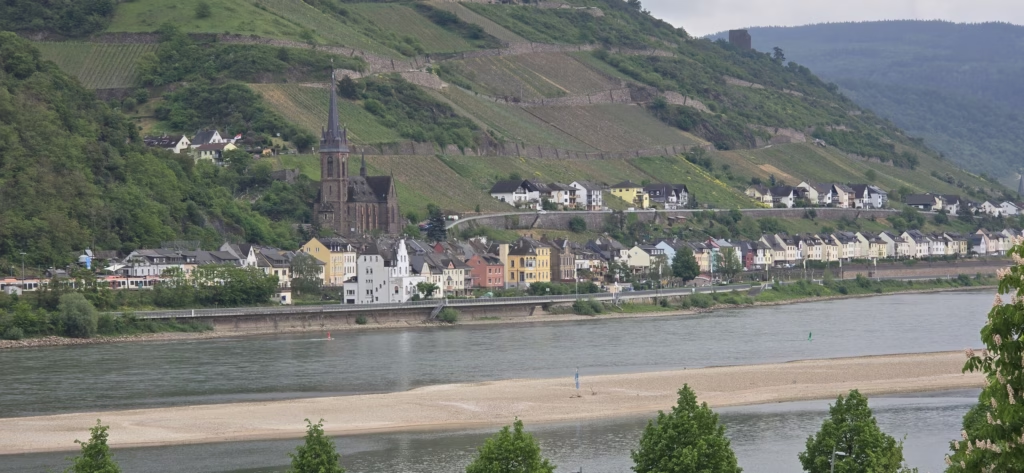
From the visit
Sources
- Bacharach, Wikipedia EN. en.wikipedia.org/wiki/Bacharach (retrieved 2026-05-17).
- Rhine Gorge / Upper Middle Rhine Valley UNESCO World Heritage Site, Wikipedia EN. en.wikipedia.org/wiki/Rhine_Gorge (retrieved 2026-05-17).
- St. Peter (Bacharach), Wikipedia DE. de.wikipedia.org/wiki/St._Peter_(Bacharach) (retrieved 2026-05-17).
- Burg Stahleck (Bacharach), Wikipedia DE. de.wikipedia.org/wiki/Burg_Stahleck_(Bacharach) (retrieved 2026-05-17).
- Burg Stahleck, Wikipedia EN. en.wikipedia.org/wiki/Burg_Stahleck (retrieved 2026-05-17).
- Stadt Bacharach official site, Burg Stahleck visitor info. bacharach.de/stadtinformationen/stadtrundgang/burg-stahleck (retrieved 2026-05-17).
- Stadt Bacharach official site. bacharach.de (retrieved 2026-05-17).
- UNESCO World Heritage Centre, Upper Middle Rhine Valley (Site 1066). whc.unesco.org/en/list/1066/ (retrieved 2026-05-17).