Wissembourg sits four kilometers south of the German-French border, an Alsatian town that has changed sovereignty four times since 1871 and still keeps the look of a medieval Free Imperial City along the Lauter river. For a KMC-area reader, this is the closest place to read three layered stories on foot in one afternoon: the 7th-century abbey origin, the 1870 opening battle of the Franco-Prussian War, and the bakery counter at Pâtisserie-Chocolaterie Daniel Rebert that turns the trip into a destination. As stop 3 of 4 in the Sunrise to pastry Wasgau and northern Alsace day trip, this is the food-and-history close, the last stop before the route turns north for home.
Visit at a glance
- Official site: danielrebert.com (Daniel Rebert pâtisserie, EN/FR)
- Address: 7 Place du Marché aux Choux, 67160 Wissembourg, Alsace, France
- Opening hours: Tue–Sat 08:00–18:30, Sun 08:00–13:00; closed Mondays
- Parking: Place de la République paid lot, ~3 min walk; cash + card meters
- Cost: Pastries €4–8; lunch tartine €10–15; town walk free
- Accessibility: Cobblestone center; level approach to Rebert; dogs welcome on terrace
- Distance from Kaiserslautern: ~75 km, ~70 min via A6 → B10 → B9 → D263
- Time on site: 90–120 min for town walk + Rebert; +1 h for 1870 battlefield
A bit of history
Wissembourg, called Weißenburg im Elsäß in its German-period spelling, has a sovereignty record that surprises American readers used to fixed national borders. The town has been French, German, French again, German again, and French again, with four flag changes since 1871 alone. That layered identity is visible on every shopfront sign and in the way the local Alsatian dialect still carries both vocabularies.
The settlement grew up around a Benedictine abbey founded in the 7th century, possibly under the patronage of the Frankish king Dagobert I, on the banks of the Lauter river.[3] The town’s first major political moment came in 1354, when Emperor Charles IV named it to the Décapole, the alliance of ten Alsatian Free Imperial Cities with imperial privileges. Wissembourg held that status until the Treaty of Westphalia and the subsequent French annexations of the 1670s pulled Alsace into the French royal orbit; the town was formally incorporated into France around 1680.
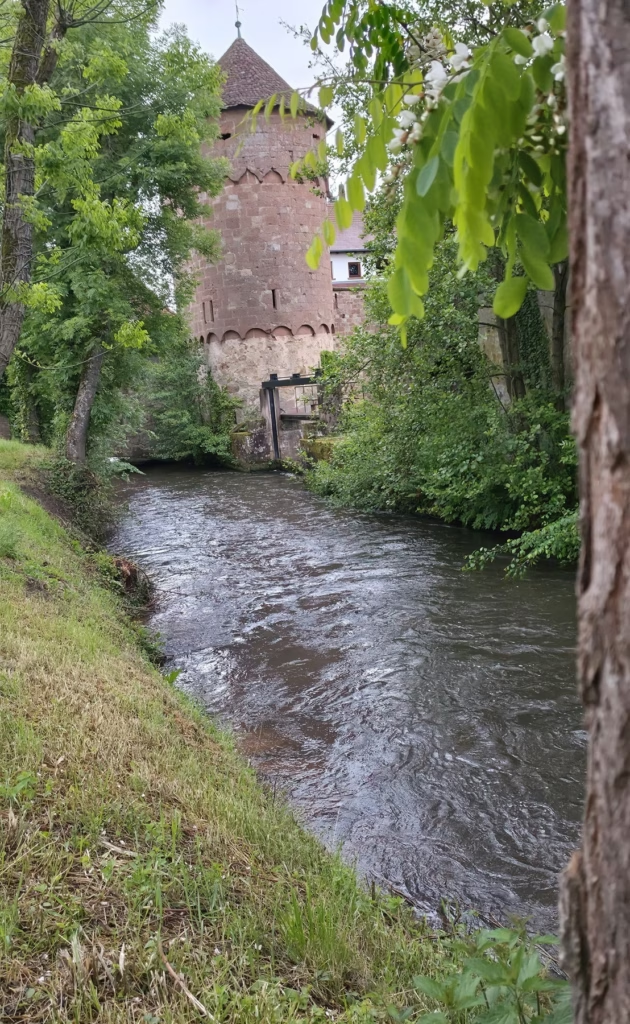
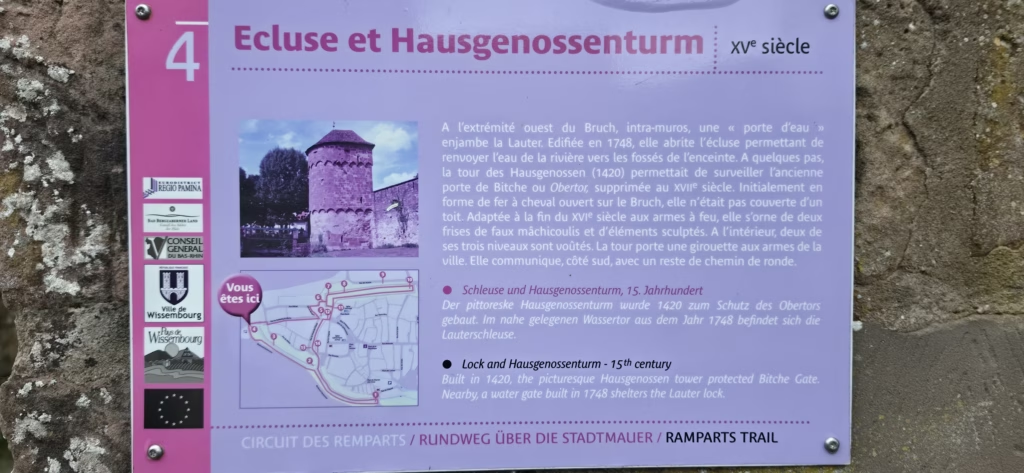
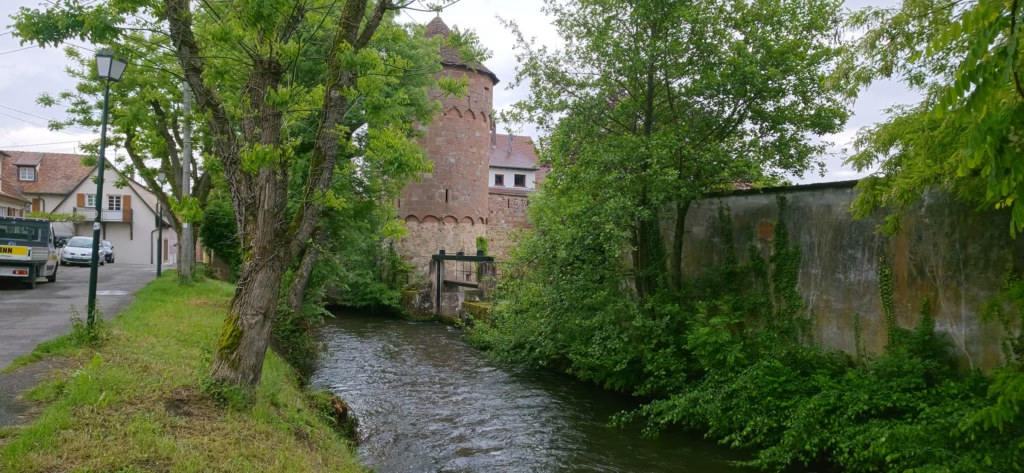
The fortifications that the visitor sees today are not classical Vauban work despite the local tradition. The Lines of Wissembourg (Lignes de la Lauter) were laid down by Marshal Villars in 1706, the year before Vauban’s death the following March, and reinforced under Vauban-school engineer Louis de Cormontaigne in 1746, who raised the walls and added the outer works.[6] The Porte de Bitche, the surviving medieval-plus-early-modern gateway on the northwestern edge of the Bruch quarter, is the most photogenic of these layered defenses. The fortifications were declassified by the French military in 1867, three years before the war that made the town famous.
A curious episode threads through this period. Stanisław Leszczyński, the deposed king of Poland, lived in exile in Wissembourg from 1719 to 1725 with his family. On 3 April 1725 the formal request arrived from Versailles asking for his daughter Marie’s hand in marriage to the young Louis XV; Marie Leszczyńska left Wissembourg to become queen of France, and the house her father occupied still stands as the Maison Stanislas.[3] The royal-exile-to-queen-of-France pivot happened on this square.
The single date that shaped the modern town is 4 August 1870. The opening battle of the Franco-Prussian War was fought on the heights above Wissembourg, where General Abel Douay’s roughly 6,000 French troops faced 25,000 German troops (Prussian III Army under Crown Prince Friedrich Wilhelm, with Bavarian forces under General Jakob von Hartmann). Douay was killed in late morning when a French mitrailleuse caisson exploded near him; the French line collapsed by afternoon.[5] The victory cleared the road into France and, within a year, produced the Reichsland Elsäß-Lothringen (1871–1918).
That new German Imperial territory made Wissembourg a German town for the first time in two centuries. France recovered it in 1918, lost it again from 1940 to 1944 under Nazi occupation, and recovered it definitively on 19 March 1945.[4] Four flag changes in seventy-five years.
What to do here
Walking Wissembourg: from Porte de Bitche to Place du Marché
The town reads cleanly on foot in a half-day if walked in this order.
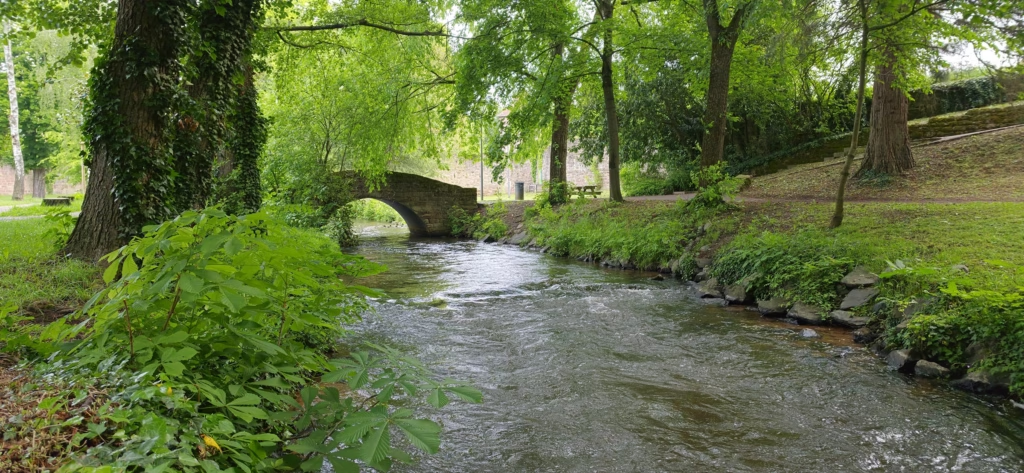
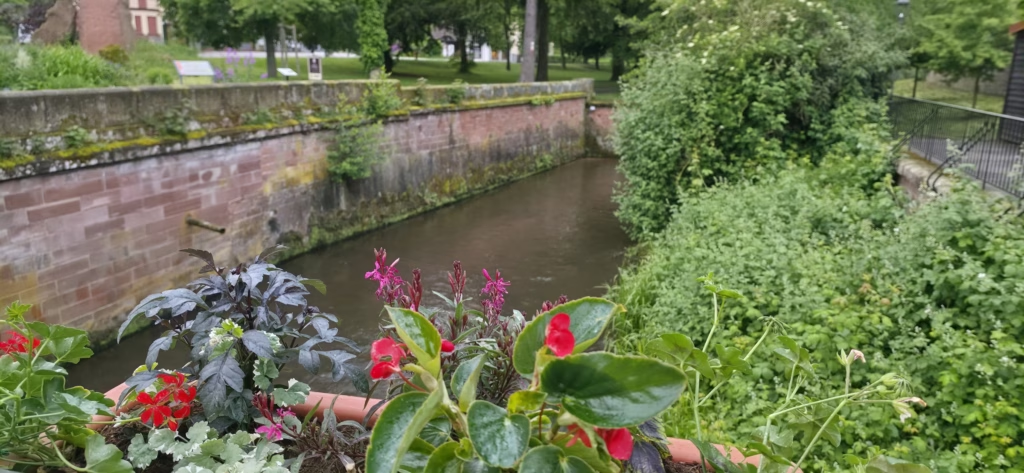
Start at the Porte de Bitche on the northwestern edge of the Bruch quarter. The gate is a layered defense of medieval base and early-modern reinforcement, and the cobbled approach makes the cleanest first frame for a hero shot. From there, follow the rampart fragments along the Lauter river south and east toward the center, taking the path between the river and the surviving walls. As of May 2026: the rampart walk is open without charge and accessible during daylight; some short sections involve uneven cobbles and small steps. Allow 15–20 minutes for the walk-in.
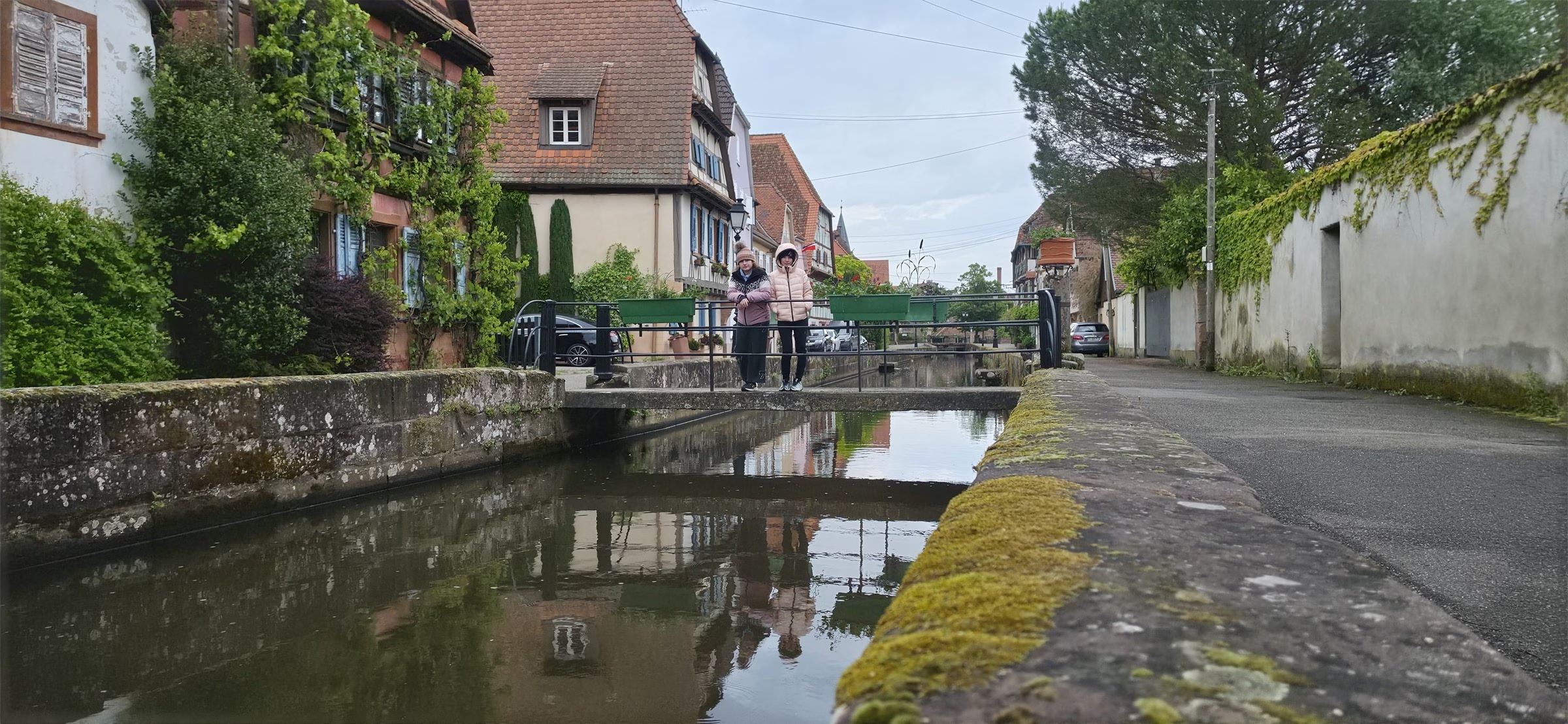
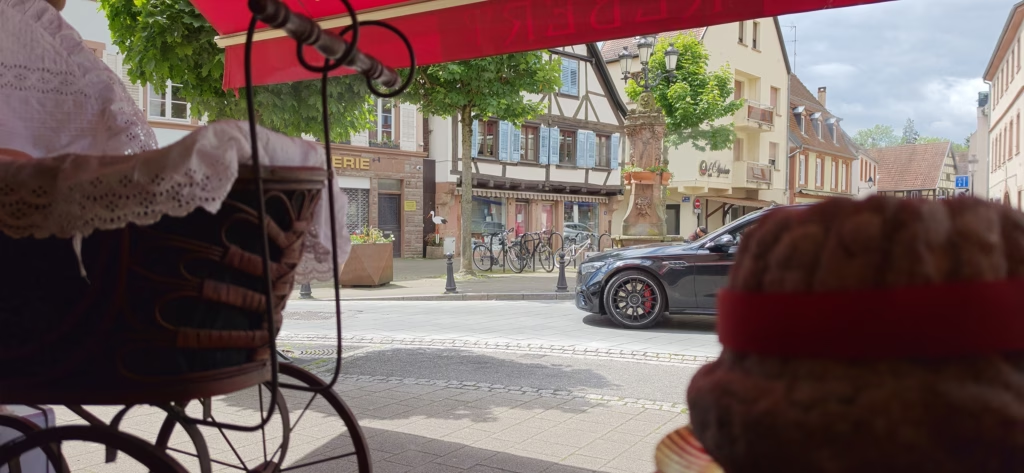
Reach Place du Marché aux Choux (Cabbage Market Square), the historic main square. The half-timbered facades around the perimeter are mostly 16th to 18th century, restored after WWII damage. The Pâtisserie-Chocolaterie Daniel Rebert is at number 7 (more on it under Where to eat and drink). Spend 10–15 minutes reading the square itself before going inside.
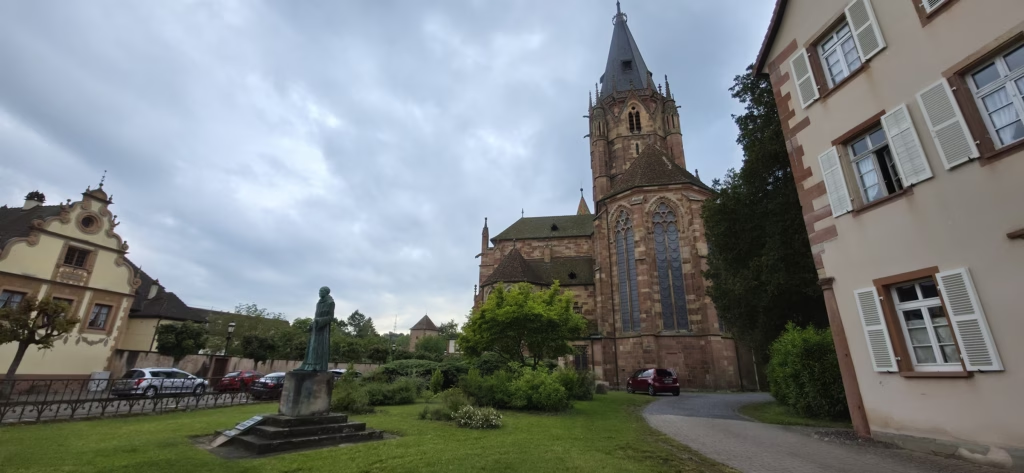
Walk two blocks to the Abbatiale Saints-Pierre-et-Paul. This is the 13th-century Gothic abbey church on the site of the original 7th-century Benedictine foundation, and is the second-largest building of original Gothic style in Alsace after the cathedral of Strasbourg.[4] The nave is large enough to swallow the sound of conversation; medieval frescoes survive on portions of the interior walls. Plan 15–20 minutes inside.
Two optional add-ons round out a longer visit. The Maison Stanislas on Quartier du Bruch is the small museum and former residence of Stanisław Leszczyński; as of May 2026: opening hours are seasonal and limited, confirm with the Office de Tourisme on Place de la République before walking over. The Musée Westercamp, the town history museum on Place des Carmes (moved to the new building adjoining the former synagogue in summer 2018), similarly keeps seasonal hours. Either one adds 20–30 minutes.
The whole sequence, Porte de Bitche to Place du Marché aux Choux to Abbatiale and back to Rebert for the food stop, runs about 90 minutes at an unhurried pace, longer with museum stops.
Where to eat and drink
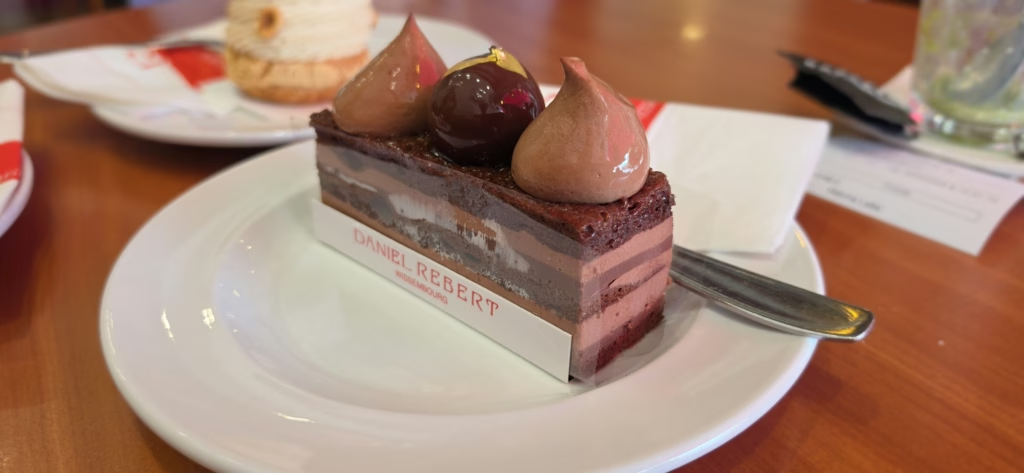
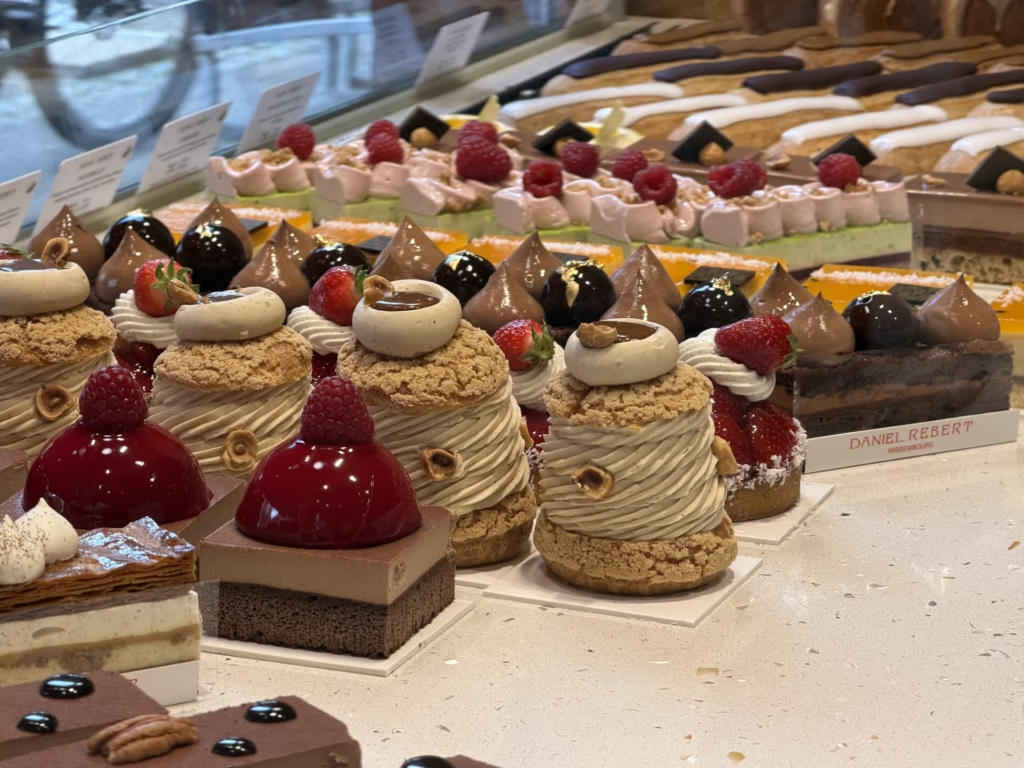
This is the headline of the day-trip series, and the reason Wissembourg closes the route rather than opening it. Pâtisserie-Chocolaterie Daniel Rebert at 7 Place du Marché aux Choux is one of the most decorated pastry-and-chocolate houses within a 90-minute drive of Kaiserslautern, and the only credible reason to plan a trip around a single shop counter.
As of May 2026: the shop is open Tuesday–Friday 07:30–18:30, Saturday 07:00–18:00, Sunday and public holidays 08:00–18:00, closed Mondays.[1] The peak hours are Saturday mid-morning and Sunday after church; weekday late mornings are usually quieter. Pastries run roughly €4 to €8 each. Chocolates are sold loose by weight; a small bag of mixed pieces lands in the €15 to €25 range. Card and cash both accepted.
The credentials are real and verifiable. The shop is a member of Relais Desserts International, the elite international guild of pastry chefs and chocolatiers, alongside houses like Ladurée, Pierre Hermé, and Sébastien Gaudard. It is also a member of Les Étoiles d’Alsace, the regional culinary-excellence association.[2] The shop also ranks among the top 100 chocolatiers in France in the Club des Croqueurs de Chocolat, the long-running national chocolate critics’ guild.[7] Foodhunter Germany’s profile situates Rebert in the lineage of haute pâtisserie working out of Alsace.[8]
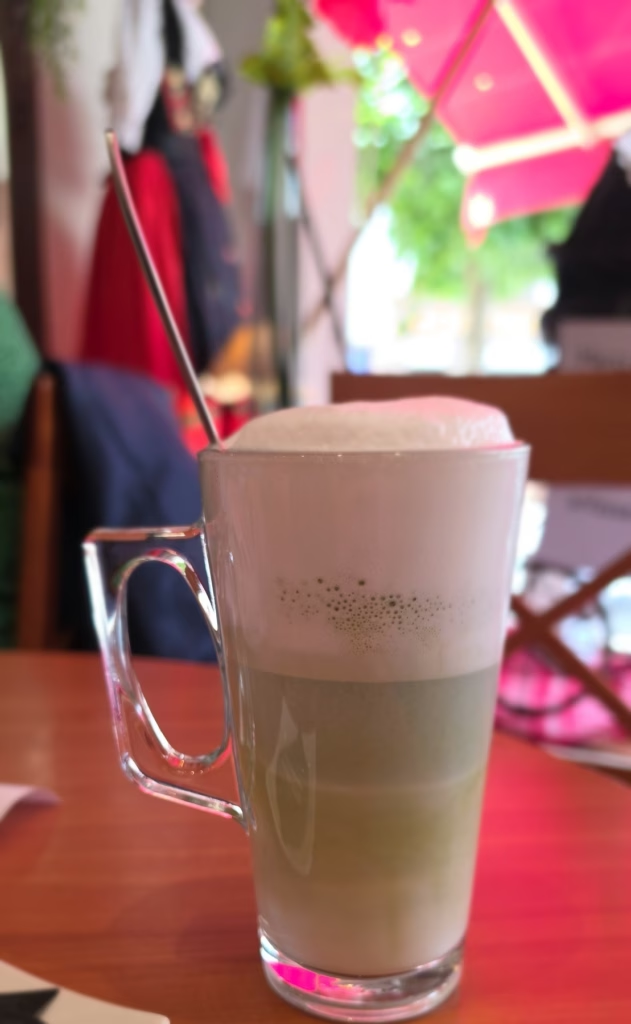
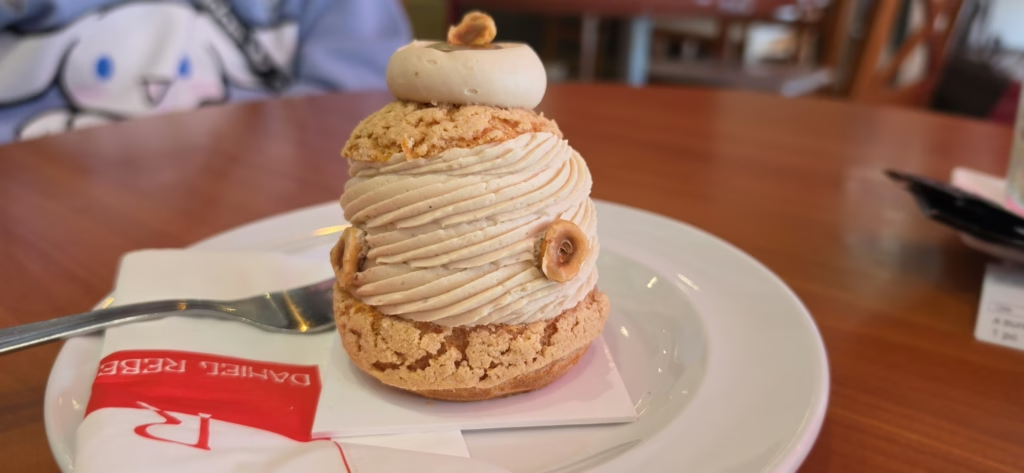
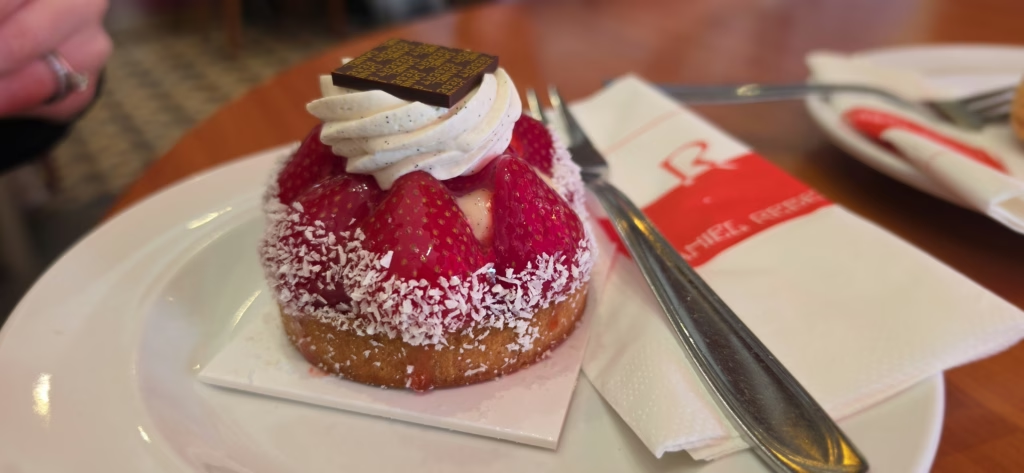
The signature pieces worth knowing by name on the way in: the tarte au citron (a benchmark lemon tart with clean citrus structure), the Saint-Honoré (the choux-and-cream classic done in the French canon), the seasonal fruit entremets, and the macarons in rotating flavors. The chocolate range covers single-origin bars, hand-rolled truffles, and seasonal molded pieces. As of May 2026: the shop also operates a salon de thé with a terrace for sit-down service in season; ask at the counter for current seating availability.
Photography inside the shop is a courtesy question. The window display is fine from the street, but interior shots of the counter or specific pieces should be cleared with the staff first; some artisanal houses ask “no flash” or “no posted images” without prior arrangement.
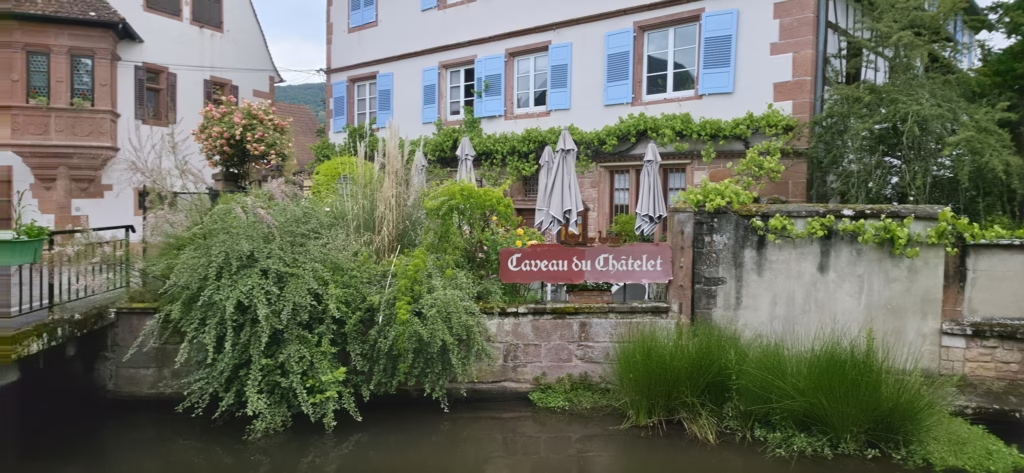
For Alsatian classics beyond Rebert, Wissembourg has a handful of traditional bistros serving tarte flambée (the flat-bread regional dish, also called Flammekueche), baeckeoffe (the slow-cooked meat-and-potato casserole), and the local choucroute. Most cluster within five minutes’ walk of Place du Marché aux Choux.
Practical tips
- Currency. France is on the euro. Card payment is standard in the shops, but a small cash reserve is useful for parking meters and the bakery’s smaller purchases.
- Language. Alsatian-French is the operational language; English and German are widely spoken in tourist-facing shops, including Rebert. The bilingual sign tradition runs through the old town.
- Schengen border. The crossing at Schweigen-Rechtenbach (~4 km north) has no passport checks under normal conditions. Carry your residence permit and passport regardless; spot checks happen, especially during European Council weeks or holidays.
- Sunday closures. Many shops in French small towns close Sundays or take reduced hours. As of May 2026: Rebert opens Sundays 08:00–18:00, which is the exception, not the rule, for the wider town. Plan museum visits for Saturday or Tuesday–Friday if possible.
- Photography in churches. The Abbatiale Saints-Pierre-et-Paul allows photography without flash during non-service hours. A wide-angle lens helps with the nave; the upper triforium reads better with a moderate telephoto.
- Best light. Mid-morning side light works best for the half-timbered facades around Place du Marché aux Choux. The Porte de Bitche reads cleanest in the first hour after sunrise. The Abbatiale interior is dimmer than it looks; a steady hand or a beanpod is more useful than a tripod, which most French churches discourage.
- ATM access. Banks on Place de la République have ATMs that accept international cards. The Rebert shop accepts both cash and card.
- Family friendly. The old town is walkable for school-age children. Strollers handle the squares but struggle with the rampart cobbles and the medieval gate thresholds.
From the visit
Sources
- Pâtisserie Rebert official site. patisserie-rebert.fr (retrieved 2026-05-15)
- Alsace Verte Tourist Office, Patisserie Daniel Rebert listing. alsace-verte.com/en/restaurants/patisserie-daniel-rebert/ (retrieved 2026-05-15)
- Wissembourg, Wikipedia EN. en.wikipedia.org/wiki/Wissembourg (retrieved 2026-05-15)
- Wissembourg, Wikipédia FR. fr.wikipedia.org/wiki/Wissembourg (retrieved 2026-05-15)
- Battle of Wissembourg (1870), Wikipedia EN. en.wikipedia.org/wiki/Battle_of_Wissembourg_(1870) (retrieved 2026-05-15)
- Plateforme Ouverte du Patrimoine, Fortification d’agglomération de Wissembourg (Ministère de la Culture). pop.culture.gouv.fr/notice/merimee/IA67008072 (retrieved 2026-05-15)
- Badische Neueste Nachrichten, Daniel Rebert aus Wissembourg. bnn.de/nachrichten/elsass/daniel-rebert-aus-wissembourg-zaehlt-zu-den-besten-chocolatiers-frankreichs (retrieved 2026-05-15)
- Foodhunter Germany, Daniel Rebert Haute Pâtisserie aus dem Elsass. foodhunter.de/daniel-rebert-haute-patisserie-aus-dem-elsass/ (retrieved 2026-05-15)