The Europa-Denkmal Sankt Germanshof is a twelve-stele sandstone circle on a quiet stretch of the L 478, where on 6 August 1950 about three hundred students from nine countries sawed down the German-French border posts and burned them as a “European fire.” For a KMC-area visitor this is a thirty-second walk from the layby that holds one of the founding gestures of open-border Europe, an act of civil disobedience timed deliberately for the day before the Council of Europe’s Consultative Assembly opened in Strasbourg.[4] As the opening stop of the sunrise-to-pastry Wasgau and Alsace day trip, it sets the political backdrop for everything that follows in Schweigen, Schoenenbourg, and Wissembourg.
Visit at a glance
- Address: Europa-Denkmal Sankt Germanshof, L 478, 76891 Bobenthal
- Opening hours: Open 24/7, year-round (outdoor site, no gate)
- Parking: Wanderparkplatz Bobenthal / St. Germanshof, free, ~40 m to monument
- Cost: Free; no admission, no donation box
- Accessibility: Level outdoor stone circle on packed gravel; practically wheelchair and stroller manageable in dry weather; dogs on leash
- Distance from Kaiserslautern: ~75 km, ~55–65 min via A6 → B270 → B10 → L 478
- Time on site: 20–30 min standalone; 45–60 min with the layby walk
- Next stop: Fort Schoenenbourg (stop 2 of 4)
A bit of history
The hamlet of Sankt Germanshof, a handful of houses tucked under the Wasgau ridge in the municipality of Bobenthal, sat on a German-French border that had been closed since 1945. Five years after the war the customs barrier was still down, the Zollhaus was still staffed, and the wooden posts still ran across the L 478.[1]
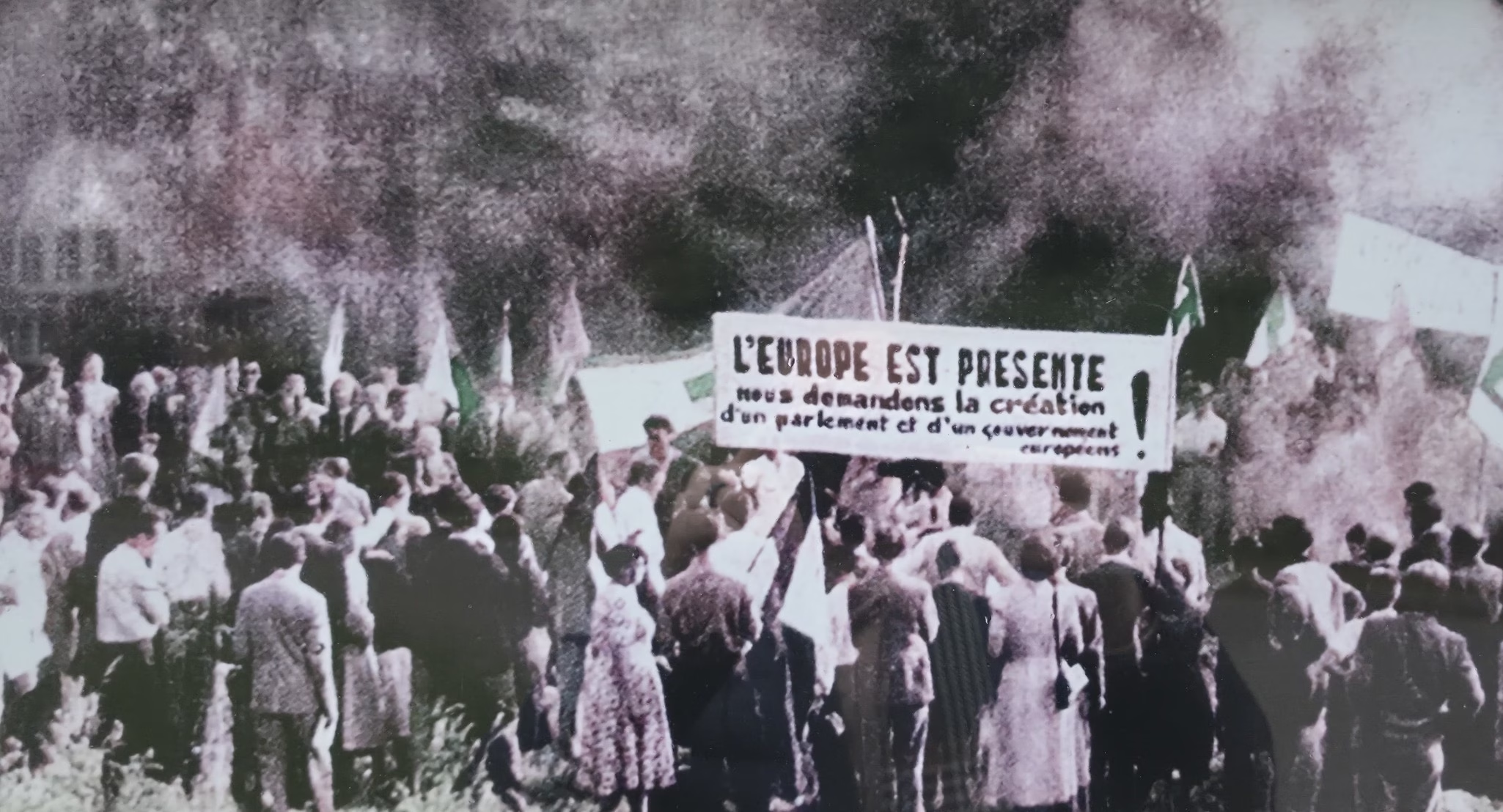
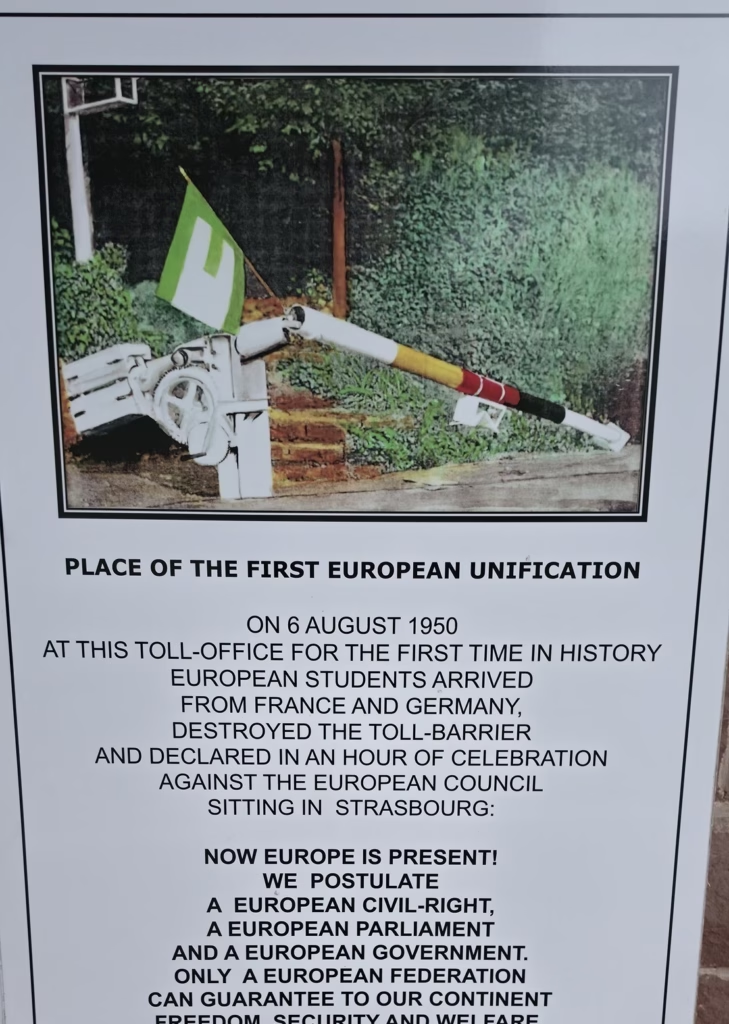
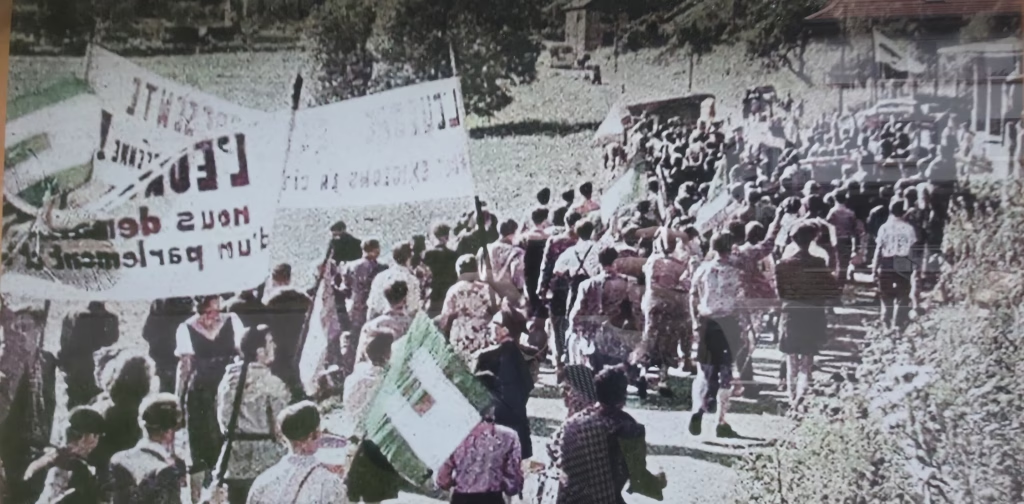
On Sunday, 6 August 1950, about three hundred people converged on the crossing from both sides. The action was organized by the Strasbourg law professor Michel Mouskhély and Prof. Marcel Mille through the Jeunesse Fédéraliste Européenne and the Bund Europäischer Jugend.[2] The LVR cultural-landscape registry records the tools they carried in plain German: “Sägen, Schraubenlüssel und Hämmer” (saws, wrenches, hammers).[3] They sawed down border trees and posts, lifted the barrier gates off their hinges, piled the wood, and lit it as the “European fire.” Where the customs signs had stood they fixed a new one: “Sie kommen aus Europa. Sie bleiben in Europa.” (“You come from Europe. You remain in Europe.”)[1]
They raised an early prototype of the European flag designed by Duncan Sandys, and they read out a proclamation titled “Europa ist Gegenwart” (“Europe is present”) with ten demands centered on a European parliament.[5] The crossing was staged for the day before the second session of the Consultative Assembly of the Council of Europe opened in Strasbourg.[4]
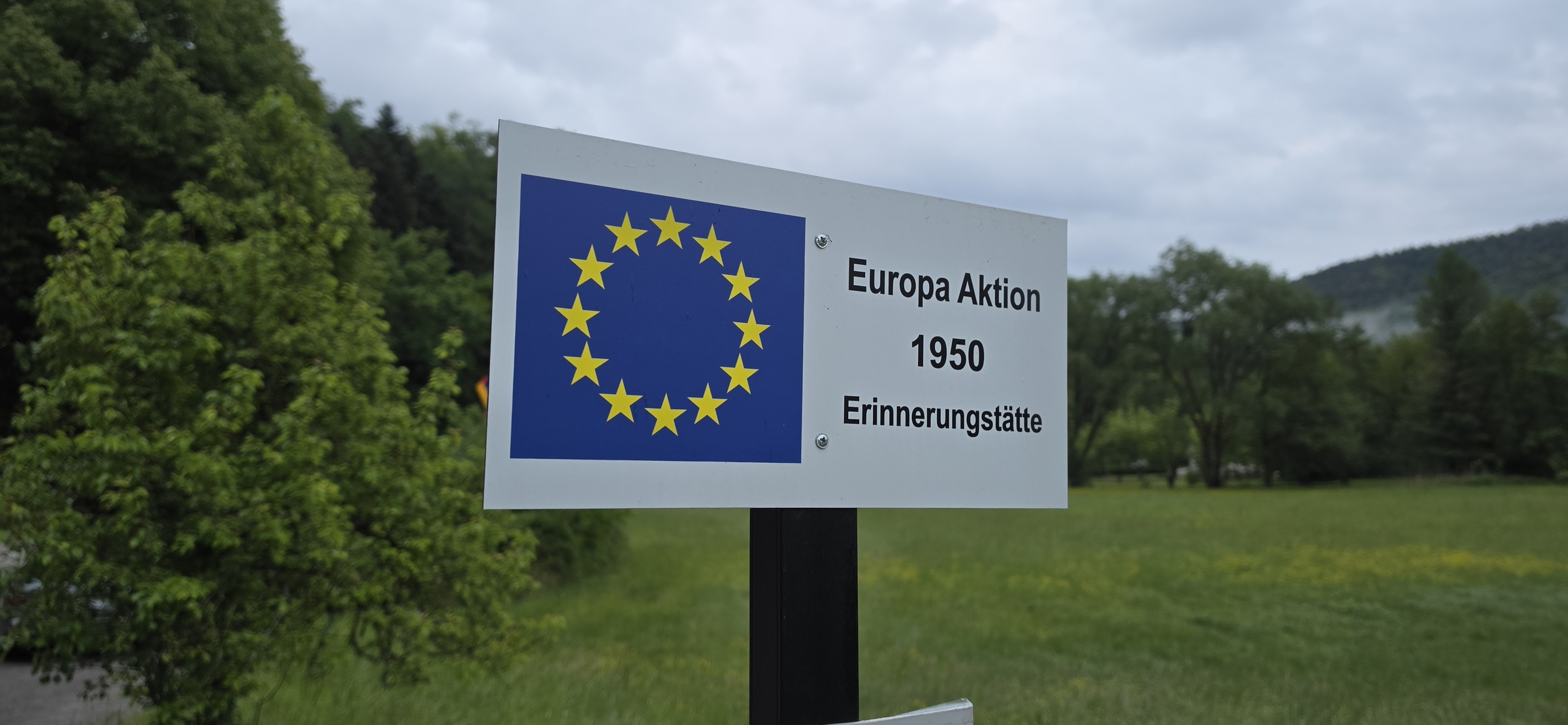
The on-site English plaque adds one detail the institutional sources omit: before the others started cutting, three of the students “using their feminine charm and feigning a fit of dizziness” had managed to preoccupy and distract the border police, while the rest of the group worked at the posts on either side. (primary-source: 2026-05-16 visit, on-site English plaque at the monument)
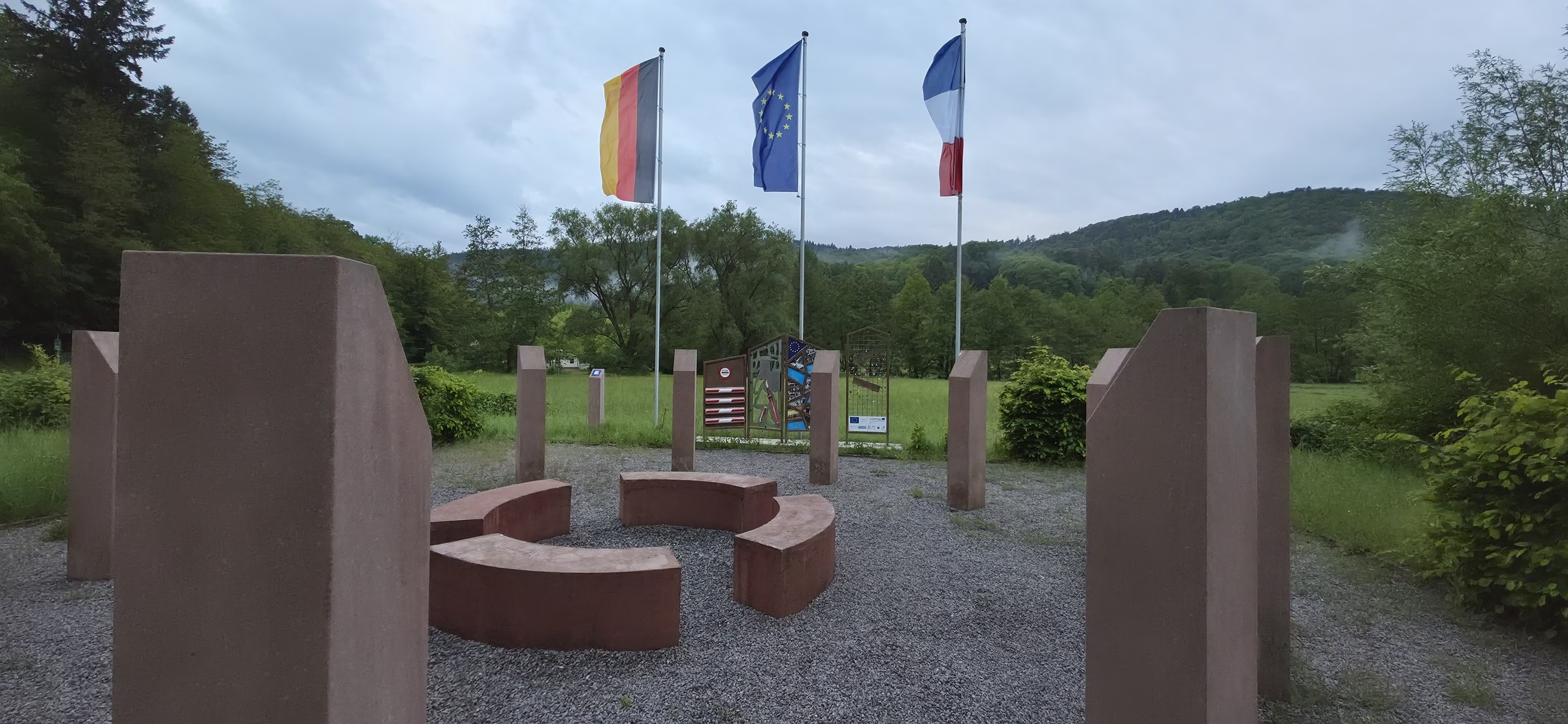
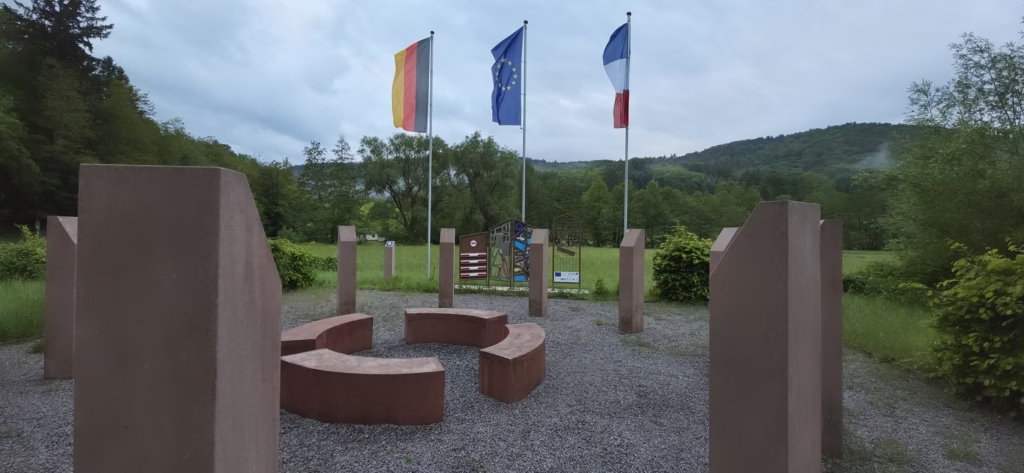
The monument itself came much later. The Europainitiative St. Germanshof-Weiler e.V., founded in 2003, drove the project, and the present site was dedicated on 9 September 2007: twelve sandstone steles in a circle whose count echoes the twelve stars of the European flag, a four-part Feuerrondell (fire ring) recalling the 1950 bonfire, and three flagpoles flying the German, French, and European flags side by side.[3] A trilingual plaque in German, French, and English carries the story. A note at the bottom of the English face adds a small civic coda that the institutional histories rarely quote: in the end, the participants collected money themselves and paid for the damage to property. (primary-source: 2026-05-16 visit, on-site English plaque at the monument)
What to do here
Park at the Wanderparkplatz on the L 478 and walk the forty meters to the stone circle. The full visit is short and rewards the kind of slow attention you can give a small site.
- Walk the stele circle. The twelve sandstone columns stand on the German side of the road, opposite the former Zollhaus. Walk the ring once on the outside, once on the inside; each stele carries inscribed text from the 1950 demands. The count of twelve ties the monument to the European flag and to the demands read out on the same ground in 1950.
- Read the trilingual plaque in German, French, and English. The English face is the shortest and most pared down; the German face carries the longest historical detail. Together they let an American visitor reconstruct the 1950 sequence without prior background.
- Look at the four-part fire ring at the center of the circle. The ring marks where the wood from the burned barriers stood; the steles mark the political demands that the burning was meant to advance.
- Cross the road to the former Zollhaus. The customs building still stands opposite the monument; the sign and the barrier are gone. Standing in front of it, the geometry of the 1950 action reads clearly: posts ran across the road here, students came over the hill from both sides, the bonfire stood where the road and the layby meet today.
- Photograph the eastern light. The circle faces roughly east-west; at sunrise the rising sun fills the gaps between the easternmost steles and throws shadows across the inscriptions for about ten minutes.
- Add the short Wieslauter walk if time allows. The Pfälzer Waldpfad long-distance trail passes directly through Sankt Germanshof; a fifteen-minute walk south takes you down to the Wieslauter stream and back, with no elevation gain.
Where to eat and drink
There is no café or restaurant at the monument itself. The Landgasthof St. Germanshof sits in the same hamlet, on the L 478 about 100 m from the stele circle, and serves Pfälzer Hausmannskost (regional German cooking) when open; their hours are seasonal, so check ahead before counting on it for breakfast or lunch. For a sunrise visit followed by a proper meal, the better strategy is to plan the food stop at the next destination: Wissembourg with Daniel Rebert is 10 minutes south across the border, and Schweigen on the Deutsche Weinstraße is 15 minutes east.
Practical tips
- Best light: sunrise hits the eastern stones first and runs across the inscriptions for about ten minutes; golden hour catches the western faces and the flagpoles. Midday flattens the steles.
- What to bring: a wide-angle lens (24-35mm equivalent) to fit the whole circle in one frame; a jacket if you arrive before sunrise (the Wasgau valley sits in cold-air shadow until the sun clears the eastern ridge).
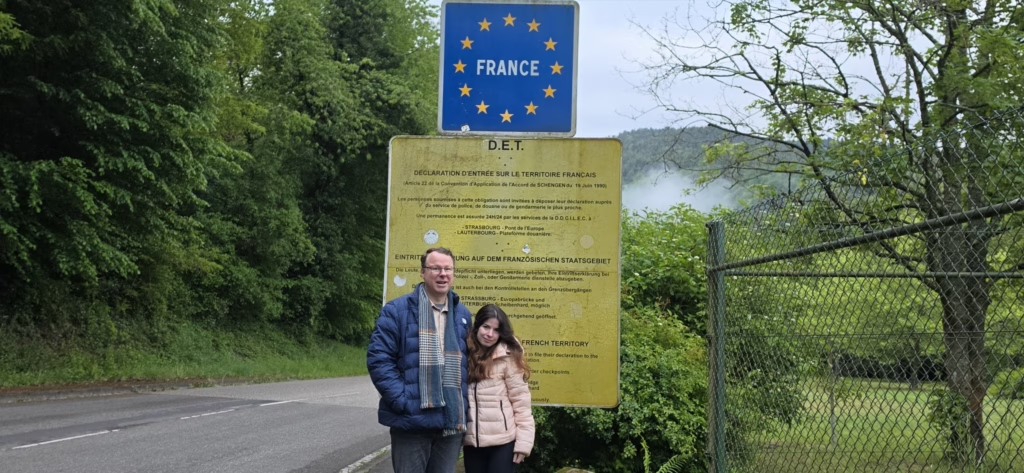
- Border crossing today: the L 478 becomes the French D 334 across the line. As of May 2026: no passport check on this crossing; you drive through. Carry a passport or German residence card regardless, in case of a spot check.
- Bathrooms: none on site. The nearest reliable bathrooms are in Wissembourg (5 min south) or Schweigen (10 min east).
- Cash vs. card: the monument is free and has no operator, but carry €30-50 in cash for the Wissembourg patisseries later in the day; the French villages on this route trend cash-friendlier than the German side.
- Language: the on-site plaque is trilingual (DE/FR/EN). Wissembourg across the border is operationally bilingual French and German.
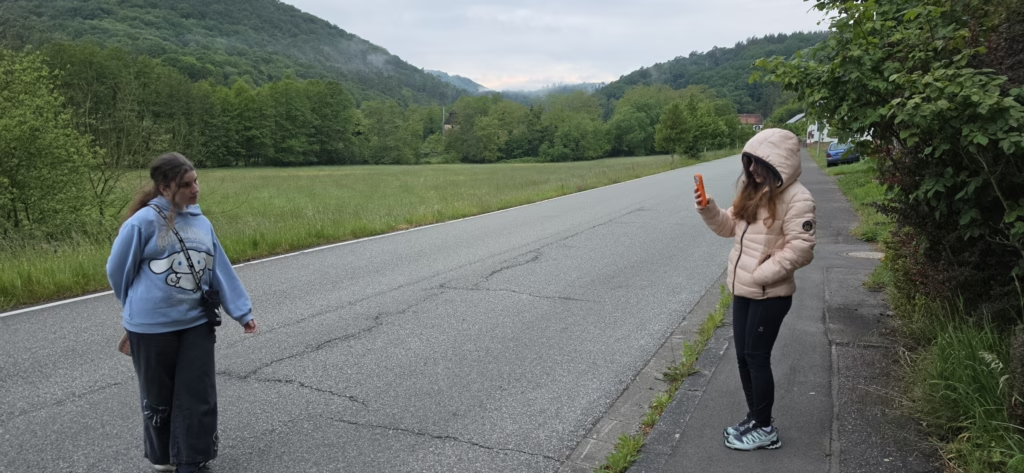
From the parking area it is forty meters back to the stele circle and another four hundred east to the French border. The closed L 478 makes the whole loop walkable in fifteen minutes, even with kids.
From the visit
Sources
- Institut für geschichtliche Landeskunde Rheinland-Pfalz (regionalgeschichte.net), “Der Studentensturm 1950”, regionalgeschichte.net/pfalz/bobenthal/einzelaspekte/der-studentensturm-1950.html (retrieved 2026-05-16).
- westpfalz.wiki, “Sankt Germanshof in Bobenthal”, westpfalz.wiki/wiki/sankt-germanshof-in-bobenthal-2/ (retrieved 2026-05-16).
- KuLaDig (LVR Kulturlandschaft Digital), Europadenkmal St. Germanshof, KLD-301144, kuladig.de/Objektansicht/KLD-301144 (retrieved 2026-05-16).
- Académie de Strasbourg / Innovathèque, “L’ouverture de la frontière entre Bobenthal et Wissembourg le 6 août 1950 et les prémices de la construction européenne”, innovatheque.site.ac-strasbourg.fr/2025/09/16/louverture-de-la-frontiere… (retrieved 2026-05-16).
- Wikipedia DE, Sankt Germanshof, de.wikipedia.org/wiki/Sankt_Germanshof (retrieved 2026-05-16).