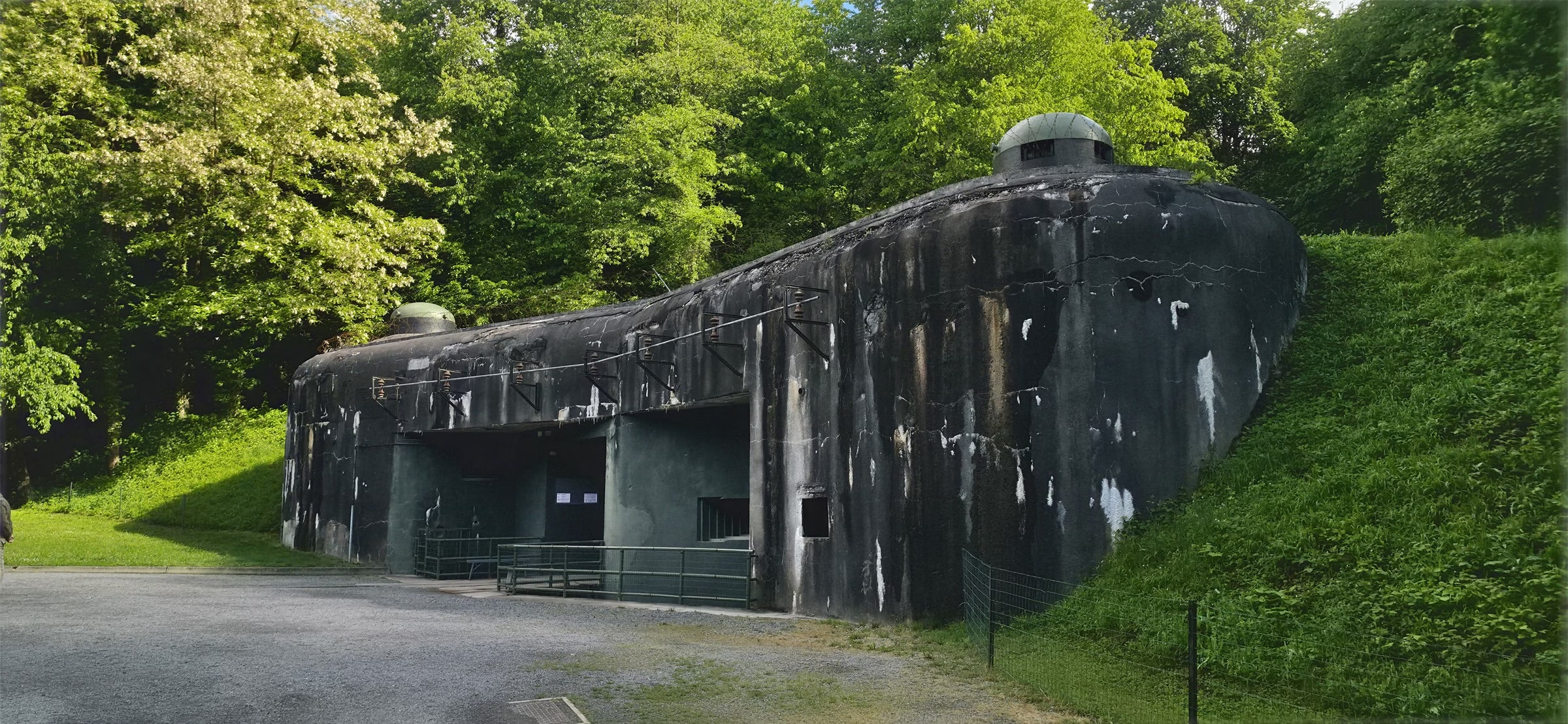
A Fort Schoenenbourg Maginot day trip from the Kaiserslautern Military Community area drops you 30 meters underground into one of the largest preserved artillery fortifications of the Maginot Line, roughly 90 minutes south of Ramstein. The Ouvrage de Schoenenbourg (Schoenenbourg work) is a Gros Ouvrage, a heavy artillery fortification with eight surface combat and entrance blocks linked by 3 km of underground galleries, and it never fell to direct German assault in 1940. This is stop 2 of 4 in the Sunrise to pastry Wasgau and Alsace series, the WWII anchor between the Wasgau ridge castles and the pastry stop in Wissembourg.
Visit at a glance
- Official site: lignemaginot.com (Maginot Line operator)
- Address: Fort Schoenenbourg, 67250 Hunspach, Alsace, France
- Opening hours: May–Sept daily 14:00–18:00; off-season weekends only; verify locally
- Parking: Free lot at fort entrance, ~50 m to ticket office
- Cost: Adult €12, child €6, family rate available; cash preferred
- Accessibility: Underground tour; stairs and uneven concrete; not wheelchair accessible; bring jacket (12 °C)
- Distance from Kaiserslautern: ~95 km, ~80 min via A6 → B10 → B9 → D263
- Time on site: 2–2.5 h guided tour
A bit of history
After 1918 France faced a strategic problem that the trench losses of the First World War made impossible to ignore. The eastern frontier with Germany ran along Alsace and Lorraine, both returned to France in 1919 after nearly 50 years of German rule, and a future German attack would arrive faster than the army could mobilize. The Conseil Supérieur de la Guerre debated mobile defense versus fixed fortification through the 1920s.
André Maginot (1877 to 1932), a Lorrainer who had been wounded in 1914 and later served as Minister of War, championed the fortified line that came to bear his name. Maginot died of typhoid in January 1932, before the line he advocated was finished. Construction at Schoenenbourg followed the standard CORF (Commission d'Organisation des Régions Fortifiées) sequence: initial planning from 1929, main concrete work from 1931 to 1933, and armament and equipment fitting through 1936 and 1937.[2]
On 14 May 1940 the German offensive bypassed the line through the Ardennes and the line's premise (a frontal assault on Alsace and Lorraine) became militarily irrelevant. The fort at Schoenenbourg fired its first shots in mid-June 1940 against German units that were probing the line from the rear. In 10 months of active service the garrison fired 15,792 rounds of 75mm from the artillery turrets and 682 rounds of 81mm from the mortar block, a total of 16,474 rounds, of which 13,388 were fired in the final 10 days between 14 and 25 June 1940.[2]
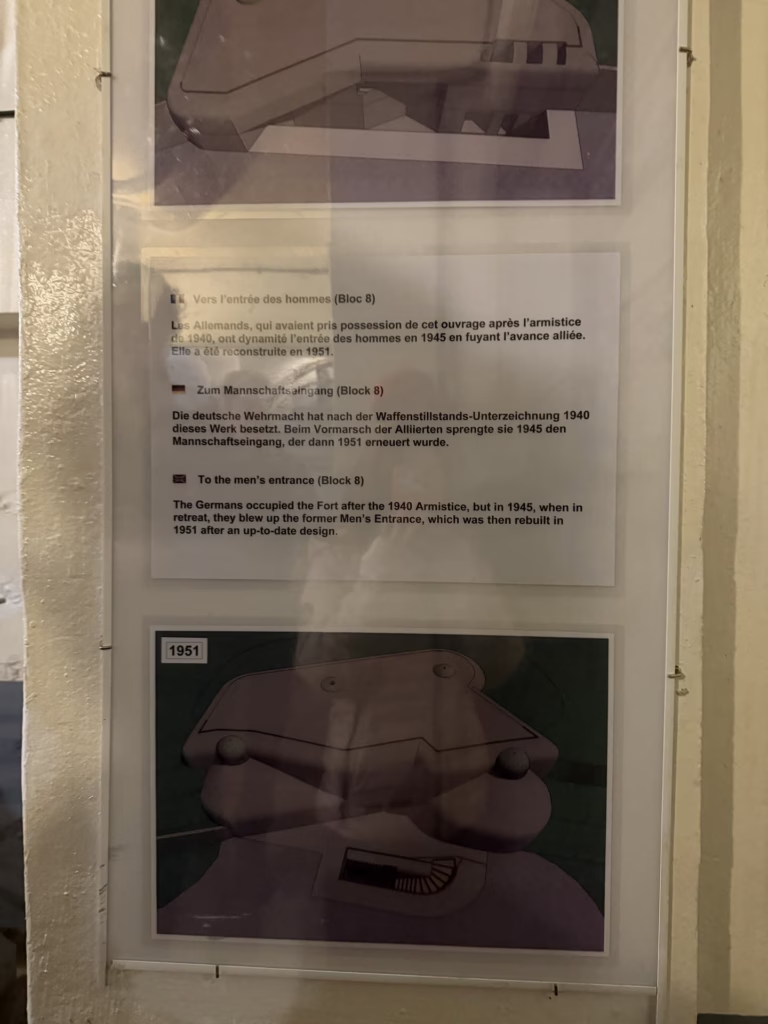
The Franco-German armistice took effect on 25 June 1940. Schoenenbourg held out. The fort surrendered on 1 July 1940, six days after the armistice, only on orders from the French high command and only because the war had already ended around it. Wikipedia FR records the operational summary directly: the fort “résista aux assauts ennemis jusqu’au 1er juillet 1940, soit six jours après l’armistice.” (resisted enemy attacks until 1 July 1940, six days after the armistice).
After the war the French Army reactivated the line for NATO defense planning in the 1950s; in June 1960 the French general staff declared the north-east forts had no further NATO role. The Association des Amis de la Ligne Maginot d'Alsace (AALMA), a volunteer association rather than a French government agency and founded in 1978, opened Schoenenbourg to regular visits in 1982 and has managed it as a visitor site ever since.[1]
What to do here
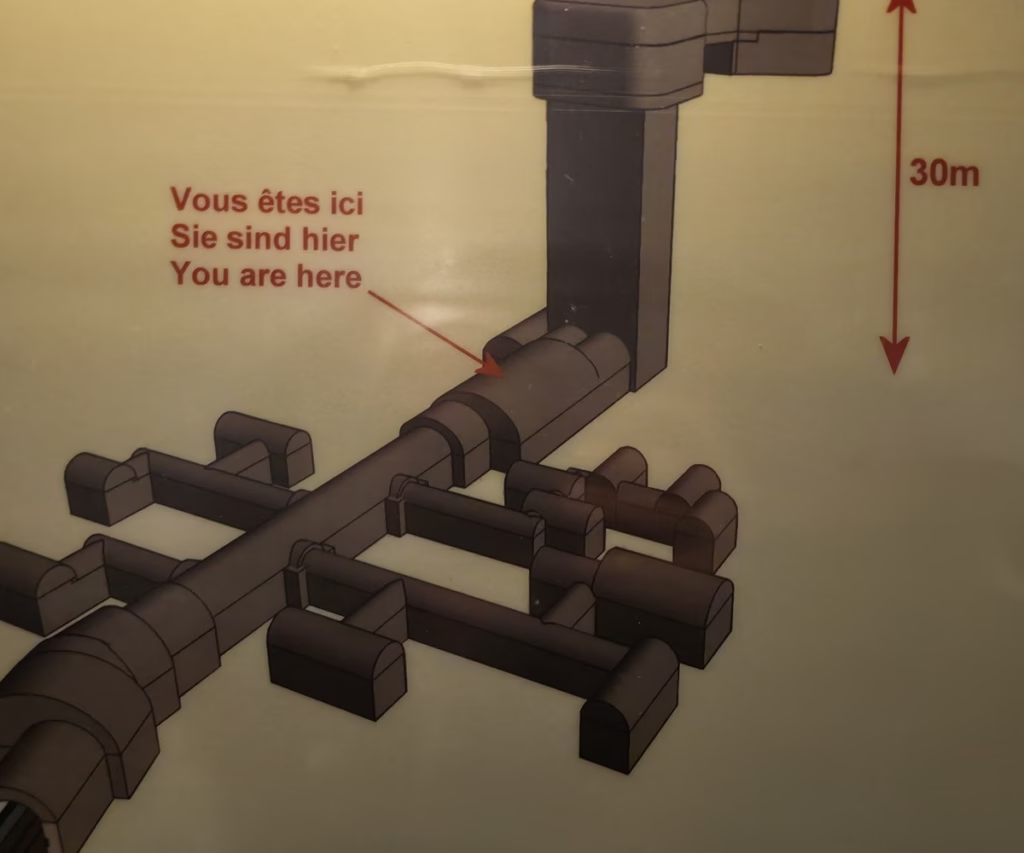
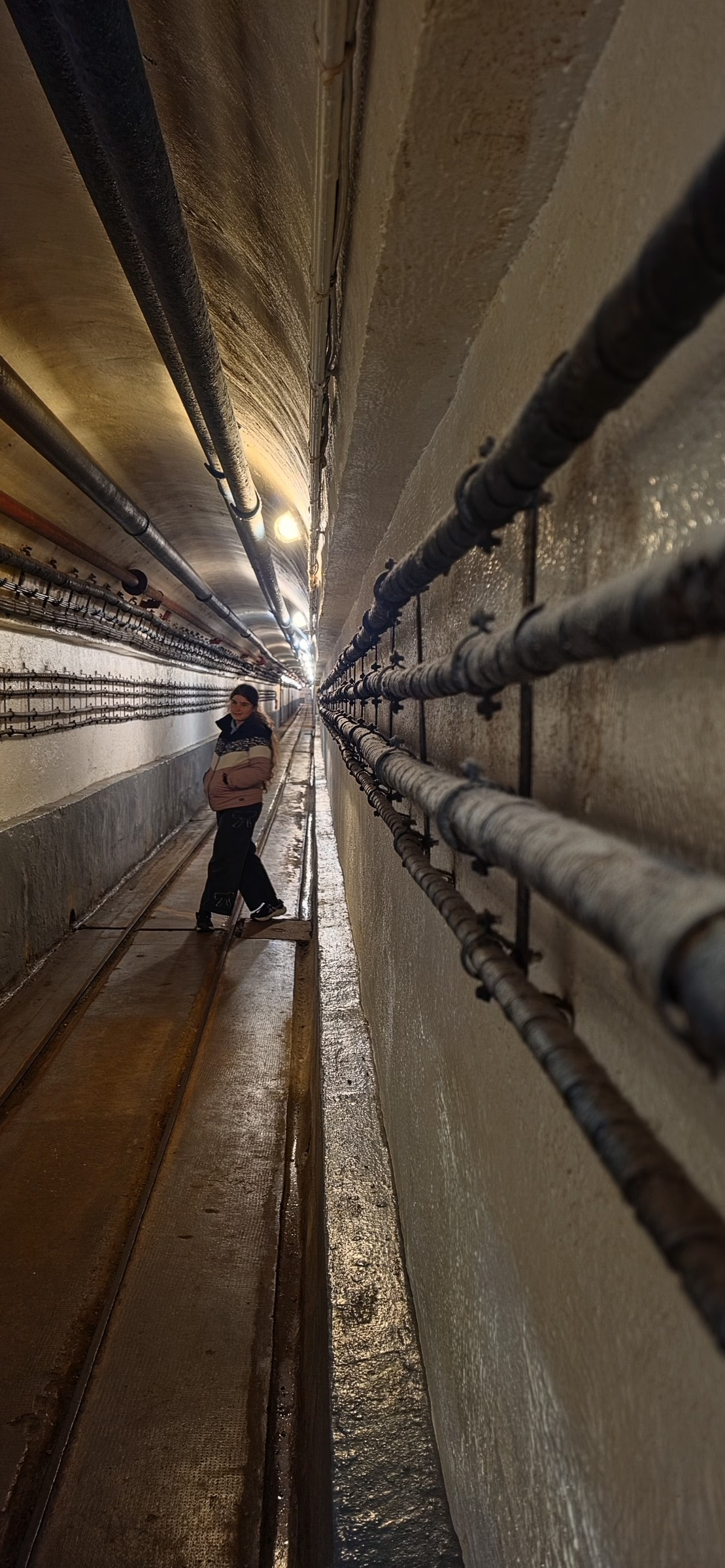
A standard visit begins at the entrée des hommes (personnel entrance) and descends roughly 30 meters by stairwell or elevator into the main gallery. The galleries connect eight surface works (six combat blocks plus two entrance blocks) by more than 1,500 meters of tunnel and roughly 3 km of total underground circuit, the largest publicly visitable artillery fort in Alsace per AALMA.[3]
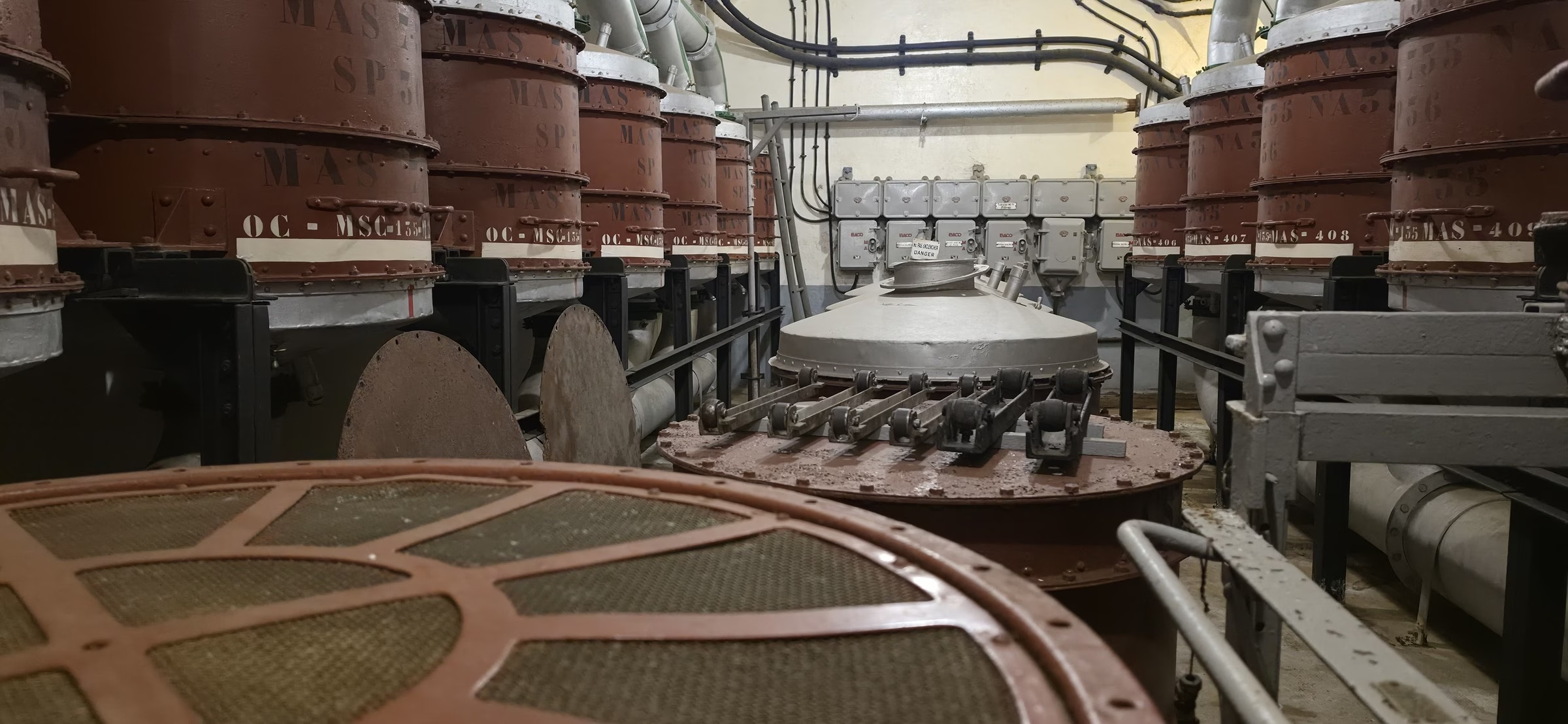
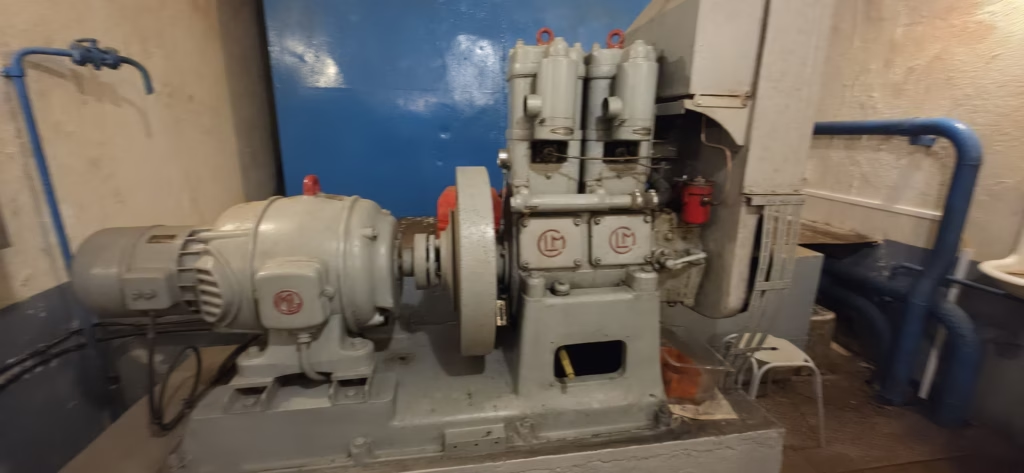
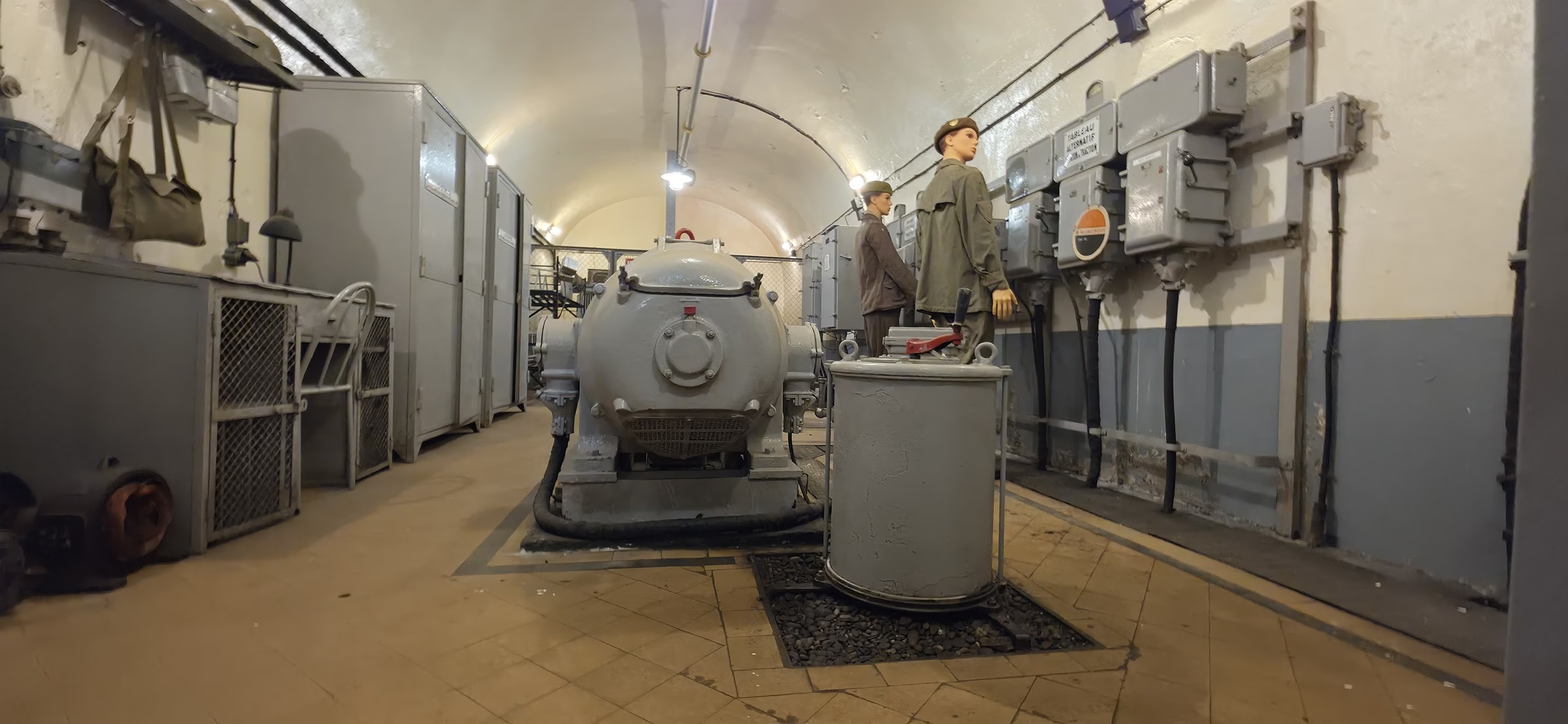
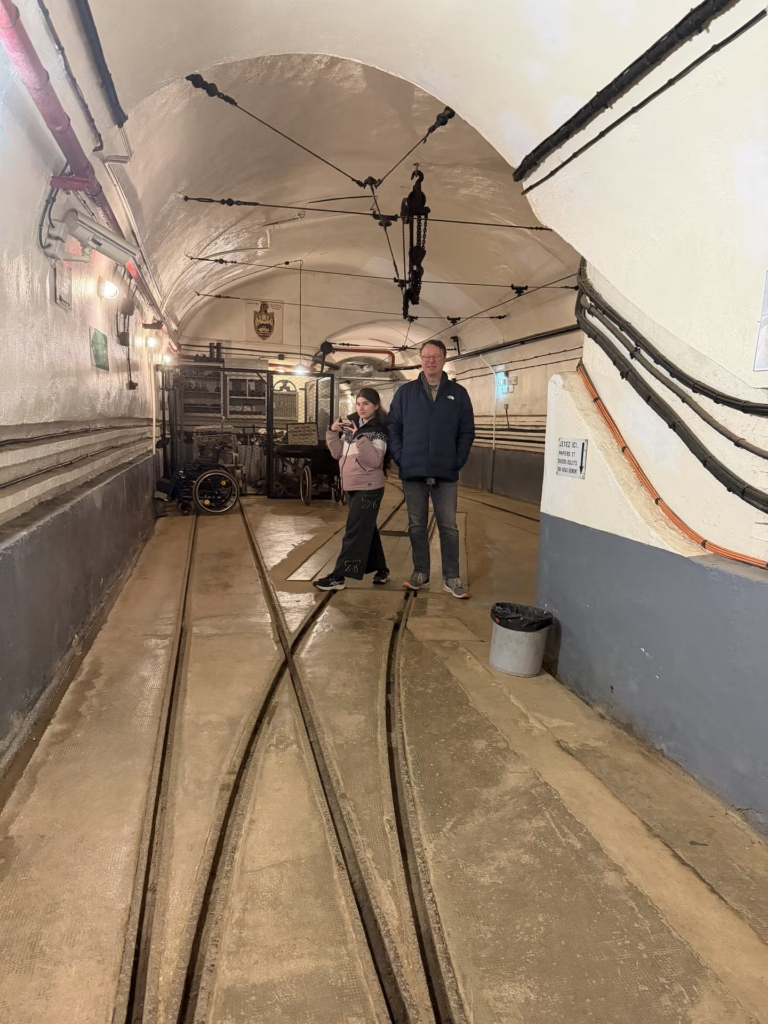
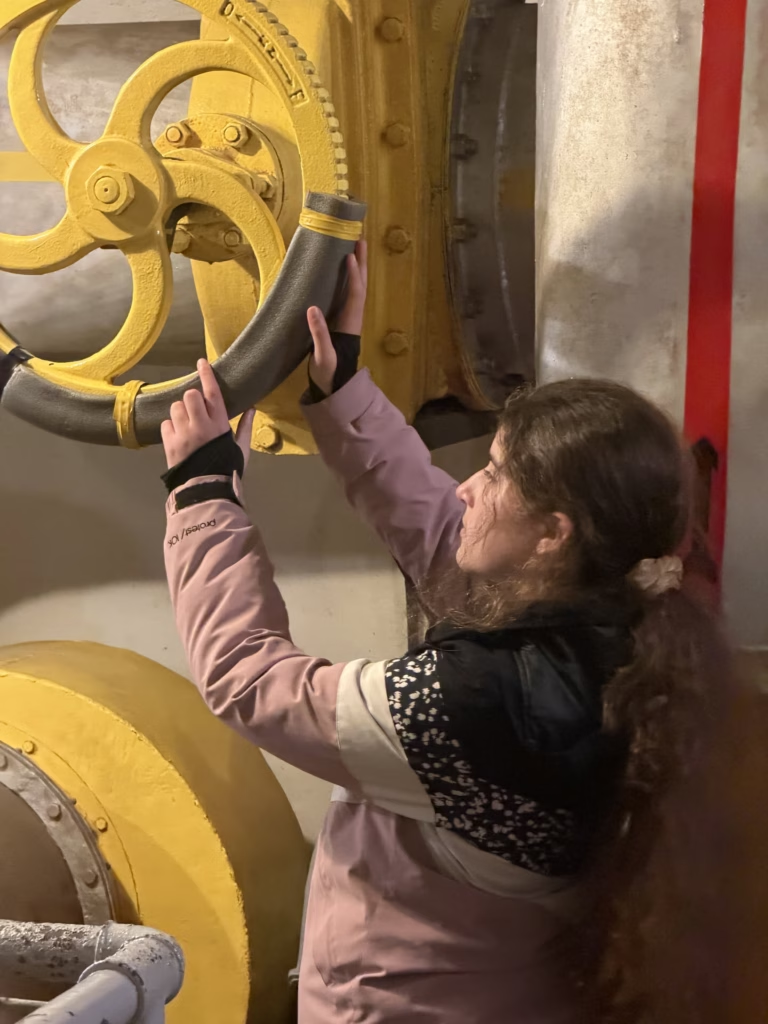
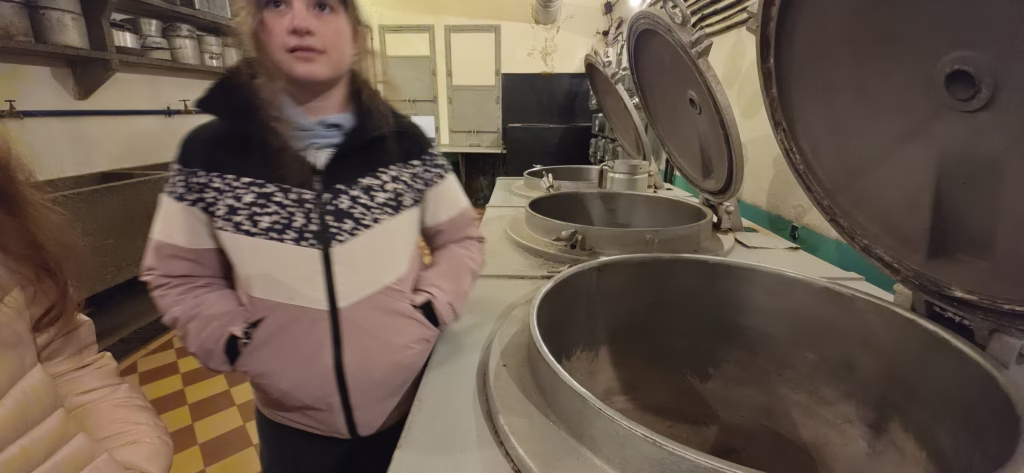
The route walks through the powerhouse with its original 1930s diesel generators (still in their concrete cradles), the kitchen and mess, the rail-served ammunition magazines, and the bottom of the 75mm turret block where you can see the rotating mechanism, the ammunition hoist, and the breech assembly from below. The 81mm mortar block on the opposite end of the gallery system is the second armament centerpiece. Several blocks retain their original ventilation plant, gas-filtering equipment, and electrical switchboards in working or display condition.
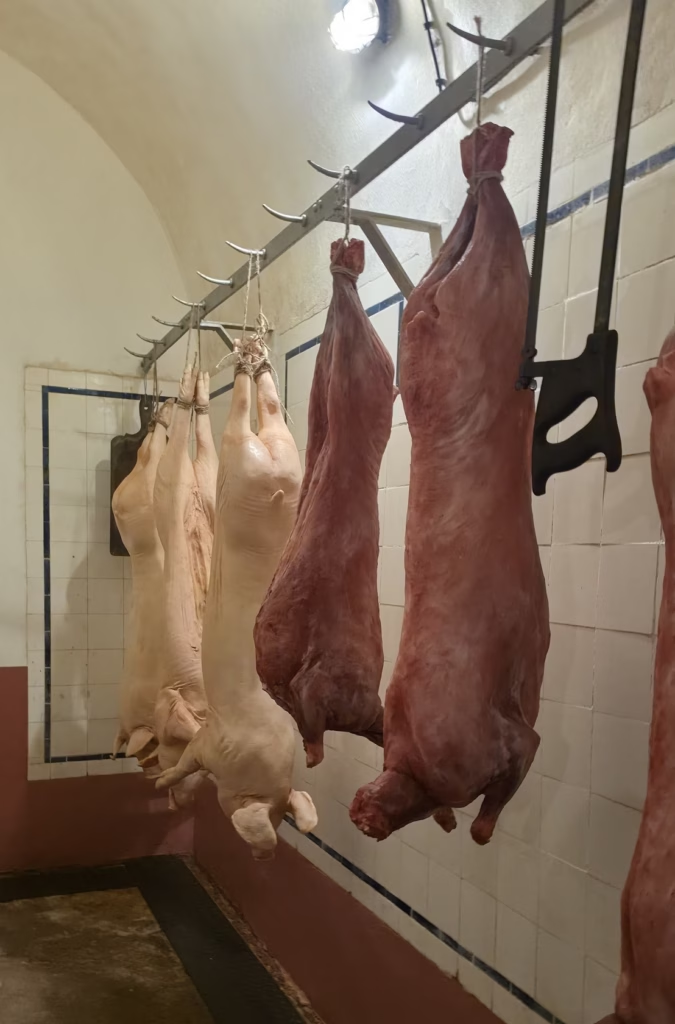
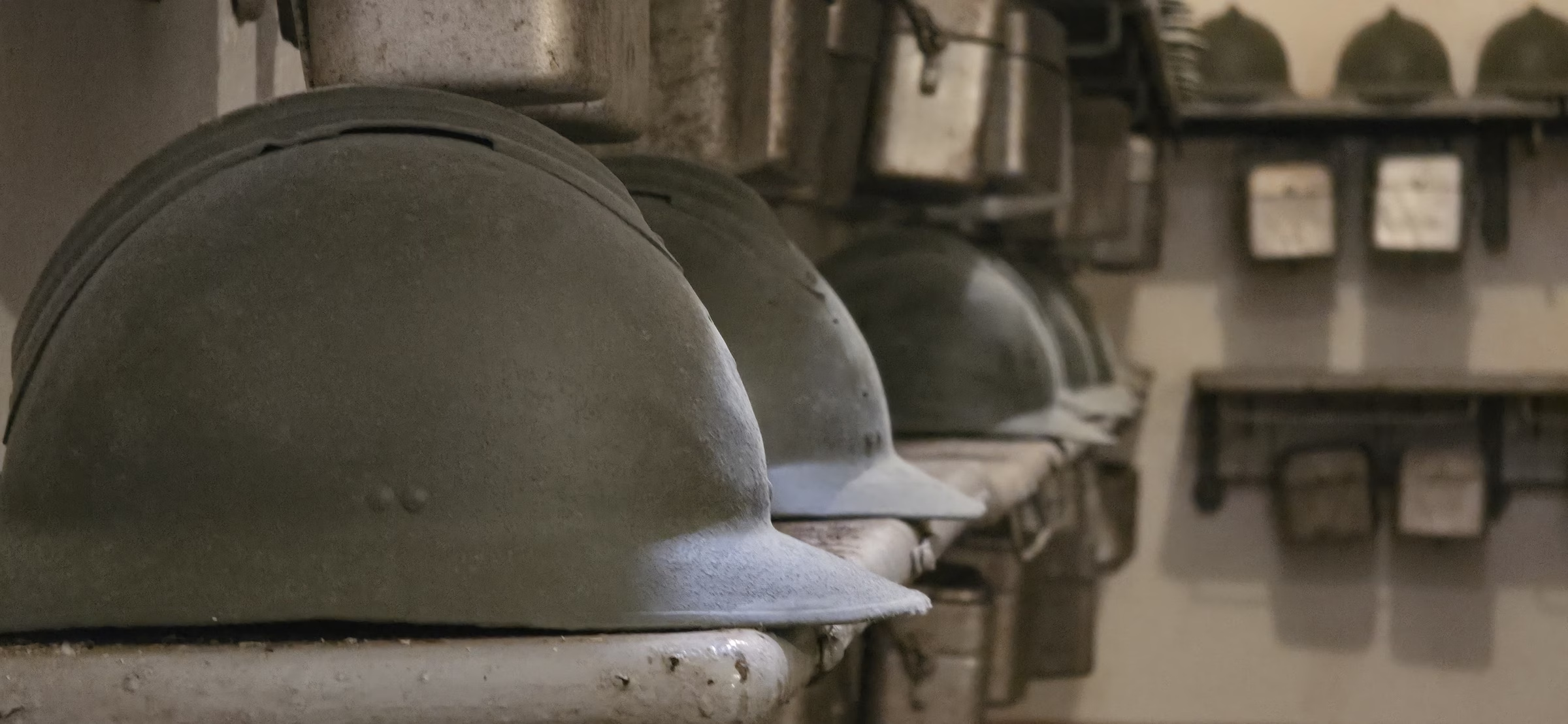
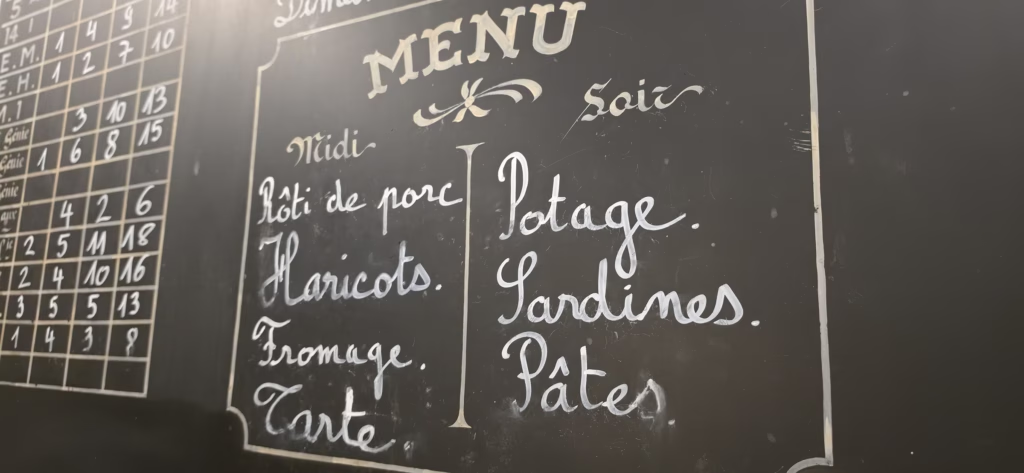
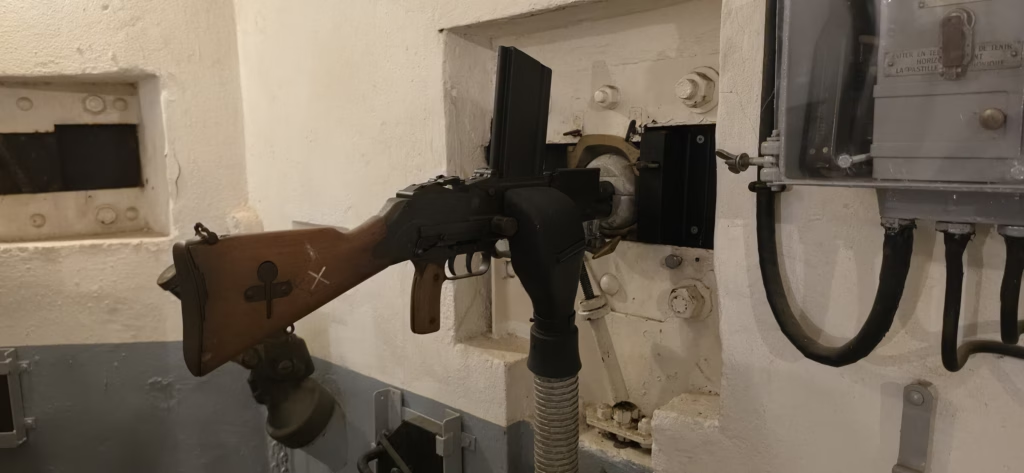
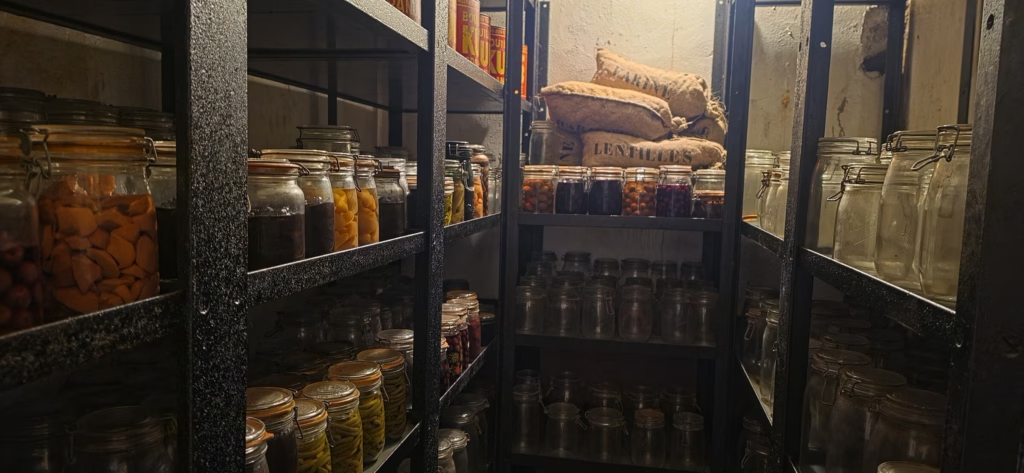
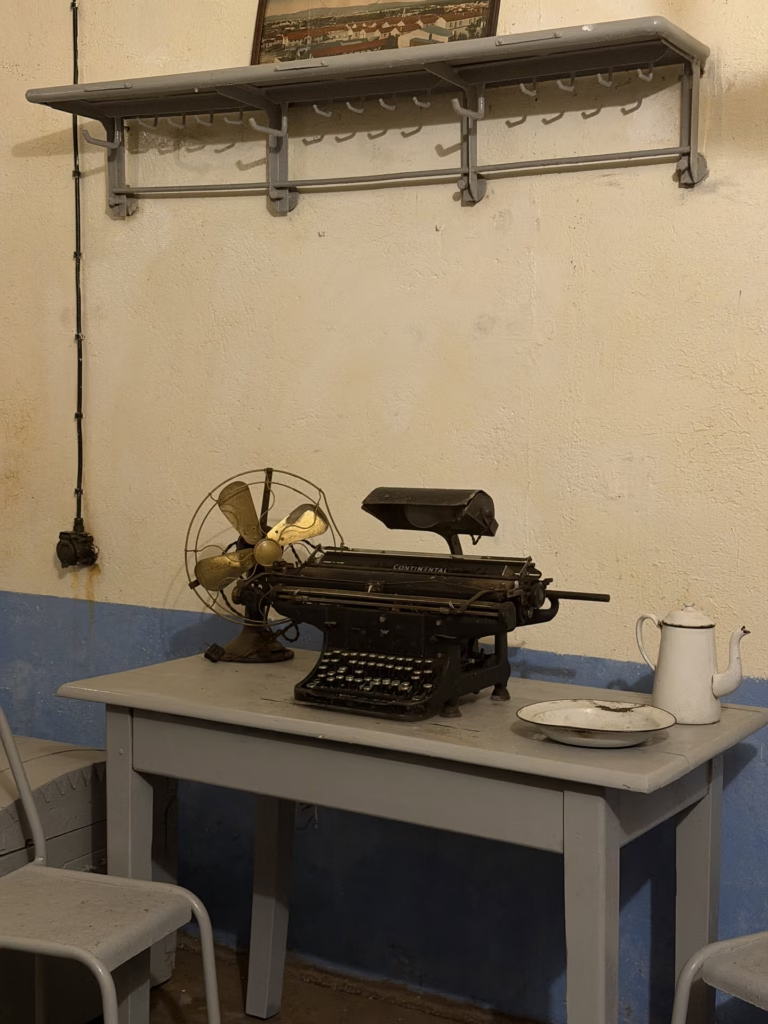
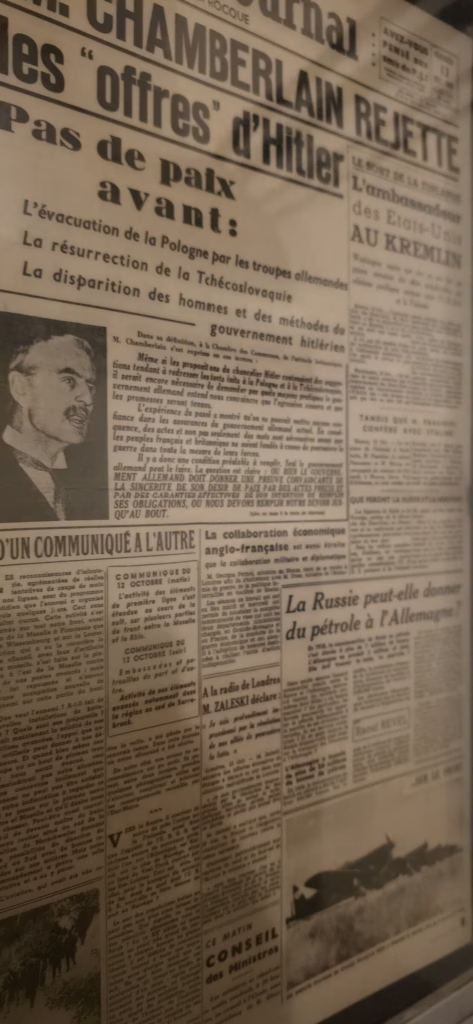
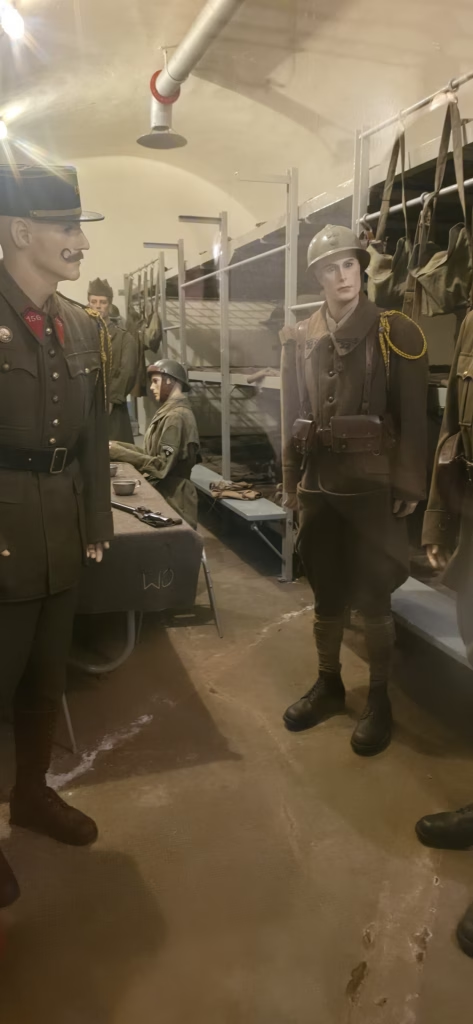
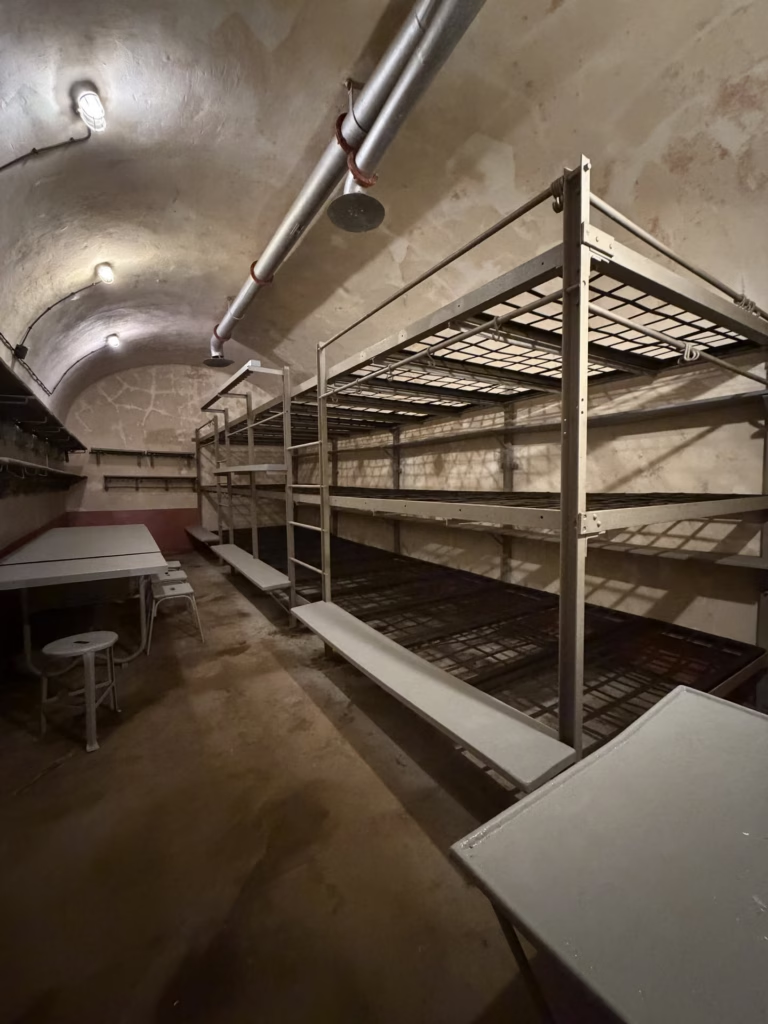
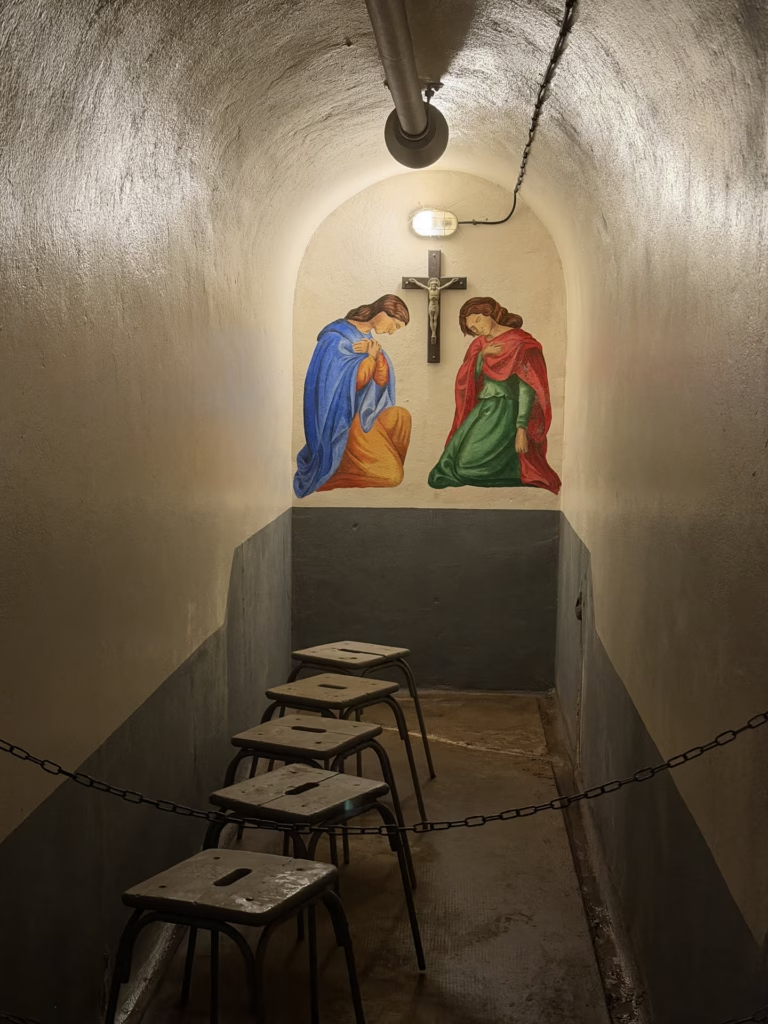
We took the self-paced audio-guide route on 2026-05-16 starting at 09:41 and exiting at 10:58, a brisk 77 minutes against the advertised 2 to 2.5 hours. The canonical entry is Bloc 7, down a long stairwell that drops you 30 metres into the main gallery (an elevator is available and covers about 90 percent of the route). Inside temperature was a steady 12 degrees Celsius all the way through; a light jacket is the right call even in May. The tour walks through the electrical plant first (four Sulzer 165-hp diesel generators still on their concrete bases), then the kitchen (large industrial cauldrons and shelves of period-correct storage jars), the barracks (metal bunk frames, mannequins in 1939 Forteresse uniform, a wall of vintage French advertising posters: RHUM Negrita, VIANDOX, Vins de France), the artillery command post, a small chapel niche with a Virgin Mary statue and three saint figures, and one combat-block turret with its original machine-gun mount intact. The infirmary, the period field telephones, and a small display of period newspapers with the Chamberlain Munich-conference headline fill the corridors on the way back to the surface. (Primary-source: 2026-05-16 visit, 09:41 to 10:58.)
For a self-paced visit AALMA offers audio guides in French, German, Alsatian, English, Spanish, and Italian, included in the entry fee per Visit Alsace.[6] Guided group tours run on request and last between 1 hour 30 minutes and 2 hours 30 minutes depending on group preference per lignemaginot.com.[1]
If you photograph the visit, plan for low light and warm-tungsten plus cool-LED mixed color temperatures in the same frame. A small tripod earns its keep in the long gallery shots and in the turret pit. The guided pace is brisk; pause at the powerhouse and the turret base for stationary frames rather than trying to shoot on the move.
Where to eat and drink
The fort has a small gift shop with vending machines but no full kitchen on site. Two practical options nearby:
- Restaurant La Ligne Maginot, on Rue Commandant Reynier about 200 m from the fort parking lot. Alsatian regional cooking, beer on tap, accommodates groups exiting a tour around lunchtime. Phone-reserve ahead on summer weekends.
- Hunspach village, 1.5 km away, has a small bakery and the Auberge du Cheval Blanc. Hunspach was voted Le Village Préféré des Français in 2020; even if you only stop for a coffee on the main street the half-timbered white houses are worth the detour.
- For the series, the better strategy is to save lunch for Wissembourg + Daniel Rebert, the fourth stop. Schoenenbourg works as the morning before lunch, not as the lunch stop itself.
Practical tips for Schoenenbourg
- Bring a jacket. The galleries hold a constant 13°C year-round per AALMA, regardless of summer temperatures above ground.[1] A fleece or light jacket is the right call even in July.
- Closed-toe walking shoes. The galleries have wet concrete, the surface blocks have steel stair-treads, and the rail tracks in the floor are a sprain risk in flat shoes.
- Budget 3 hours on site. AALMA quotes a 2 to 2.5 hour underground tour; add transit between blocks, the entrance briefing, and the surface block viewing and you are at 3 hours start to finish.
- No cell reception underground. The galleries run 30 meters under concrete and bedrock; mobile signal drops to zero once you descend. Tell anyone expecting to reach you that you will be offline for the duration of the visit.
- Audio guide languages. As of May 2026: French, German, Alsatian, English, Spanish, and Italian, included in the entry fee per visit.alsace.[6]
- Payment. As of May 2026: Adult entry is 10 EUR. AALMA accepts cash and card at the visitor reception. Bring cash as a backup; rural French operator card readers can have an off day.
- Accessibility. An elevator covers about 90 percent of the underground circuit, but the surface combat blocks, several side passages, and the original stair-and-ladder transitions are not wheelchair-accessible. Strollers are impractical inside the galleries.
- The Maginot Line and the Westwall are not the same thing. The German counterpart, the Westwall (Siegfried Line), was built on the other side of the Rhine between 1936 and 1939 and is a separate fortification system. Schoenenbourg is French, not German, and was never part of the Westwall.
From the visit
Sources
- AALMA (Association des Amis de la Ligne Maginot d’Alsace), operator site. lignemaginot.com/ligne/tourmaj/fr/schoen0.htm (retrieved 2026-05-15)
- Wikipedia FR, Ouvrage de Schœnenbourg. fr.wikipedia.org/wiki/Ouvrage_de_Schœnenbourg (retrieved 2026-05-15)
- WikiMaginot, SCHOENENBOURG (Ouvrage d’artillerie). wikimaginot.eu/V70_visitables_detail.php?id=10893 (retrieved 2026-05-15)
- Stars and Stripes, Fort Schoenenbourg (2025 feature). stripes.com/living/europe_travel/2025-08-21/… (retrieved 2026-05-15)
- Explore Grand Est, Schoenenbourg Fort, the Invincible Guardian. explore-grandest.com/en/offerings/… (retrieved 2026-05-15)
- Visit Alsace, Fort Schoenenbourg Maginot Line. visit.alsace/en/219006469-fort-schoenenbourg-maginot-line/ (retrieved 2026-05-15)